REVIEW · HIROSHIMA
Japanesel Archery Experience HIROSHIMA CASTLE SHARAKU
Book on Viator →Operated by HIROSHIMA CASTLE SHARAKU · Bookable on Viator
Kyudo feels like a calm routine with one big physical payoff. At the Hiroshima Castle Sharakū archery range, you’ll step into a traditional lesson, put on the uniform, and learn how Japanese archery works at close range—right near one of Hiroshima’s most memorable castle areas.
I love the way this session is built for real beginners: you get clear instruction, demonstrations, and practice time with plenty of coaching. I also love the small group size (max 4 people), which makes it easier to correct your form without feeling rushed.
One consideration: kyudo uses a lot of arm and shoulder control, and you may end up with a sore hand/arm if you’re totally new, especially during your first pulls and releases—so go in expecting some strain.
In This Review
- Key Highlights You’ll Actually Feel
- Kyudo in Hiroshima Castle Area: More Than a “Try Archery” Moment
- Dress Like a Kyudo Archer: Dogi, Hakama, and the Real Reason It Changes Your Shot
- The 60-Minute Flow: From Instructions to Practice Rounds and Competition
- 1) Meeting and getting ready
- 2) Kyudo overview and demonstrations
- 3) Learn the shooting steps
- 4) Practice rounds
- 5) The mini competition
- What You’ll Learn That Makes Kyudo Different
- Equipment, Guides, and How Translation Works When English Isn’t Perfect
- Photos and the “I’ll Want to Remember This” Factor
- Price and Value: Why $43.11 for One Hour Can Make Sense
- Where Logistics Matter: Getting There and Staying Comfortable
- Who Should Book This Kyudo Session in Hiroshima?
- Should You Book Japanese Archery Experience at Hiroshima Castle Sharakū?
- FAQ
- How long is the Japanese archery experience?
- Where do I meet for the Hiroshima Castle kyudo session?
- How much does it cost?
- Is it beginner-friendly?
- Will there be help if I don’t speak Japanese?
- How many people are in the group?
- Can I cancel and get a full refund?
Key Highlights You’ll Actually Feel
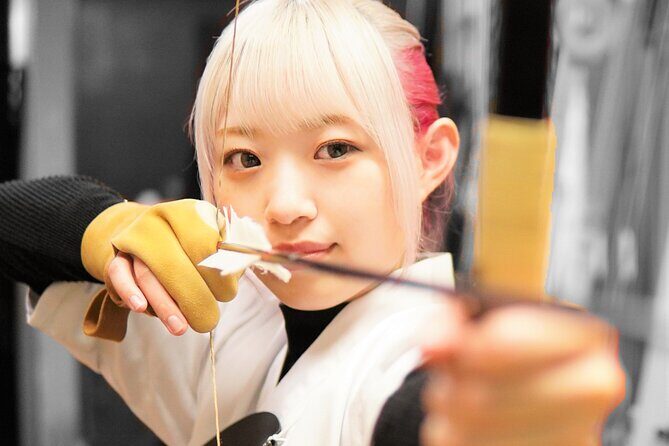
- Traditional kyudo uniform (dogi and hakama): dress the part and learn while wearing it.
- Beginner-friendly structure: you learn the steps and still get to enjoy real shooting rather than watching only.
- Lots of shot time: you typically shoot multiple arrows per round, not just a token few.
- Mini competition energy: after practice, you’ll often do a fun challenge between participants.
- Translation support: a tablet/translation app helps when English isn’t perfect.
- Castle-area location: you’re set up near Hiroshima Castle’s Sannomaru Ruins, then you’re done back at the same meeting point.
Kyudo in Hiroshima Castle Area: More Than a “Try Archery” Moment
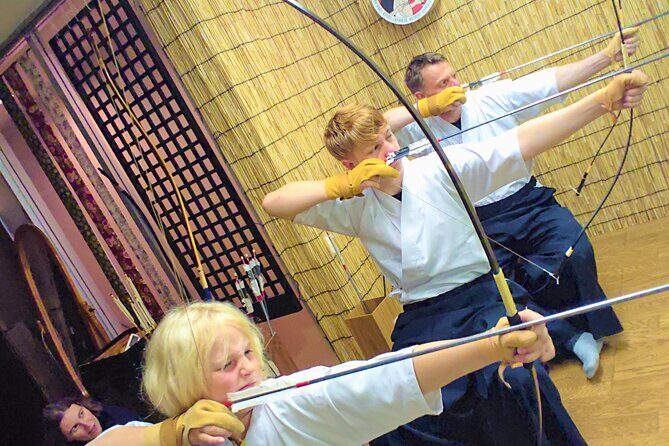
This is one of those activities where the setting and the sport work together. You meet at Hiroshima Castle Sannomaru Ruins (address: 21-7-2 Motomachi, Naka Ward, Hiroshima), and the whole experience is organized around the kyudo idea that technique is part physical skill, part disciplined routine.
Kyudo is Japanese archery built around form and respect—how you handle the equipment, how you face the target, and how you execute the full sequence. The difference from Western archery is that there’s a traditional flow to it, not just point-and-shoot. That’s why it feels oddly calming at first and then surprisingly challenging once you’re actually drawing and releasing.
If you like doing something cultural that’s also hands-on, this session fits well. You won’t just watch; you’ll learn the sequence, practice, and shoot rounds that make you feel progress during the hour.
Other Hiroshima Castle tours in Hiroshima

Dress Like a Kyudo Archer: Dogi, Hakama, and the Real Reason It Changes Your Shot
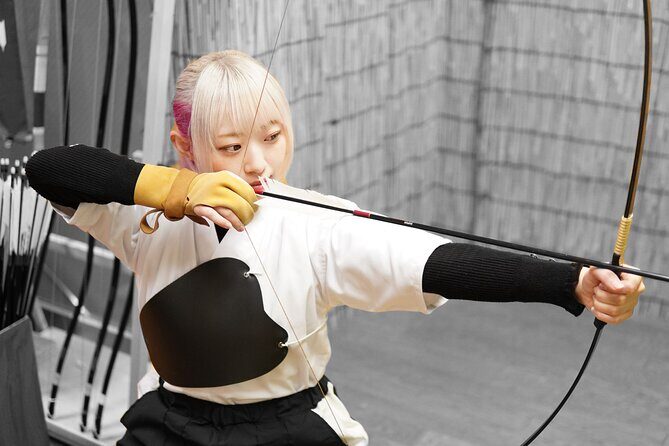
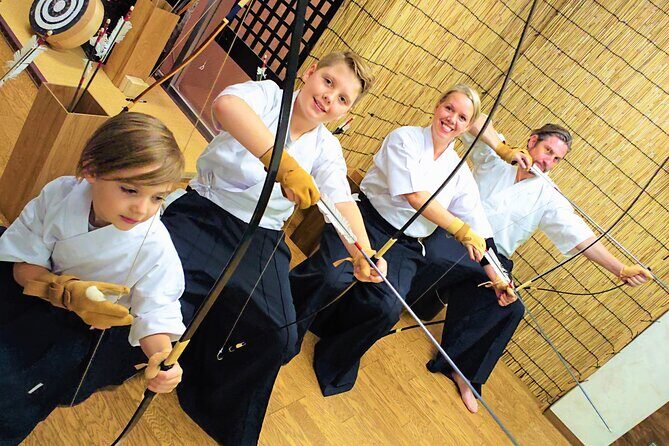
You show up and get into traditional kyudo clothes. In the lesson, you’ll wear dogi (the upper garment) and hakama (the lower pleated wear), plus you may also encounter armor-style items as part of the authentic practice setup. Wearing the uniform isn’t just for photos—it affects how your body positions itself and how you move through the shooting routine.
In reviews, people specifically loved how fun the costume was, and that matters because it lowers the mental barrier. You’re not thinking, I’m playing tourist. You’re thinking, I’m learning the real sequence. That headspace helps, especially when you’re a beginner who’s trying to copy exact steps.
There’s also a psychological twist: kyudo asks for full-body coordination. When your clothes and posture are consistent with the tradition, the technique becomes easier to understand as a sequence rather than random movements.
The 60-Minute Flow: From Instructions to Practice Rounds and Competition
The total time is about one hour, and it ends back at the meeting point. In that time, the instructor-led session follows a simple arc: explanation and demonstration, beginner coaching, then rounds with enough repetition to actually improve.
Here’s what the flow looks like in practice:
1) Meeting and getting ready
You start at the Hiroshima Castle Sannomaru Ruins meeting point and head into the archery range setup. The group is small (max 4), so you’re not waiting around for long stretches.
2) Kyudo overview and demonstrations
Before you shoot, you’ll get a brief explanation of what kyudo is trying to do—focus of mind and body—and how the movement routine respects the equipment and opponent. Then you’ll see the shooting sequence demonstrated. Expect the early part to feel structured and slightly slower while you learn the basic steps.
Other Japanese archery (Kyudo) tours in Hiroshima
3) Learn the shooting steps
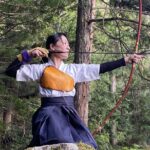
Even though kyudo traditionally has rules about when you can fully pull and shoot, your lesson is designed so you can experience real shooting as a complete beginner. You’ll learn how to prepare and shoot in the kyudo style, including the step that often surprises first-timers: notching and handling the arrow correctly.
One review called out how the early steps can feel overwhelming at the start, and then you quickly get the hang of it. That matches what you should expect: the first shots teach your brain new muscle memory.
4) Practice rounds
After instruction, you’ll do practice shooting. Many sessions include a practice round with about 8 arrows, and then you move into additional rounds. You also may get technique tips mid-session as you shoot, so the instructor can adjust your form rather than only talking at the beginning.
5) The mini competition
Once you’re comfortable enough, you’ll likely do a fun competition between participants. Reviews mention a competitive structure where each person shoots 8 arrows in each round, split into two halves of 4 arrows at a time. That split matters because it keeps the pacing manageable and lets instructors correct things without the group losing focus.
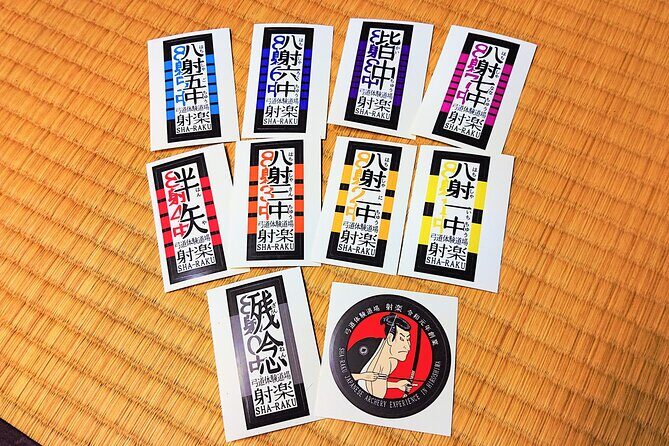
If you score really well, there can be a reward component. One review mentioned a special spot on the wall if you get all 8, and another mentioned score cards for good scoring. Even if you’re not aiming for perfection, the competition format turns practice into something you actually remember.
What You’ll Learn That Makes Kyudo Different
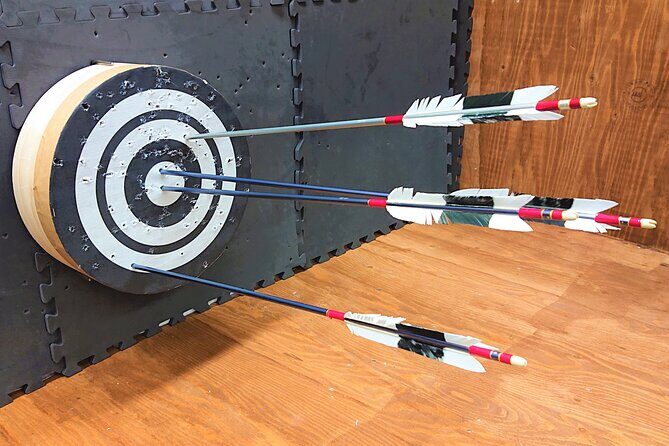
Kyudo’s biggest lesson isn’t only how to hit the target. It’s how the shot is a sequence.
The instructor emphasizes routine: posture, handling the bow and arrow, and the release itself. You also learn that kyudo doesn’t treat archery as a purely mechanical action. The goal is a controlled movement where you’re present and accurate, not just strong.
A few points you’ll likely notice quickly:
- Technique rules really matter. One review emphasized that following the rules led to hitting the target more often.
- Arrows can behave differently than expected. People noted the arrows curving when shot. That’s a big reason why the instructor’s form cues matter—because you can’t rely on guessing like you might with casual archery.
- Aim and outcome can feel non-intuitive at first. One person joked that aiming left could still lead to the arrow going straight. The practical takeaway is simple: don’t over-correct mid-process. You’ll get better by trusting the form you’re being taught.
This is also why the lesson can feel “humbling” in a good way. Even with a competitive mindset, you’re learning a new system.
Equipment, Guides, and How Translation Works When English Isn’t Perfect
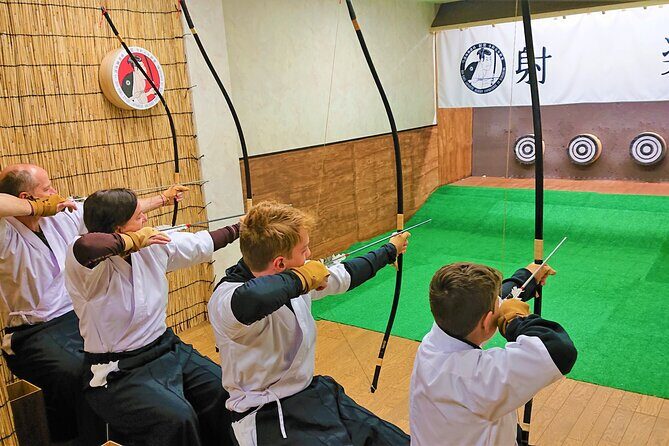
The session uses good quality bows and archery equipment provided for you. You’ll also get traditional gear for the uniform portion, and the instructors guide you through use in a way that feels safe and structured.
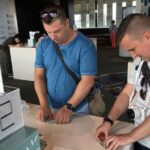
The biggest support feature here is human coaching plus tech help. The experience notes that translation apps may be used, and reviews describe the instructor using a tablet for translation when needed. That means you’re not left stranded if your Japanese is limited.
You should also know that small group instruction matters. With max 4 participants, you get more attention than you would in a big group class. Reviews praised patience and supportive teaching, and several mentioned that even when people were beginners, the learning curve felt manageable.
One balanced note from a minority of reviews: a few people said an instructor could be stressed or less patient. That’s not the dominant theme—most feedback highlights politeness and helpful guidance—but it’s worth keeping in mind if you’re with kids or you’re sensitive to a stricter teaching style.
Photos and the “I’ll Want to Remember This” Factor
There’s a practical reason this activity works as a memory maker: the outfit plus the action.
In reviews, people liked that instructors take pictures and videos using your phone toward the end. That’s a small detail, but it changes the whole experience. Instead of struggling to film while you’re learning, you can focus on the shot and still walk away with usable clips.
And because you’re in kyudo uniform at a historic location area, the photos feel more like you did something specific in Japan rather than another generic activity.
Price and Value: Why $43.11 for One Hour Can Make Sense
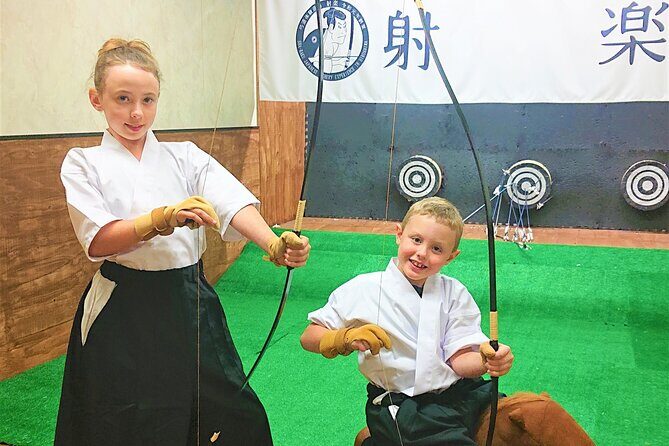
The price is $43.11 per person for about an hour. At first glance, that might sound like a “try it” fee. The value here comes from what’s included and how much practice you actually get.
You’re paying for:
- In-person instruction that guides you through a structured routine (not just letting you swing a bow).
- Traditional uniform elements like dogi and hakama for the experience.
- Equipment and coaching during practice and rounds.
- A small group format, which increases your odds of getting corrections in time.
The best sign of value is repetition. Reviews mention that participants shoot plenty of arrows—some described shooting enough to reach over 45 arrows in the total session including practice rounds, depending on how quickly they picked up technique. Even if your number is lower, the lesson is designed so you’re not waiting in line to shoot a handful of times.
So yes, it’s a paid activity, but it’s not a token one. For many people, it becomes a highlight because you leave with skill, photos, and a story that feels genuinely Japanese.
Where Logistics Matter: Getting There and Staying Comfortable
The meeting point is near public transportation, which helps a lot in Hiroshima where you don’t want your day to revolve around one specific stop. You return to the meeting point after the session, so you’re not planning a separate way back.
A note from one review: parking nearby can be a bit of a nightmare. If you’re driving, give yourself extra time. If you’re using transit, you’ll likely find it easier since it’s described as near public transportation.
Wear normal travel clothing under the kyudo setup. You’ll be working your arms, so avoid heavy layers that you’ll hate moving in. Also, if you’re sensitive to soreness, plan a bit of recovery time afterward—kyudo can stress your hand/arm if you’ve never done anything like it.
Who Should Book This Kyudo Session in Hiroshima?
This is a great choice if you want:
- A cultural, hands-on experience that’s more than sightseeing.
- A small-group activity where you get guidance, not just equipment rental.
- Something fun to do as a family (people reported enjoying it with kids and teenagers).
It’s also a good fit for couples or solo travelers who like structured learning. One review mentioned it could be great even solo or with family.
Who should skip it? The activity notes it’s not recommended for people with arm, hand, or shoulder injuries or disabilities. If you have any relevant limitations, you’ll want to think carefully before signing up.
Should You Book Japanese Archery Experience at Hiroshima Castle Sharakū?
I’d book this if you want a short, memorable activity that teaches you a Japanese tradition in a way you can actually do yourself. The combination of traditional uniform, structured beginner-friendly instruction, and plenty of arrow time makes it far more satisfying than the usual “one photo, one try” tourist version.
You might hesitate if you’re injury-prone in the arms/shoulders, or if you hate activities that require listening closely and following step-by-step routines. But if you’re okay with a little workout and you like clear coaching, this is one of the more rewarding ways to spend an hour in Hiroshima.
If you’re in the area, treat it like a high-quality side quest: you’ll come away with better than a souvenir. You’ll have a skill, a story, and a different view of what Japan can be beyond temples and streets.
FAQ
How long is the Japanese archery experience?
It’s about 1 hour.
Where do I meet for the Hiroshima Castle kyudo session?
You meet at Japanese Archery Experience HIROSHIMA CASTLE SHARAKU at Hiroshima Castle Sannomaru Ruins, 21-7-2 Motomachi, Naka Ward, Hiroshima, 730-0011, Japan.
How much does it cost?
The price is $43.11 per person.
Is it beginner-friendly?
Yes. The lesson is designed so complete beginners can enjoy the real kyudo experience during the class, with instruction and demonstrations before practice.
Will there be help if I don’t speak Japanese?
A translation app may be used. Reviews also mention the instructor using a tablet to translate verbal instructions when needed.
How many people are in the group?
The activity has a maximum of 4 travelers.
Can I cancel and get a full refund?
Yes. You can cancel up to 24 hours in advance for a full refund. If you cancel less than 24 hours before the start time, the amount you paid won’t be refunded.