REVIEW · HIROSHIMA
Hiroshima Peace (Heiwa) Walking Tour at World Heritage Sites
Book on Viator →Operated by MagicalTrip Inc. · Bookable on Viator
A Hiroshima Peace tour hits different when it’s guided. This 5-hour walk from the Peace Memorial Museum to the Orizuru Tower pairs serious World Heritage history with the everyday grit of a city that rebuilt. I love that it’s led by a MagicalTrip Certified Guide and kept to a small group of up to 8.
My second big win: you don’t just “see sights.” You stop at places that hold memory—like the Atomic Bomb Dome—and then look down on today’s Hiroshima from Orizuru Tower with lunch included. One drawback to plan for: the Peace Memorial Museum can get crowded, and on busy days you may not have time for every exhibit space.
In This Review
- Key highlights worth your time
- Why this Hiroshima Peace walk feels personal, not just factual
- Meeting at MontbellJapan and the “easy start” advantage
- Hiroshima Peace Memorial Museum: where the story begins
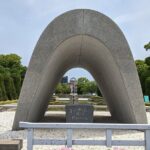
- Cenotaph for Atomic Bomb Victims: a pause that’s part of the tour
- Children’s Peace Monument: a powerful focus on what comes after
- Atomic Bomb Dome and the Aogiri tree: seeing survival in one view
- Orizuru Tower lunch: the view that changes how you process everything
- Pacing, crowds, and weather: what can make or break the day
- Price and value: what $94.84 buys you in Hiroshima
- Who should book this tour (and who might want a different plan)
- Should you book the Hiroshima Peace (Heiwa) Walking Tour?
- FAQ
- How long is the Hiroshima Peace (Heiwa) Walking Tour?
- What’s included in the ticket price?
- Where does the tour start and end?
- How many people are in the group?
- Is the tour suitable for people with mobility issues?
- Can the tour accommodate gluten-free diets or allergies?
- Are the museum exhibits appropriate for children?
- What is the cancellation policy?
Key highlights worth your time
- Peace Memorial Museum + Park, guided at a human pace (about 1 hour inside)
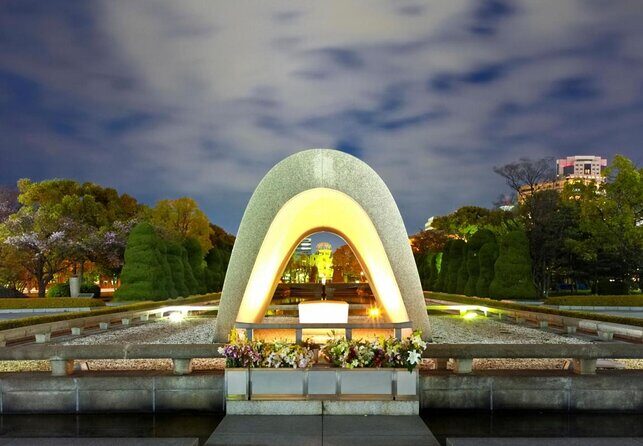
- Meaningful memorial stops: the Cenotaph for the Atomic Bomb Victims and Children’s Peace Monument
- Atomic Bomb Dome viewing with context, plus a walk that also includes the Aogiri tree area
- Orizuru Tower lunch with panoramic views to contrast past and present
- Small-group format (max 8) plus tour photos included in your ticket
Why this Hiroshima Peace walk feels personal, not just factual
Hiroshima is a city of layered meaning. When you walk it with a good guide, you start noticing what signs alone can’t fully explain: how survivors described daily life, how the memorials were shaped, and why the message of peace still feels urgent.
I also like that this tour isn’t trying to rush you through trauma. The structure is clear—Peace Park first, then key memorials, then the A-bomb Dome area, and finally a view from Orizuru Tower—so your emotions have time to catch up. If you’ve ever left a museum feeling like you missed the point, this format helps.
And yes, the guides matter. The praise in the guide reviews keeps coming back to this same theme: guides like Yuji, Etsuko, Yasue, Kaori, and Tommy are repeatedly described as calm, patient, and able to connect history to real human stories. Even when you already know the basics, that “why this matters” piece lands harder.
Other Peace Memorial Park tours in Hiroshima

Meeting at MontbellJapan and the “easy start” advantage
The tour starts at MontbellJapan in Kamiyachō (Naka Ward). It’s easy to find, and it’s near public transportation, which matters in Hiroshima where you might be switching between tram lines and short walks.
You’ll also use a mobile ticket, so you’re not stuck figuring out counters and paper vouchers on the day. Once the group gathers, you’re immediately in walking mode—no long wait, no awkward milling around.
Hiroshima Peace Memorial Museum: where the story begins
Your first major stop is Hiroshima Peace Memorial Park, followed by about an hour at the Peace Memorial Museum. Even if you’ve read about the atomic bombing, the museum experience is different in person. You’re surrounded by artifacts, records, and explanations that give the event a clear timeline and then widen into the aftermath—how the people of Hiroshima coped and rebuilt.
A practical note: some exhibits include graphic imagery. If you’re bringing kids (or you’re sensitive to that kind of material), tell your guide. The tour instructions specifically suggest letting them know your concerns, and that small heads-up can change how the guide manages pacing.
The museum admission is included, so you’re not doing math mid-visit. But do yourself a favor and plan for crowding. One important drawback from real experiences: on very busy periods, you may find limited time inside the museum, which can mean you don’t reach every area you wanted. If you’re the type who likes to soak in every room, arrive with patience in your bag.
Cenotaph for Atomic Bomb Victims: a pause that’s part of the tour
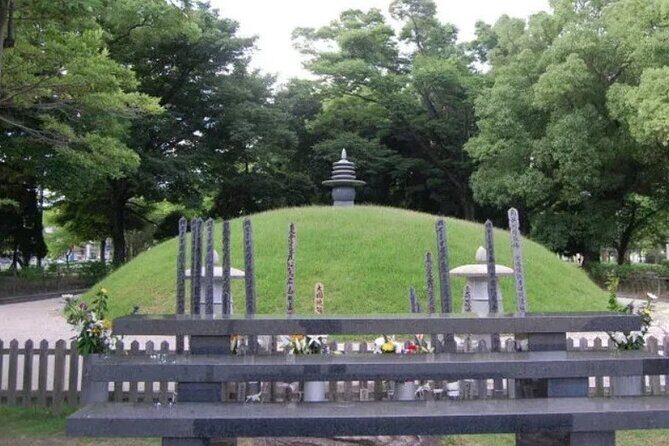
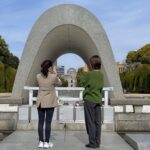
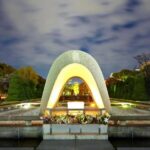
After the museum, you move to the Peace Park area and stop at the Cenotaph for the Atomic Bomb Victims. This is a shorter stop (about 5 minutes), but it’s not “just a photo stop.” The guide explains what the cenotaph represents and why it’s placed where it is in the larger peace memorial space.
This is one of those moments that works best when you don’t rush it. If you’re the kind of visitor who wants a moment of quiet, you’ll likely appreciate this stop being brief but intentional rather than dragged out.
Children’s Peace Monument: a powerful focus on what comes after
Next is the Children’s Peace Monument, with about 10 minutes on site. The guide explains its meaning, which helps you see the memorial not only as remembrance of what happened, but also as a message directed at the future.
What I like about including this stop is simple: it shifts the emotional lens. You still honor the victims, but you also see the effort to keep the story from turning into history-only trivia. It’s especially meaningful if you’re traveling with teens, or if you want Hiroshima to “stick” in your head for the right reasons.
Other Hiroshima walking tours in Hiroshima
Atomic Bomb Dome and the Aogiri tree: seeing survival in one view
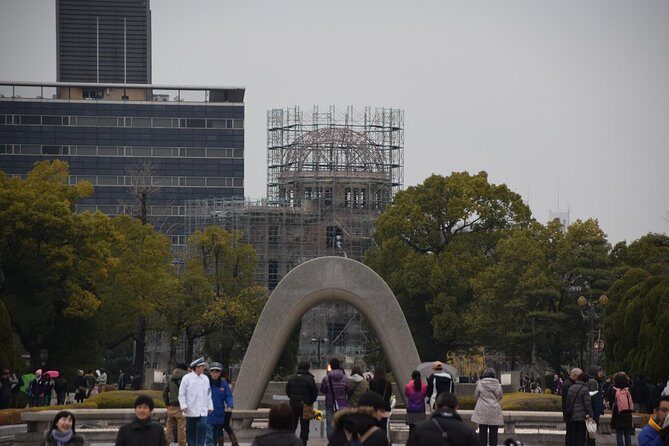
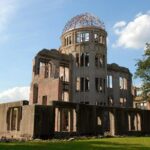
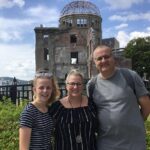
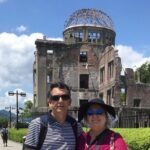
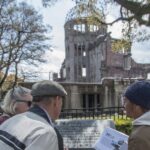
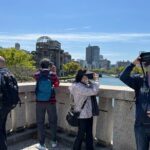
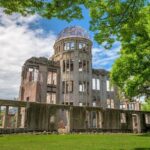
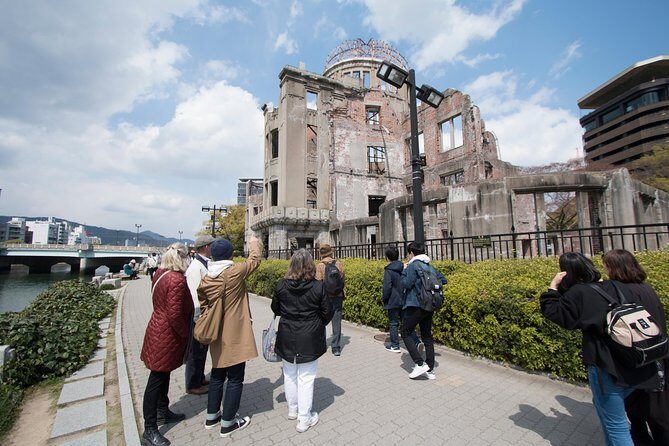
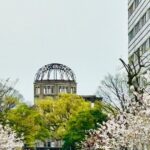
Then you get to one of the most recognizable scenes in Japan: the Atomic Bomb Dome. Plan on about 15 minutes here. The guide frames what you’re looking at—how this structure conveys the horror of August 6, 1945—and why it’s treated as a symbol for peace.
Also, you’ll walk past the area connected with the Aogiri (camphor) tree as part of the story of resilience. It’s one of the most moving “survival” images tied to Hiroshima, because it’s not an object made for remembrance. It’s living proof that life tried to keep going after impossible damage.
Two tips that help:
- Bring your phone camera, but also look with your eyes first. It’s easy to snap a shot and miss the emotional reason it’s here.
- If you’re sensitive to crowds, expect people near this icon. This stop is famous, so time your photos without blocking others.
Orizuru Tower lunch: the view that changes how you process everything

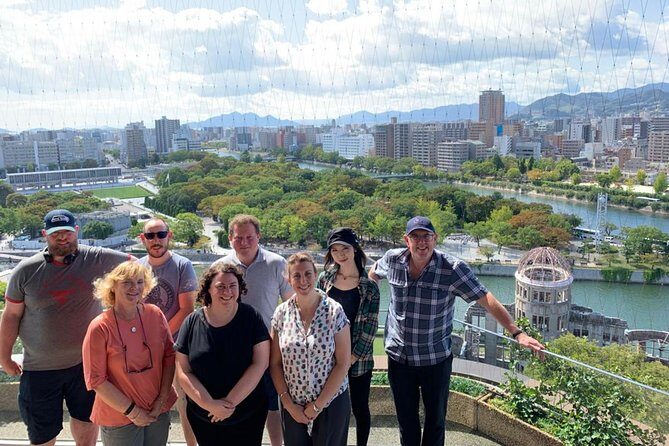
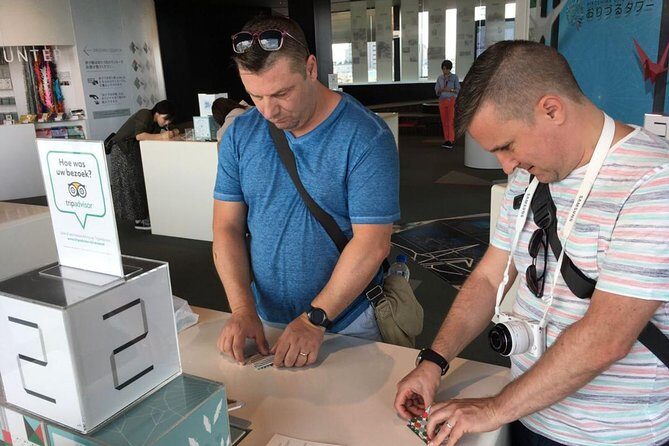
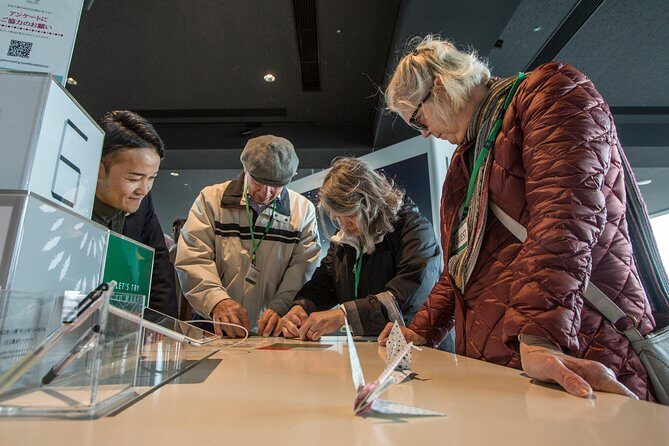
After the memorial stops, you head to Hiroshima Orizuru Tower for lunch. You eat at the top, then you get a panoramic view of modern Hiroshima. The lunch time is about 30 minutes.
This is where the tour’s pacing pays off. You’ve spent hours with remembrance. Then you step into a viewpoint that shows the city as it is now—an obvious contrast, but not a cold one. It’s the “and they rebuilt” chapter you can literally look at.
Food is included, and it’s a nice break in the middle of a heavy day. Also, the tour notes extra food and drinks aren’t included, so you’ll likely want water. On a warm day, you’ll feel it more than you expect.
Diet heads-up: gluten-free requests aren’t accommodated on this tour, and allergy-free guarantees aren’t provided because food may come from kitchens outside MagicalTrip. Vegetarian options are also limited (and Japanese restaurants can be tricky for strict diets). Still, I’ve seen at least one review mention vegan choices being available, which suggests there can be flexibility—but don’t assume. If you have diet needs, request them at least one day ahead.
Pacing, crowds, and weather: what can make or break the day
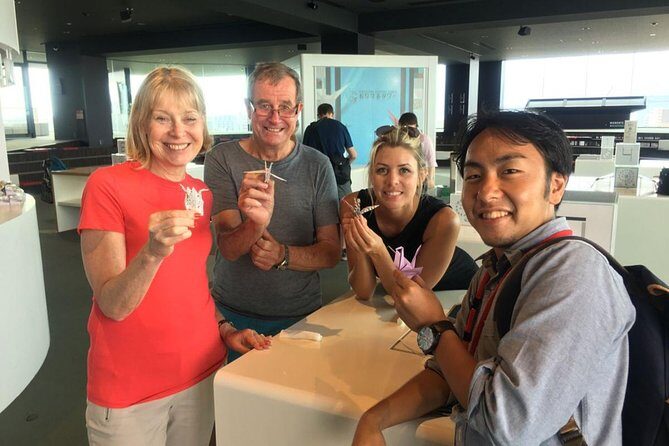
This is a 5-hour tour at a walking pace that’s described as easy and relaxed in feedback. With a small group (max 8), the guide can keep things moving without feeling like you’re herded through history.
Still, remember Hiroshima Peace Park is one of the most visited sites in the country. The negative feedback points to a simple reality: the museum can be crowded enough to reduce your time in certain rooms. If your goal is to see every last exhibit, you may need to treat the museum as “guided highlights” rather than “complete coverage.”
Weather also matters. In summer, Hiroshima can be extremely hot and humid—up to 40°C (110°F). In winter, lows can drop to -5°C (20°F). The tour itself requires good weather, too. So pack smart:
- Bring water and a hat in warm months
- Wear comfortable walking shoes
- Use layers if you’re visiting in cooler weather
If you have mobility issues, the tour isn’t recommended. The guidance is clear: if walking is a challenge, consider a private tour option instead.
Price and value: what $94.84 buys you in Hiroshima
The price is $94.84 per person, and it’s actually easier to judge when you look at what’s included. You’re paying for:
- Admission to the Peace Memorial Museum
- Admission to Orizuru Tower
- A certified guide
- Lunch
- Tour photos
You’re also getting a structured route that takes you across major sites without you having to map each stop. That’s real value in a city where public transport is good, but historical areas can be spread out and emotionally draining to navigate solo.
MagicalTrip also includes group discounts, and the “mobile ticket” setup reduces friction on the day. In short: you’re not just buying entry tickets—you’re buying context, timing, and an adult who knows where to slow down.
Who should book this tour (and who might want a different plan)
This tour is a great fit if you want Hiroshima to feel understandable, respectful, and grounded in real human stories. The consistent praise across guides—people like Kinnei, Kaz, Mariko, Angela, Yuri, Hiro, Mizu, and others—suggests the best outcome happens when you appreciate guidance more than self-guiding.
It also suits people who like a plan. The route covers the key sites most visitors come for: Peace Memorial Park, museum time, cenotaph, children’s monument, Atomic Bomb Dome, and Orizuru Tower lunch.
Consider a different approach if:
- You need full control of museum time for a very specific exhibit list
- Your group has accessibility needs that make walking difficult (the tour warns against it)
- You have strict dietary requirements that you can’t adjust around (gluten-free isn’t accommodated; allergies aren’t guaranteed)
Should you book the Hiroshima Peace (Heiwa) Walking Tour?
Yes, if you want a thoughtful, small-group walk through Hiroshima’s most important memorial sites, with lunch and entry tickets handled. The biggest reason to book is the guide-led framing—history plus the human layer—plus the pacing that prevents the day from feeling like a rushed checklist.
I’d only hesitate if you know you’ll be unhappy in crowds or you’re expecting “complete museum coverage” no matter what. In that case, you might still go—but consider pairing it with extra time on your own so you can return to any area that you didn’t get to fully.
If your goal is to leave Hiroshima with meaning, not just photos, this tour is an excellent call.
FAQ
How long is the Hiroshima Peace (Heiwa) Walking Tour?
The tour is about 5 hours.
What’s included in the ticket price?
Entrance fees for the Peace Memorial Museum and Orizuru Tower, lunch, a MagicalTrip certified guide, and tour photos are included.
Where does the tour start and end?
It starts at MontbellJapan in Hiroshima (Naka Ward, Kamiyachō). It ends near the lunch restaurant area, at Souvenir Select HitotoKi Orizuru Tower 1F, and the activity ends near Chishaku-in Temple.
How many people are in the group?
The tour has a maximum of 8 travelers.
Is the tour suitable for people with mobility issues?
It’s not recommended for individuals with mobility issues. The guidance is to book a private tour if walking is difficult.
Can the tour accommodate gluten-free diets or allergies?
Gluten-free requests can’t be accommodated. Allergy-free or specific dietary restrictions aren’t guaranteed because food is prepared in kitchens outside MagicalTrip, and substitutions may not always be possible.
Are the museum exhibits appropriate for children?
Some exhibits include graphic imagery and may be disturbing for young children. Tell your guide if you have concerns.
What is the cancellation policy?
You can cancel up to 24 hours in advance for a full refund. If you cancel less than 24 hours before the start time, the amount paid won’t be refunded.