REVIEW · HIROSHIMA
The Journey of Hiroshima from Tragedy to Peace
Book on GetYourGuide →Operated by Peace Walk Hiroshima · Bookable on GetYourGuide
A single walk can hold a whole century. This Hiroshima Peace Memorial Park tour brings the story of before, during, and after the atomic bombing into one guided route, with stops built around remembrance and peace advocacy. I especially love how the tour centers the Atomic Bomb Dome and ends at the hypocenter, turning landmarks into real-world context you can feel in your chest.
One thing to consider: this is a serious walking itinerary and it is not suitable for people with mobility impairments.
In This Review
- Key things that make this tour worth your time
- Hiroshima Peace Memorial Park, told like a route you can follow
- Gates of Peace meeting point: start smart, then walk with purpose
- Mother and Baby in Storm to Dr. Marcel Junod: why compassion shows up in stone
- Norman Cousins and the Peace Memorials: linking writing to nuclear disarmament
- Peace Cenotaph and Flame of Peace: the names, the promise, the weight
- Hiroshima National Peace Memorial Hall: turning the story into evidence
- The 170-meter survival story: why distance suddenly matters
- Children’s Monument and Sadako Sasaki: paper cranes as a living symbol
- Korean Monument and Peace Bell: shared victims, shared responsibility
- Atomic Bomb Dome and the UNESCO angle: why survival still scares you
- End at the hypocenter: the pause that sticks with you
- Price and value: what $30 buys you here
- Who this tour fits best, and who should choose another plan
- Should you book this Hiroshima Peace Memorial Park tour?
- FAQ
- What language is the Hiroshima Peace Memorial Park tour offered in?
- Where do I meet the guide?
- What does the tour include, and what is not included?
- Is this tour suitable for people with mobility impairments?
- What’s the price, and can I pay later?
- What is the cancellation policy?
Key things that make this tour worth your time
- A guide with a Peace Studies degree who explains the events with care and context, not just facts.
- A stop-by-stop route through major memorials, including the Peace Cenotaph and Flame of Peace.
- Human stories, like a survival account from about 170 meters from the hypocenter.
- Broad remembrance, with tributes such as the Korean Monument and children’s memorials for Sadako Sasaki.
- The pacing and discussion time that keeps a heavy topic from turning into a hurried lecture.
Hiroshima Peace Memorial Park, told like a route you can follow
Hiroshima’s Peace Memorial Park can feel overwhelming when you first arrive. You see plaques and statues, but it’s easy to lose the thread: what came first, what happened, and what changed afterward. This tour is designed to solve that problem by moving you through the key sites in a logical order, so the meaning of each stop connects to the next.
I like that the experience is built around clear themes: tragedy, survival, and the push for peace and nuclear disarmament. The guide doesn’t just point out sights. They help you understand why certain places exist in the first place, and what visitors are meant to do with that knowledge—remember, reflect, and carry the message home.
And yes, it’s emotionally heavy. The best part is that you don’t just leave with sadness. You leave with a direction: Hiroshima’s commitment to peace is shown through memorial design, names, and symbols that keep the conversation going.
If you're still narrowing it down, here are other tours in Hiroshima we've reviewed.
Gates of Peace meeting point: start smart, then walk with purpose
Your tour starts at the Gates of Peace, in front of the Italian restaurant Mario. This matters more than you might think. It helps you get oriented fast, before you’re fully inside the memorial area where the symbolism can blur together.
Once you meet your guide, the group gathers and prepares for an immersive walk in English. The tone from the start is calm but serious. That sets you up well for what’s next, because several stops are designed to make you pause, not just take photos.
From there, you’ll move at a pace that gives you time for questions and discussion. In feedback, people liked that the walk felt measured and not rushed, with enough pauses for photos and thinking. One person even mentioned an afternoon timing around 4:30 pm as a nice way to escape the day’s heat. If that matches your schedule, it’s a practical plus.
Mother and Baby in Storm to Dr. Marcel Junod: why compassion shows up in stone
The first meaningful stop is the Mother and Baby in Storm statue. It’s a powerful image of care and survival instincts that appear in the aftermath of unimaginable violence. I like this start because it frames the story with a human lens. Before you get into details of the bombing itself, you’re reminded that people were still people—holding each other, trying to live.
Next you’ll visit the Dr. Marcel Junod Memorial. Junod is presented as a Swiss physician who became a humanitarian hero after the bombing. This is where the tour widens from Hiroshima’s suffering into a global response. It’s not only about what happened to one city. It’s also about how outside help and witnesses can shape history and moral urgency.
A good guide here makes a difference. In the feedback you can see a pattern: guides like Ali and Wajid were singled out for explaining clearly and answering questions well. That skill is especially important around memorials, because symbols can raise more questions than they answer.
Norman Cousins and the Peace Memorials: linking writing to nuclear disarmament
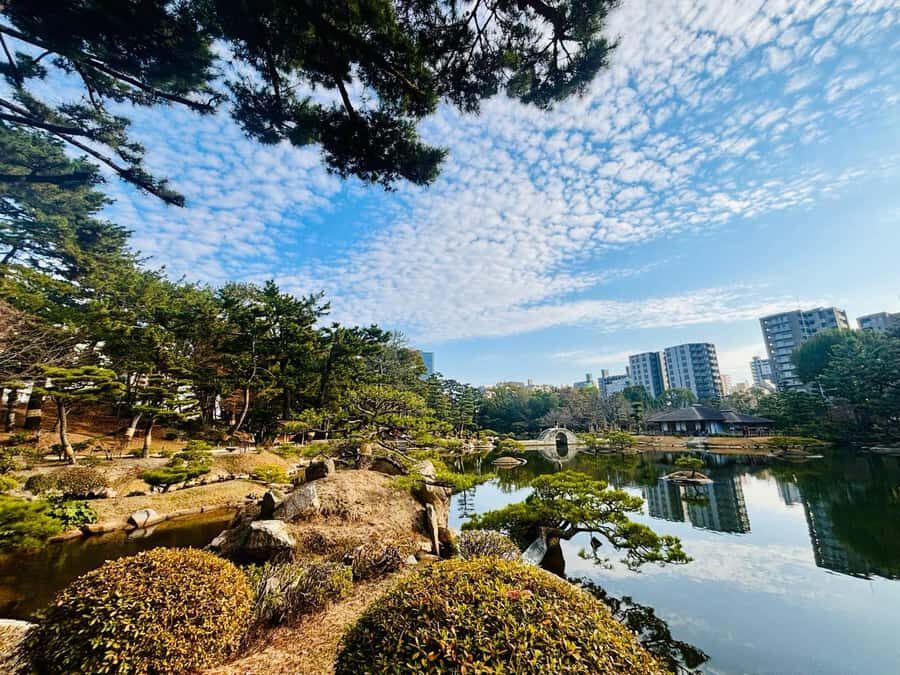
As you continue, the Norman Cousins Peace Memorial is a key stop for understanding Hiroshima’s peace message beyond national borders. Cousins was an American author and peace activist, and the memorial is tied to nuclear disarmament advocacy.
This stop helps you see something many visitors miss at first: Hiroshima’s peace movement isn’t only local mourning. It’s part of a wider international conversation about how nuclear weapons affect human life and how societies should respond. When the guide connects the memorial to its peace activism meaning, the park feels less like a set of unrelated monuments and more like an argument for a different future.
You’ll also see the Peace Cenotaph and later the Flame of Peace, and those are where the tour turns emotional again. Cousins is the bridge: the memorials are designed not just to grieve, but to push for action.
Peace Cenotaph and Flame of Peace: the names, the promise, the weight
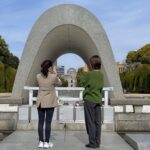
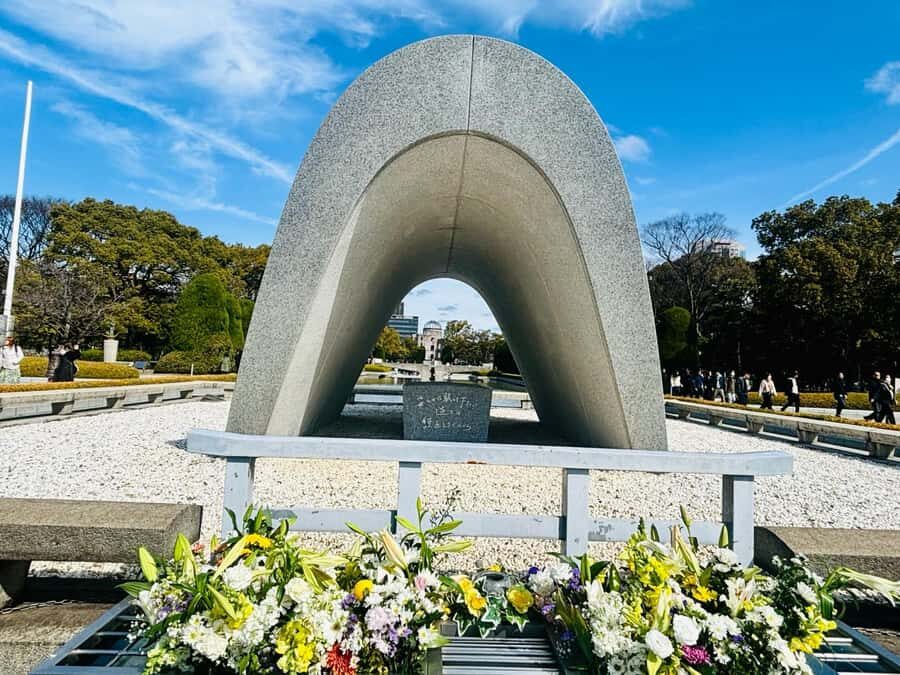
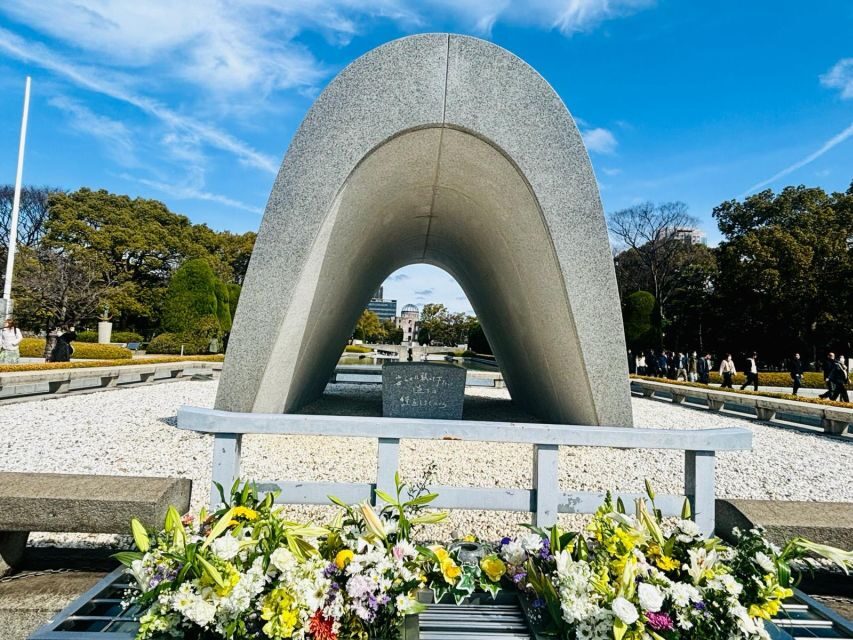
The Peace Cenotaph is a curved stone structure, and the focus is inside: the names of atomic bomb victims. This is one of those places where you should plan to slow down and actually take in what’s in front of you.
Next is the Flame of Peace. The eternal flame is described as a promise that it will remain lit until the last nuclear weapon is eliminated from the earth. That sentence changes the feeling of the stop. It stops being only about remembrance and becomes a statement about ongoing responsibility.
I find this pairing effective because it gives you two angles at once:
- the intimate scale of individual names
- the long timeline of a world without nuclear weapons
A guide who knows how to pace here will keep it respectful without making it stiff. In feedback, people praised guides for the right amount of walking, discussion, and photos, which helps you absorb stops like this instead of rushing past them.
Hiroshima National Peace Memorial Hall: turning the story into evidence
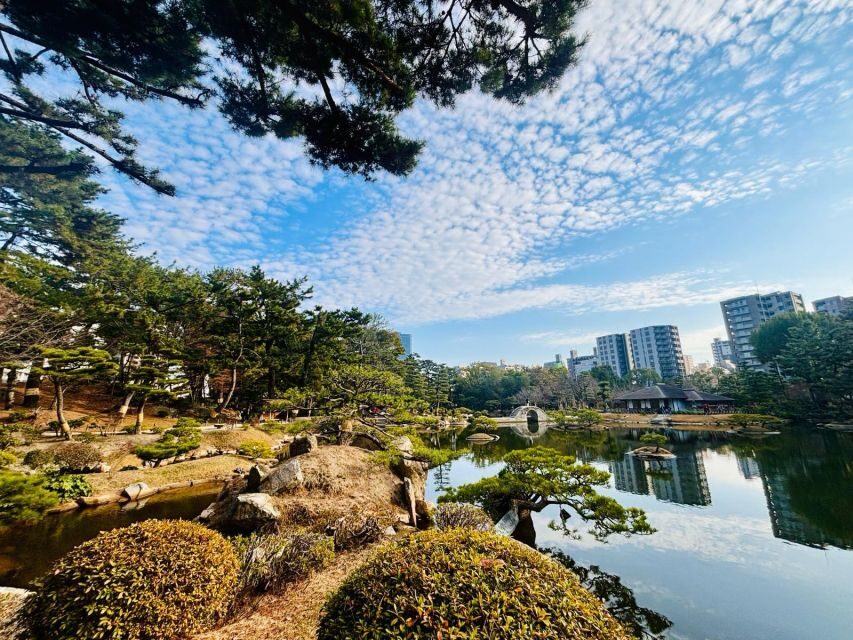
After the cenotaph and flame, the route includes the Hiroshima National Peace Memorial Hall for the Atomic Bomb Victims. This hall is where you can see an extensive archive and memorial information about those who lost their lives.
One practical note: entrance to the museum isn’t included in the tour package you’re purchasing here. So if you want that indoor layer, plan to pay separately for any museum access. Still, the guide’s explanation is valuable even if you only spend a limited amount of time indoors, because it helps you understand what the archive represents and why it was built.
This is where the tour becomes more than a walk among outdoor statues. It becomes a structured understanding of what happened and what evidence and records mean for long-term memory.
The 170-meter survival story: why distance suddenly matters
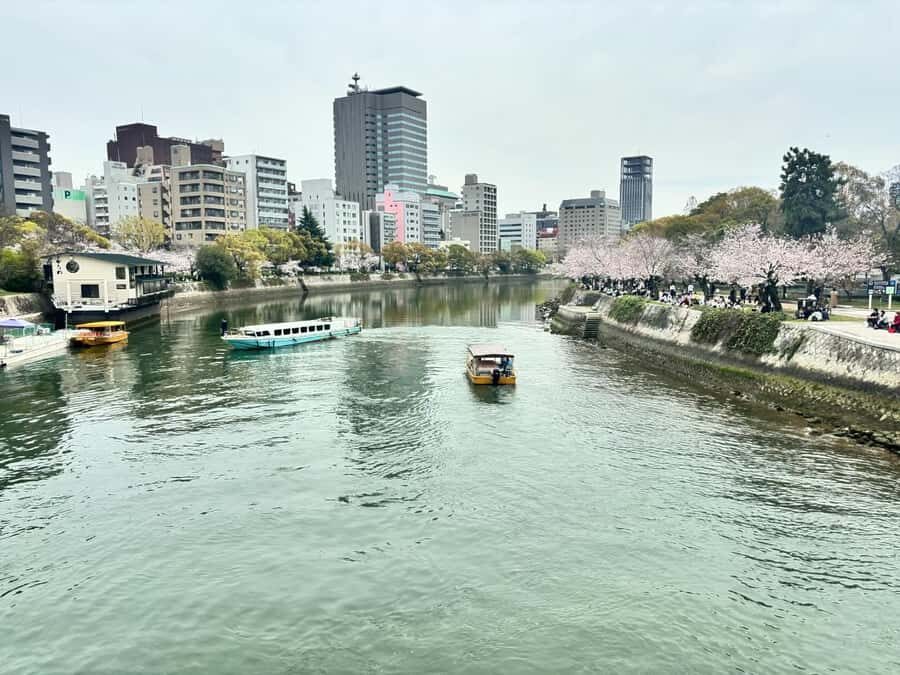
At the Hiroshima Peace Park Rest House, the tour shares the survival account of a resident who was about 170 meters from the hypocenter during the explosion.
That number can sound abstract until you’re standing on the ground where it’s being discussed. I like that the tour uses proximity to turn the scale of the bombing into something you can picture. You start thinking in meters and seconds, not headlines.
This stop also balances the park’s heavier symbolism with resilience. It’s not sugarcoated. But it focuses on the human capacity to endure and rebuild. In other words, it gives you a thread of recovery without changing the truth of what happened.
Children’s Monument and Sadako Sasaki: paper cranes as a living symbol
The children’s portion of the route is anchored at the Children’s Monument, dedicated to Sadako Sasaki and other children affected by the atomic bomb. The tribute includes colorful paper cranes, which symbolize peace and hope for a world free of nuclear weapons.
This stop is often where visitors shift from sorrow to connection. Sadako’s story is commonly known, but in this setting it reads differently because you’re surrounded by other memorials that emphasize different kinds of loss and responsibility. The cranes make the message feel personal, not abstract.
Also, this is a good place for a moment of quiet. If you’re the type who wants to write down a few thoughts afterward, bring a small notebook or note app. A stop like this can produce a lot of feelings fast, and having a place to process can help.
Korean Monument and Peace Bell: shared victims, shared responsibility
The tour also includes the Korean Monument, honoring Korean victims of the bombing. This matters because it broadens the story. Hiroshima’s tragedy was not limited to one group of people, and peace messaging loses something when it becomes too narrow.
After that, you’ll visit the Peace Bell. The idea is simple: you ring it in remembrance, and it becomes a collective call for peace. If you’re visiting with friends or family, this is a good moment for everyone to share a quiet, personal reflection. No grand speeches needed. The bell is the action.
Atomic Bomb Dome and the UNESCO angle: why survival still scares you
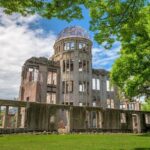
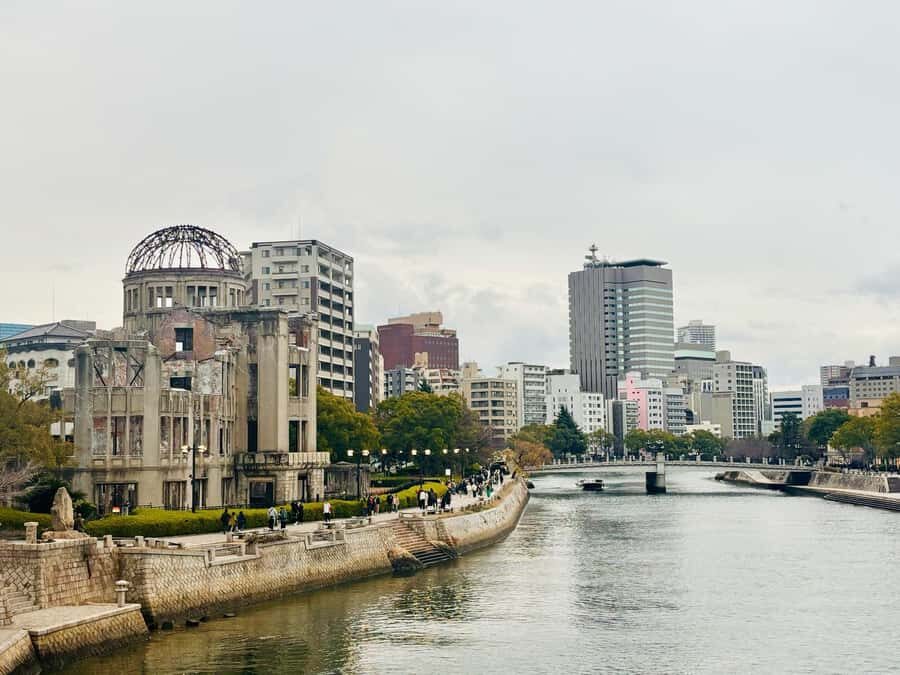
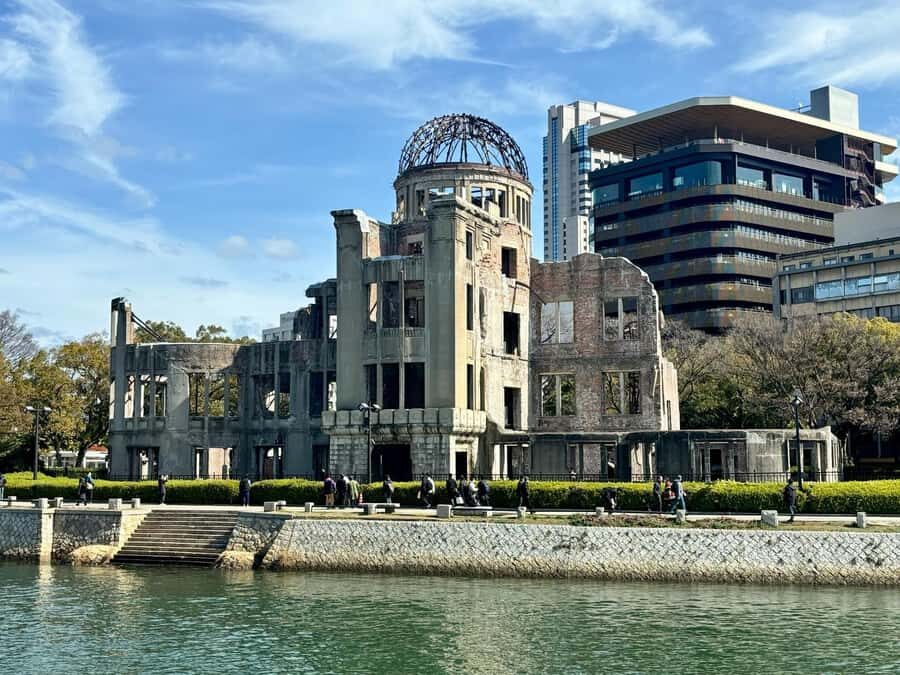
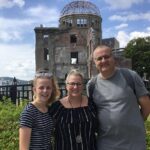
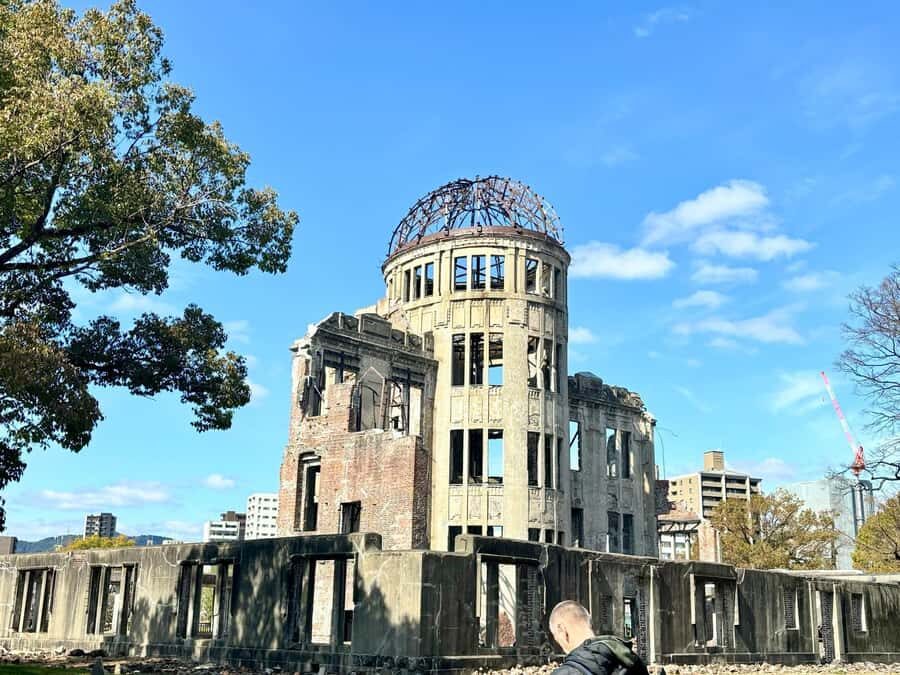
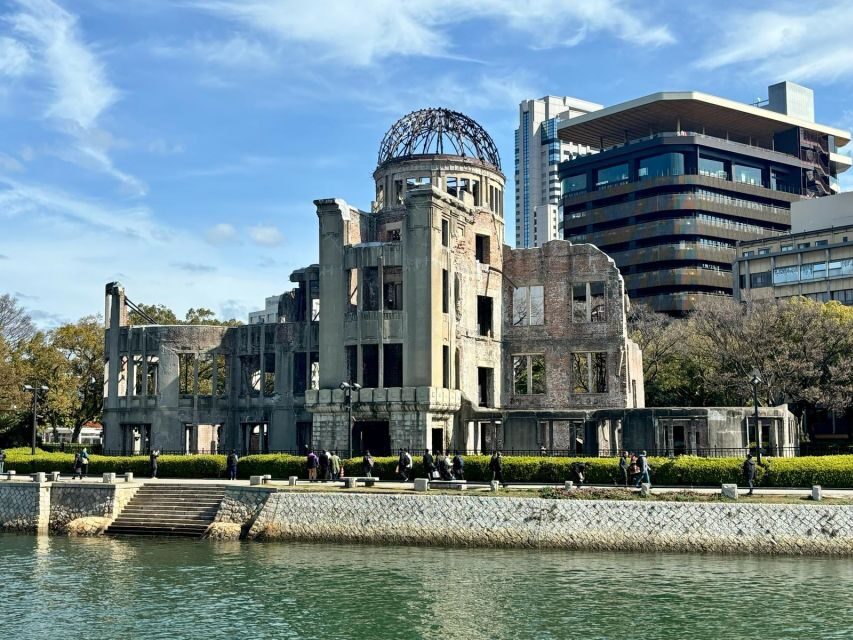
Then you reach the iconic Atomic Bomb Dome, a UNESCO World Heritage Site. The guide explains how it survived against incredible odds, and why that survival is so haunting. This is where the park’s themes snap into a single image: a structure that remained standing while the world around it was changed beyond repair.
I like how the tour treats the dome as more than a photo spot. You’re not only seeing a landmark. You’re being asked to consider what it means that something built for an earlier life endured long enough to become a warning for later generations.
In feedback, people praised guides such as Ali and Zunera for knowledge and for keeping a comfortable pace while still covering what matters. For a site as famous as this one, that guidance helps you avoid the usual pattern of staring, taking pictures, and moving on without really absorbing why the dome is kept.
End at the hypocenter: the pause that sticks with you
Your walk concludes at the hypocenter, the point directly under the explosion. Here, you’ll take a moment for deep reflection. This final pause is part of what makes the tour feel complete. You don’t just see remembrance from the outside. You end at the origin point of the event, which forces your mind to slow down.
The group returns back to the meeting point at the Gates of Peace. That loop is practical: you don’t end stranded, and you can continue your day with a clearer sense of where everything is.
If you’re wondering what to do immediately after, I suggest this: give yourself time before planning something intense. A memorial walk like this can shift your emotions. Even if you feel calm during the tour, the impact often hits later.
Price and value: what $30 buys you here
The price is about $30 per person, and for Hiroshima Peace Memorial Park, that’s solid value because the tour includes a guided route through multiple major memorial points. You’re not only paying for movement around a park. You’re paying for interpretation and context.
Two things make the cost feel fair:
- a professional guide with a Peace Studies degree guiding the story in English
- access to a route that covers major sites, including the Atomic Bomb Dome, the Hiroshima National Peace Memorial Hall, children’s memorials, and the Flame of Peace
You’ll still want to budget a bit for anything not included. Food isn’t included, and museum entrance isn’t included. But if you plan to snack before or after and treat museum entry as optional based on your interests, the core value remains the guided understanding of the whole memorial system.
Also, the tour has an excellent rating (4.8) across 44 reviews, and the comments consistently point to guide quality, clarity, and pacing.
Who this tour fits best, and who should choose another plan
This works best if you want a structured walkthrough with time to ask questions. If you’re the kind of person who likes to understand why a memorial is shaped the way it is, this tour gives you that meaning. It also suits group travelers who want a shared, respectful experience without turning it into a silent march.
If you’re traveling with limited walking ability, the tour is not suitable for mobility impairments. The park area can require steady walking between stops, and the route is designed around visiting multiple sites efficiently.
If you’re sensitive to heavy topics, plan for that emotionally. This is not a light sightseeing route. But if you handle intense history responsibly, you’ll likely find it worth your time because the tour connects grief to peace advocacy in a clear sequence.
Should you book this Hiroshima Peace Memorial Park tour?
If you want to understand Hiroshima with structure, this is a strong choice. The guide-led pacing, the focus on key memorials, and the inclusion of survivor and advocacy themes give you a fuller picture than wandering on your own.
I’d book it if:
- you want English guidance through the major Peace Memorial Park sites
- you like learning from specific stories and symbols, not just reading signs
- you’re willing to slow down and reflect at multiple stops
I might skip it if:
- you can’t manage a walking-focused itinerary
- you prefer only light outdoor sightseeing and would rather skip structured reflection moments
- you’re hoping food and museum entry are included in the price
FAQ
What language is the Hiroshima Peace Memorial Park tour offered in?
The tour is offered in English.
Where do I meet the guide?
Meet your guide at the Gates of Peace, in front of the Italian restaurant Mario.
What does the tour include, and what is not included?
The tour includes Hiroshima Peace Memorial Park, the Atomic Bomb Dome, Hiroshima Peace Memorial Hall for Atomic Bomb Victims, Children monuments, and the Flame of Peace. Food is not included, and entrance to the museum is not included.
Is this tour suitable for people with mobility impairments?
No. It is not suitable for people with mobility impairments.
What’s the price, and can I pay later?
The price is listed as $30 per person. There is a reserve & pay later option, meaning you can book and pay nothing today.
What is the cancellation policy?
You can cancel up to 24 hours in advance for a full refund.