REVIEW · HIROSHIMA
Cultural Activities :Kimono, tea ceremony, Calligraphy and Amulet
Book on Viator →Operated by Okeiko Japan · Bookable on Viator
Three traditions in one calm temple visit.
This short, focused experience in Miyajima gives you real hands-on practice with kimono-wearing cultural basics, plus photos sent by email after your lessons. I especially love how the day flows smoothly—no rushing between unrelated stops—and how you’re taught in a way that feels welcoming even if Japanese culture isn’t on your everyday radar. One possible drawback: it packs three activities into about 2 hours, so each lesson is brief rather than deep.
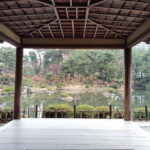
You start at Tokuju-ji Temple, founded around 300 years ago, in a setting with gardens that make the whole thing feel quieter and more grounded than most boxed cultural tours. You’ll leave with something you made (and can keep), plus a better sense of how these traditions fit together in daily life and ceremony. If you’re the type who wants hours and hours of instruction, you might prefer a longer class elsewhere, but for most people this is a great time-to-value pick.
In This Review
- Key things to know before you go
- Tokuju-ji Temple in Miyajima: the setting for calligraphy, tea, and amulets
- Wearing a Kimono and Apron: how to make the photos actually memorable
- Japanese calligraphy lesson: learning your name in Japanese
- Tea ceremony in 30 minutes: matcha, manners, and a slower rhythm
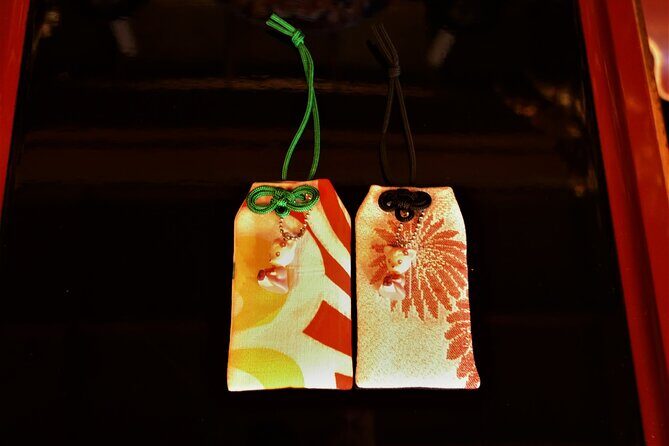
- Amulet-making: a protective keepsake with temple logic
- Price and logistics: what $171.73 buys you in real value
- Getting there at Okeiko Japan Miyajima: meeting point and timing tips
- Who should book this Miyajima cultural bundle?
- Should you book? My practical take before you commit
- FAQ
- FAQ
- How long does the experience last?
- What is the price per person?
- Where does the experience take place?
- What cultural activities are included?
- Do I wear traditional clothing during the lessons?
- Are photos included?
- Is the temple admission included?
- What’s the minimum age, and are kids allowed?
- Is there a group size limit?
- What’s the cancellation policy?
Key things to know before you go
- Tokuju-ji Temple setting: The lessons happen at a temple with gardens, not in a storefront workshop.
- Three hands-on activities: Calligraphy, a tea ceremony, and amulet-making happen in roughly one visit.
- You wear traditional clothing: A provided kimono and apron make it feel ceremonial, not just instructional.
- Name practice is part of it: You learn to write your name in Japanese during the calligraphy lesson.
- Photos by your teachers: They take pictures during the activities and send them to you by email.
- Small group size: The experience caps at 10 participants, so you’re not lost in a crowd.
Tokuju-ji Temple in Miyajima: the setting for calligraphy, tea, and amulets
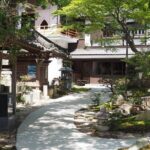
The heart of this experience is Tokuju-ji Temple in Miyajima (Hatsukaichi, Hiroshima). The temple was founded about 300 years ago, and the focus here includes a main Buddha called Kinseki jizo, associated with protection for children and pregnancy. There’s also an old story tied to that belief: an old couple wished for a baby after praying to Jizo, and they reportedly received a healthy boy—thanks for that, they built the temple.
That matters because it frames what you’re doing next. Calligraphy and the tea ceremony aren’t treated like show-and-tell craft projects. Instead, they’re presented in a space where ceremony and everyday intention overlap. You’ll also hear that in Miyajima, religious life is layered—temples here can have connections that overlap with the broader world of Itsukushima Shrine traditions (Shinto influence is part of the cultural landscape).
Another nice touch: the temple visit comes with an admission ticket included (about a 20-minute portion). So even though you’re doing three lessons, you also get that “you’re really here” feeling inside an old religious site, not just at a themed activity corner.
Other tea ceremony tours in Hiroshima

Wearing a Kimono and Apron: how to make the photos actually memorable
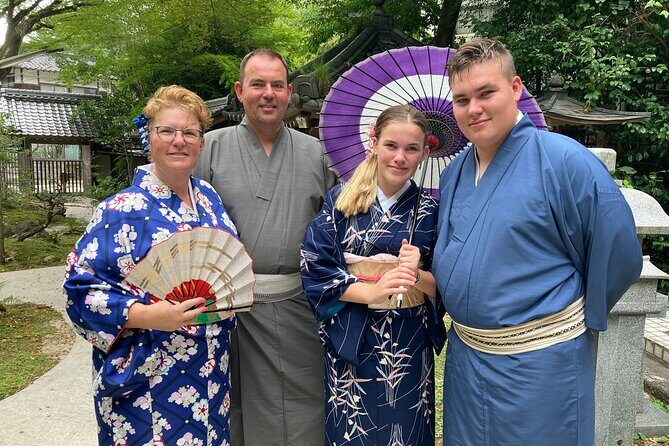
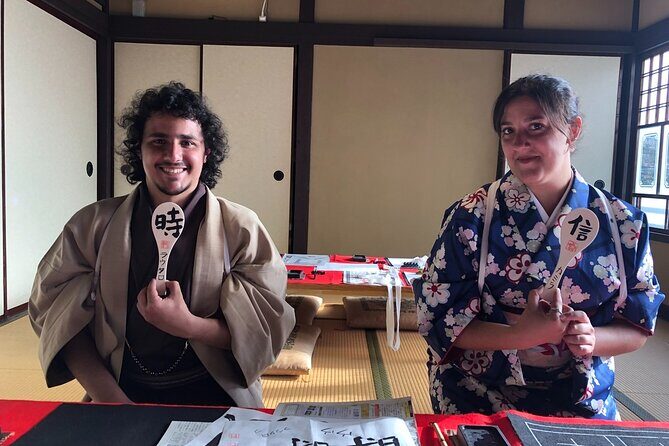
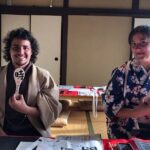
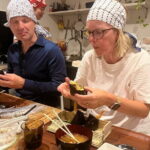
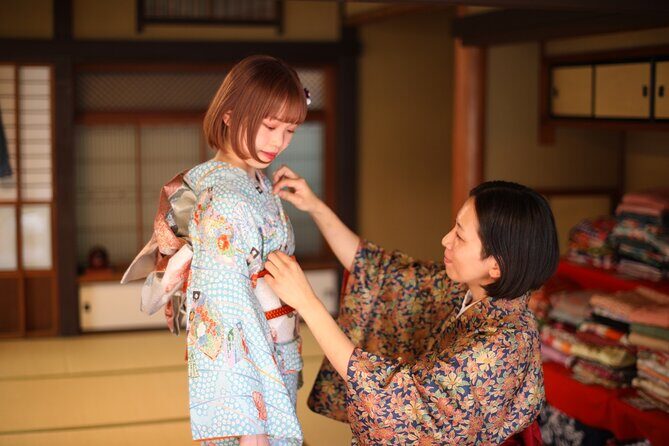
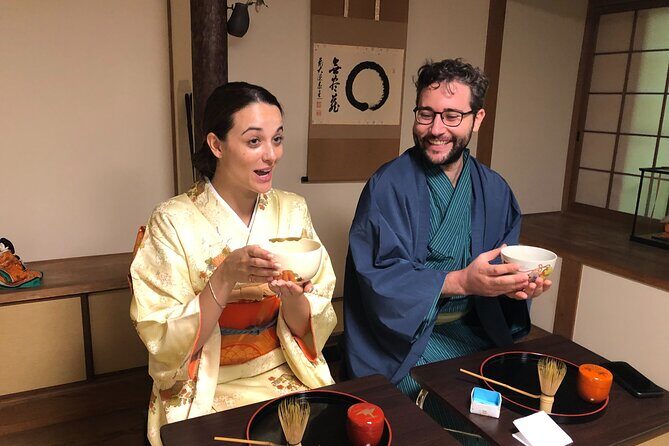
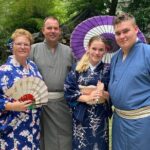
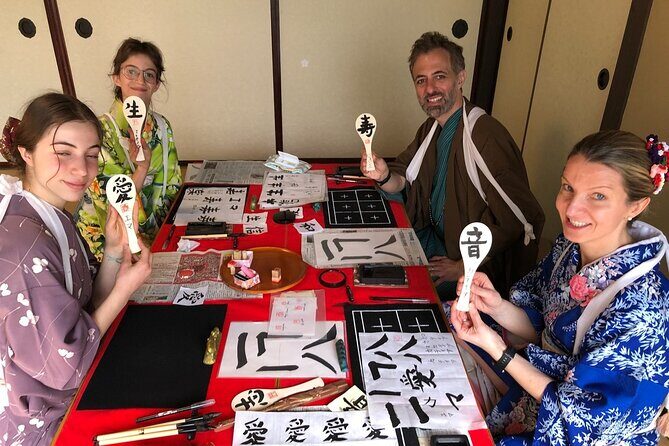
One of the best parts is that you don’t just watch from outside the ritual—you dress for it. You’ll be provided a kimono along with a traditional apron, and you’ll wear them through the activities. That instantly changes the whole mood. It’s not only visual; it also slows you down just enough to pay attention to what you’re being taught.
Then there’s the photo angle. Your teachers take pictures during your lessons and then send them to you by email. In other words, you’re not constantly fiddling with your camera while trying to learn brush strokes, tea steps, or an amulet technique. You can focus on the activity, and you still get the commemorative shots that match the setting.
Practical tip: arrive with a little extra breathing room if your schedule allows. One practical lesson from people who go is that getting there a bit early gives you time to settle into the kimono and enjoy the gardens before the main instruction starts. Even if you don’t add extra time, plan for the fact that dressing takes a moment, and you’ll want to be unhurried.
Japanese calligraphy lesson: learning your name in Japanese
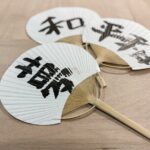
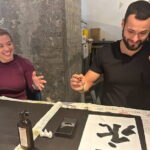
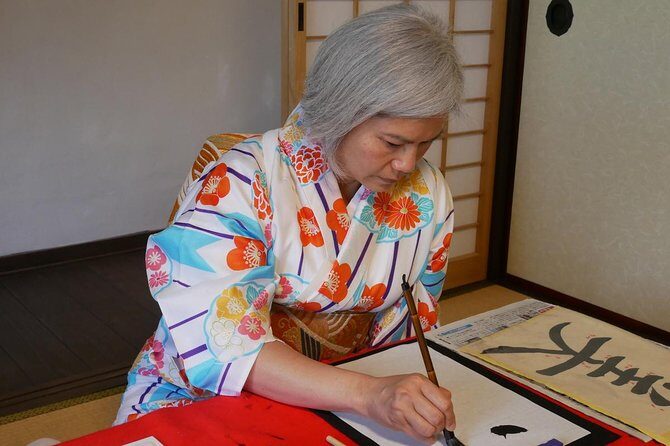
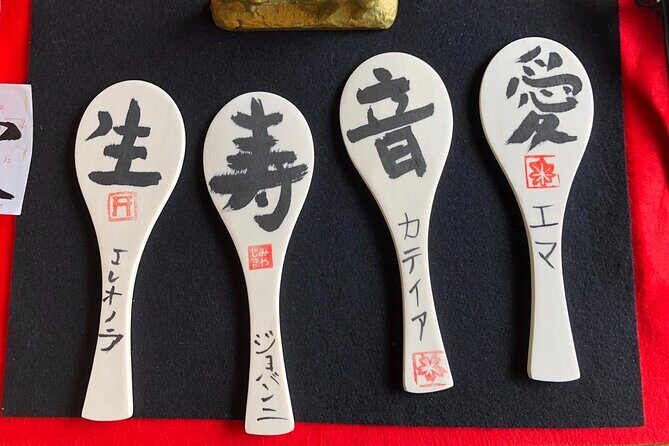
The calligraphy portion is about half an hour. The goal is straightforward: you’ll learn how to write your name in Japanese. That’s a smart choice for a first-timer class because it’s personal. You don’t have to memorize art history or master a complex character set on day one. You work toward something you can immediately recognize as yours.
Here’s what I like about this format: it turns calligraphy into a practical skill, not just a performance. You’re not trying to copy a fancy masterpiece from the get-go. You’re learning the process and the feel of the strokes so you can write something meaningful in a way that reflects Japanese writing conventions.
In a temple setting, calligraphy also feels more ceremonial. You’re less likely to treat it like a quick souvenir craft. Instead, you get the sense that writing has a rhythm—something you do with care.
Potential consideration: since the class is time-limited, you probably won’t end up with a perfect “masterwork” on the first try. Expect progress and guidance more than perfection.
Tea ceremony in 30 minutes: matcha, manners, and a slower rhythm
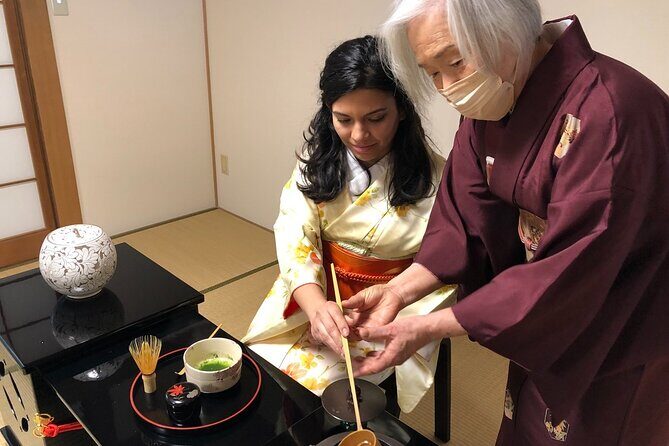
Next is the tea ceremony, also about half an hour. If you’ve only seen tea ceremonies as a cultural performance, this one is closer to a practical introduction. You learn how the ceremony works and you get to participate rather than just watch.
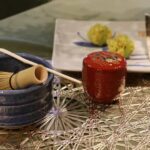
From the way this lesson is taught, you can expect to learn the basics of preparing matcha and then performing the ceremony steps. You’ll likely talk through what’s happening along the way so you understand the order of actions, not just the motions.
The value here isn’t only the tea itself. It’s the pace. You’re in a centuries-old temple environment, wearing traditional clothing, and doing a ritual that encourages controlled movements. That’s why this part tends to stick with people. It doesn’t feel like a checklist; it feels like a short practice in paying attention.
One more practical note: because time is tight, you won’t have a long, lecture-style explanation of every symbolism detail. What you get is enough to understand the structure and make your own participation feel meaningful.
Amulet-making: a protective keepsake with temple logic
The third activity is amulet-making. This is often the most surprising part for people, because it’s less common than kimono dressing or calligraphy workshops. Here, it’s treated as an intentional craft tied to temple belief—again, not just a decorative item.
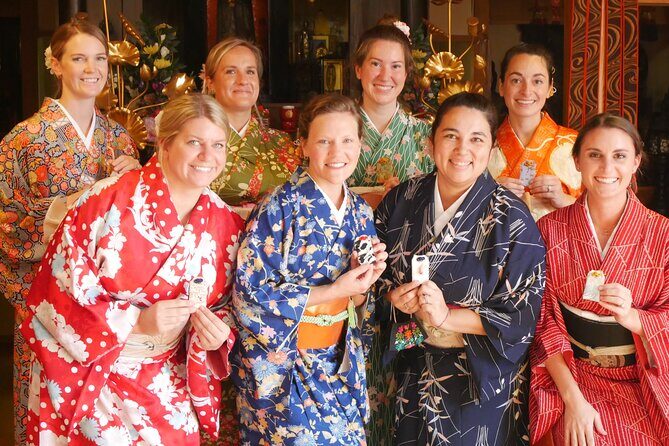
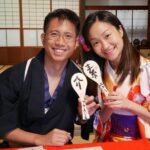
You’ll learn how to make the amulet during the lesson, and you’ll leave with a wearable or keepable result (depending on the amulet style you create in class). The idea is that it’s connected to protection and good fortune, which fits naturally with the temple’s focus on Jizo and guardianship.
The reason I think this is a great “third stop” is pacing. After writing and tea, your brain has switched modes. Amulet-making becomes a hands-on focus that doesn’t require the same kind of memory or sequence. It’s a nice reset before you finish the experience.
Possible drawback: if you’re hoping to learn deep background theology or symbolism beyond the lesson level, the time won’t cover that. But for most visitors, the hands-on act plus the temple context is exactly right.
Other kimono tours in Hiroshima

Price and logistics: what $171.73 buys you in real value
At $171.73 per person, this isn’t a budget activity. The real question is value, and here the math makes sense.
You’re paying for four major things:
- Three structured lessons (calligraphy, tea ceremony, amulet-making) packed into about 2 hours
- Provided kimono and apron so you don’t need to find rentals or figure out fitting
- Temple admission included (the experience includes a ticket portion)
- Photos taken during the activities, then sent to you by email
Then there’s the size and attention factor. With a maximum of 10 participants, you’re not stuck waiting for a guide to notice you. Small group teaching matters most for calligraphy and hands-on rituals. You also won’t spend time herding across town between unrelated activities.
If you’re comparing alternatives, think about what you’d pay to do these separately. A standalone tea ceremony with instruction, plus a calligraphy workshop, plus an amulet or craft lesson, and plus clothing—often becomes more expensive and more complicated. This bundle helps you get “the full set” without juggling multiple bookings and locations.
One scheduling note: it’s commonly booked around 52 days in advance on average. That’s a hint that popular time slots can disappear. If your dates are fixed, you’ll likely feel better booking early.
Getting there at Okeiko Japan Miyajima: meeting point and timing tips
You’ll meet at Okeiko Japan Miyajima, address 741-1 Miyajimachō, Hatsukaichi, Hiroshima 739-0588, Japan. The activity ends back at the same meeting point. It’s also listed as near public transportation, which makes it easier to plug into a day on Miyajima without needing a private plan.
You’ll use a mobile ticket, so keep your phone charged and ready to show it.
Timeline-wise, plan for the overall experience to be about 2 hours. Inside that window, the calligraphy, tea ceremony, and amulet-making each take roughly half an hour, with the temple admission included as part of the flow. That means you shouldn’t schedule a tight connection right after—give yourself a buffer.
What to bring is simple: wear comfortable clothing under the kimono dressing process, and bring a mindset that this is a hands-on cultural lesson, not a rapid museum stop.
Who should book this Miyajima cultural bundle?
This experience is a strong fit if you want:
- Hands-on culture in a short time (not just photos and walking)
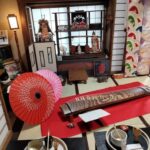
- A temple setting that adds meaning to the activities
- A “try it once” format for calligraphy, tea ceremony, and an amulet
- Kimono dressing without the stress of organizing rentals
It also works for families with kids—there’s a stated minimum age of 6, and children must be with an adult. If you’re traveling as a couple, this kind of structured teaching also tends to feel romantic in a quiet way: you’re doing the same ritual steps side by side while the setting does most of the atmosphere-building.
Who might skip it? If you’re already a serious tea or calligraphy practitioner who expects long technical coaching, the time limits may frustrate you. This is introductory and guided—excellent for first contact, less ideal for advanced deep practice.
Should you book? My practical take before you commit
If you’re spending a day or half-day in Miyajima and you want a cultural experience that feels real—inside an actual temple, with traditional clothing, instruction, and a keepsake—this is an easy yes.
I’d especially recommend it when your schedule is tight. You get three traditions stitched together into one smooth program, and you leave with photos emailed to you plus the tangible results of your own work. At $171.73, it’s not cheap, but it’s also not random. It’s priced like a small-group, guided cultural workshop with clothing and temple context included.
If you still feel on the fence, ask yourself this: do you want a quick, guided introduction to several Japanese arts at once? If yes, book it and plan to enjoy the process, not just the outcome. If you only want one activity—say, calligraphy—then it may be worth looking for a single longer lesson instead.
FAQ
FAQ
How long does the experience last?
It lasts about 2 hours (approx.).
What is the price per person?
The price is $171.73 per person.
Where does the experience take place?
The activities are held at Tokuju-ji Temple in Miyajima. The meeting point is Okeiko Japan Miyajima at 741-1 Miyajimachō, Hatsukaichi, Hiroshima 739-0588.
What cultural activities are included?
You’ll take part in Japanese calligraphy (learning to write your name in Japanese), a tea ceremony, and amulet-making.
Do I wear traditional clothing during the lessons?
Yes. You’ll be provided a kimono and a traditional apron to wear during your lessons.
Are photos included?
Yes. Your teachers take photos during the lessons and send them to you via email.
Is the temple admission included?
Yes. Admission ticket is included, with a listed 20 minutes for that portion.
What’s the minimum age, and are kids allowed?
The minimum age is 6. Children must be accompanied by an adult.
Is there a group size limit?
Yes. The experience has a maximum of 10 travelers.
What’s the cancellation policy?
Free cancellation is available up to 24 hours in advance for a full refund. If you cancel less than 24 hours before the experience starts, the amount paid will not be refunded.