REVIEW · HIROSHIMA
Half Day Private Guided Walking Tour in Hiroshima City
Book on Viator →Operated by Hiroshima custom tour by certified guide Pancho (in English) · Bookable on Viator
One Hiroshima detail hits fast. This private 4-hour walk turns major memorial landmarks into something personal and specific, led by Pancho. You’ll follow a route built around reflection, but you won’t feel stuck in a lecture.
Two things I like right away: the guide’s family perspective and how the pacing keeps you moving between meaningful stops like the Hypocenter monument and the Peace Park area. Second, you get a real break for lunch near Peace Memorial Park, with choices like okonomiyaki, ramen, or sushi.
One consideration: lunch is on you, and some ticketed items (like the Peace Memorial Museum) cost extra—so plan your day budget before you go.
In This Review
- Key highlights to know before you go
- Why Pancho’s Hiroshima walk feels more than a checklist
- Meeting in Hiroshima: station platform or hotel pickup options
- Shirakami Shrine to the Hypocenter monument: where the route turns serious
- Saiko-ji Temple and the Atomic Bomb Dome: evidence, not abstraction
- Peace Flame and the Rest House: a calmer pause in the middle
- Children’s Peace Monument to the cenotaph: why the symbols matter
- Lunch near Peace Memorial Park: simple, local, and adaptable
- Price and value: is $200 per person fair here?
- Who should book this Hiroshima private walking tour
- Final thoughts: should you book it?
- FAQ
- How long is the Half Day Private Guided Walking Tour in Hiroshima City?
- Is the tour private or shared with other groups?
- Where can I meet the guide in Hiroshima?
- Is lunch included?
- Are entrance fees included?
- How does transportation work?
- Do I get a ticket on my phone?
- Can I bring a service animal?
- What’s the cancellation window?
Key highlights to know before you go
- A guide with family ties to the A-bomb story: Pancho shares history through a lived connection, not just dates and facts
- Four-hour route built around the Peace Memorial Park core: you hit major sites without trying to cover everything
- Shirakami Shrine plus A-bomb survivorship details: you stop at a shrine with a specific background tied to Hiroshima’s targeting
- Hands-on reflection options: the Rest House stop includes a small museum/origami experience, and Pancho’s crane teaching shows up often
- Lunch is flexible and request-based: you’ll eat near Peace Memorial Park with vegetarian/vegan/gluten-free options possible
- Private group, mobile ticket, and multiple meetup options: makes the morning easier to manage
Why Pancho’s Hiroshima walk feels more than a checklist
Hiroshima has famous sights for a reason. But a lot of tours can turn heavy places into a fast photo mission. This one tries hard to avoid that.
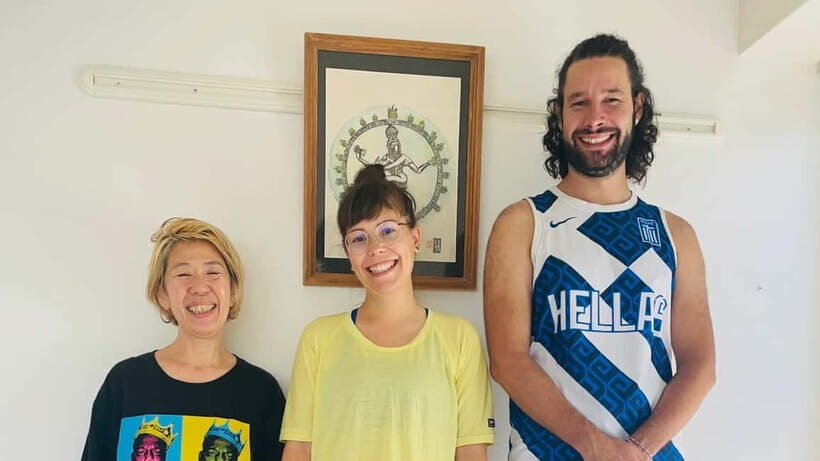
You’re led by Pancho, a certified guide in English and the son of an A-bomb survivor. That family connection is the point. He doesn’t just point to monuments; he ties each stop to what it meant for his family and for Hiroshima’s recovery. You can feel the difference when the guide explains not only what happened, but how survivors and their children live with the memory.
The tour also gives you structure. You start in the city’s transportation hub area, move through key memorial sites in a logical progression, then finish with the Peace Park monuments and a lunch stop in the same zone. For many people, that order matters: your brain needs a path, especially when the subject is emotionally intense.
Other Hiroshima walking tours in Hiroshima
Meeting in Hiroshima: station platform or hotel pickup options
Logistics can make or break a short tour. Here, the meeting plan is built to work with how you’re arriving.
You have three meetup options. If you’re coming into Hiroshima by bullet train, you can meet your guide at the Bullet train platform in Hiroshima station. If you’re staying nearby, you may be able to get a reception at your hotel. And there’s also a third setup described as meeting by alternative reception options.
The tour uses a mobile ticket, which helps you avoid paper delays and last-minute confusion. Also, communication is set up so you can exchange details ahead of time, and that tends to matter more than people expect—especially when you arrive with jet lag and want to find your guide quickly.
Practical tip: if you’re coordinating pickup from a hotel, double-check the exact lobby or entrance meeting point with your guide so you’re not hunting around. With a half day, every minute counts.
Shirakami Shrine to the Hypocenter monument: where the route turns serious
The early part of the walk sets the tone. You begin with Hiroshima Station, then head toward the first memorial-related stop: Shirakami Shrine.
This shrine looks like the Shinto shrines you might recognize from other parts of Japan, but it has a specific story tied to why Hiroshima became the A-bomb target. You also see survived trees from the bombing area. That combination works well because it gives you two ways to understand what you’re seeing: the spiritual setting around it, and the physical survivorship evidence.
After that, you reach the Hypocenter monument, the ground-level marker tied to the bomb’s center point. The stop is short—about ten minutes—but it’s a real anchor for the entire tour. This is where many people feel their thoughts snap into place: you’re not just seeing memorial art, you’re standing near the specific reference point the city uses to remember the event.
A thoughtful pacing note: the tour doesn’t try to overload you with explanations nonstop. You get moments to absorb and then move on.
Saiko-ji Temple and the Atomic Bomb Dome: evidence, not abstraction
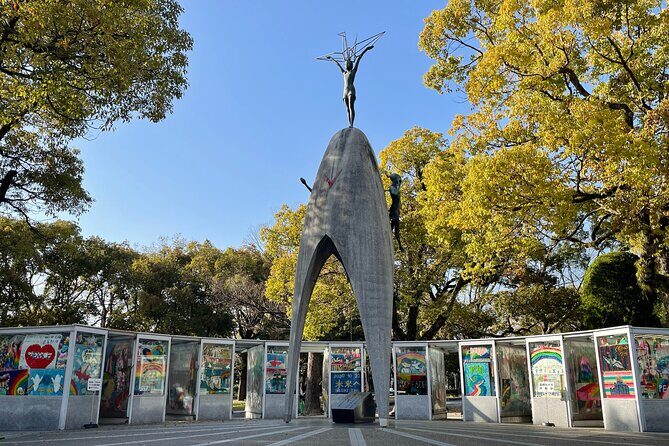
From the hypocenter reference point, the walk continues to two stops that people often consider the core visual “proof” sites: Saiko-ji Temple and the Atomic Bomb Dome.
At Saiko-ji Temple, the focus is on how the heat and blast were huge when the bomb exploded, with evidence of what happened. The tour doesn’t frame it as a science lesson. It’s more about helping you understand why certain structures and sites became part of Hiroshima’s memory culture.
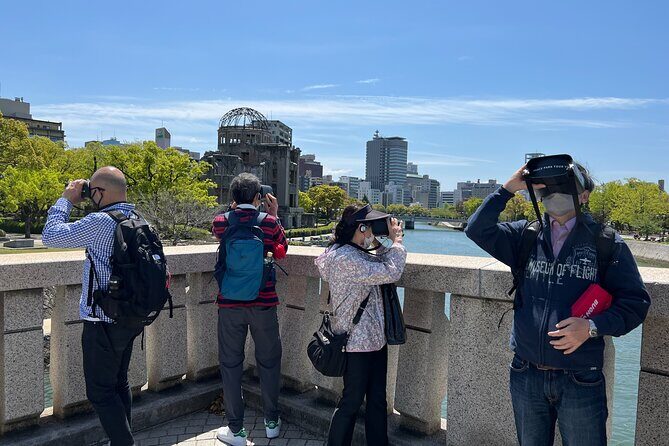
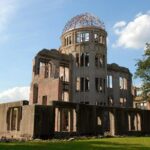
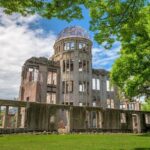
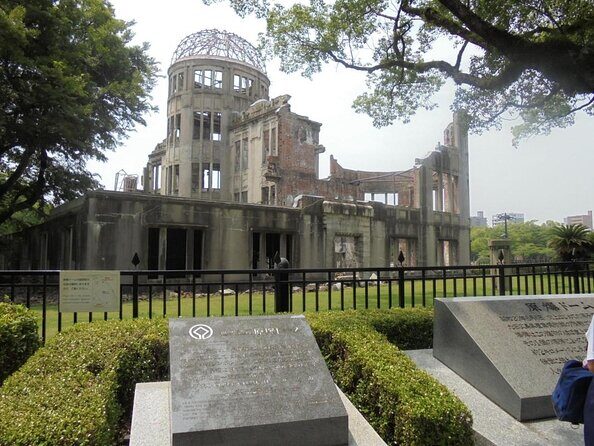
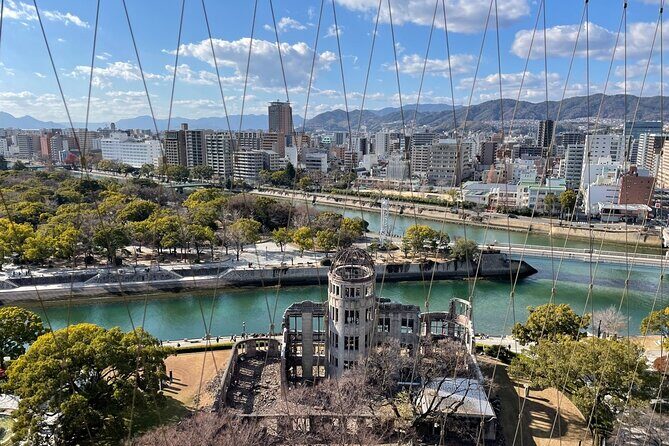
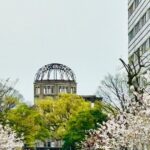
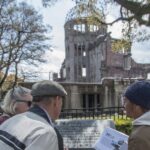
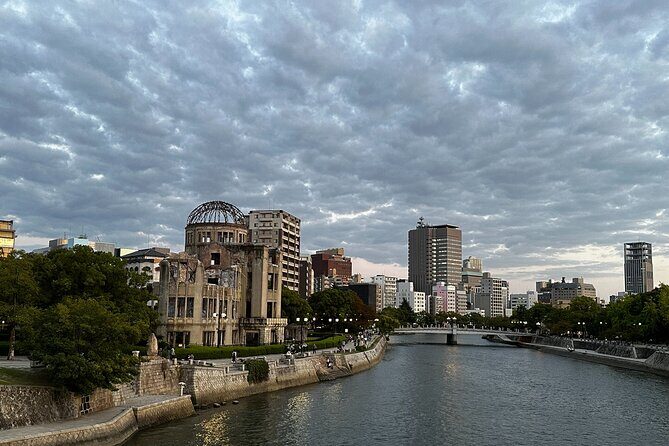
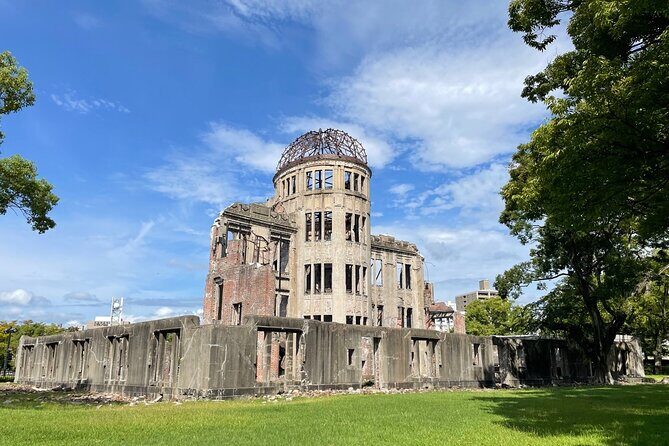
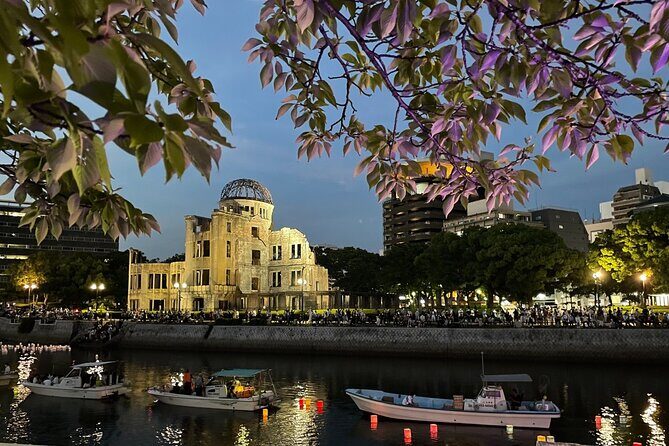
Then comes the Atomic Bomb Dome. You’ll stop and see the Atomic-Bomb Dome as a reminder of what happened in Hiroshima. The description also highlights that it was connected to the first use of atomic bombs—so your guide uses it to explain Hiroshima’s place in world history, without losing focus on the local aftermath.
Time at each stop is limited, so you won’t get a museum-style timeline here. But the value is that these are the places you can actually look at. If you’ve ever visited memorial sites and felt like you needed more context, this is where the tour helps most. You leave with a clearer mental picture of what the buildings were, what survived, and why the city chose to preserve these reminders.
Peace Flame and the Rest House: a calmer pause in the middle
After the harder visual stops, the tour includes a quieter moment.
You visit the Peace Flame (the flame of peace). It’s only a short stop, but the meaning is the point: why the flame keeps burning, and what that message is meant to carry forward.
Then you head to the Rest House of Hiroshima Peace Park. This building is described as one of the surviving structures from the A-bomb. Today it’s used as tourist information and also includes a small museum and origami experience. In practice, this is where the tour gives your brain a break. You can sit, reset your emotions, and still learn something new.
This stop also matches what many people love in Pancho’s style: he mixes seriousness with human, approachable teaching. In the reviews, origami cranes show up as a memorable moment—an activity that turns the visit from watching into participating, even if it’s just for a short time.
If you’re the type who finds it hard to focus at memorials, this middle-of-tour pause can help you return to the route with better attention.
Other walking tours we've reviewed in Hiroshima
Children’s Peace Monument to the cenotaph: why the symbols matter
The final memorial sequence is designed around stories and meaning, not just objects.
First up is the Children’s Peace Monument. You’ll learn about one girl’s story and her paper crane effort, tied to Japanese belief and her hope to recover from leukemia. It’s a short stop, but it’s intentionally emotional. The point isn’t to make you sad for the sake of it—it’s to show how Hiroshima’s peace message includes future generations.
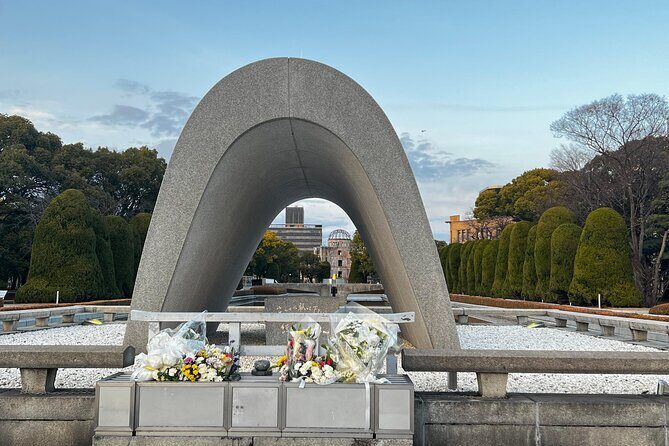
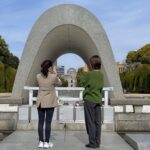
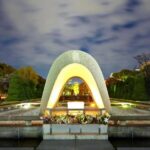
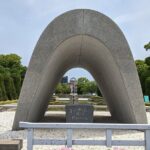
Next is the Hiroshima Peace City Monument Cenotaph for the Atomic Bomb Victims. The guide explains the history, the reason for the cenotaph’s shape, and its meaning. You’ll also notice the design concept, so you’re not just reading plaques. You’re learning how the form itself is part of the communication.
This is the part of the tour where you’re most likely to look around and notice how the city teaches its visitors. The monuments aren’t random. They’re placed so you move from general memory to specific human loss to the ongoing promise of peace.
Lunch near Peace Memorial Park: simple, local, and adaptable
Half day tours often fall into one of two traps: they either cancel lunch or they dump you into a random spot. Here, lunch is planned right near Peace Memorial Park.
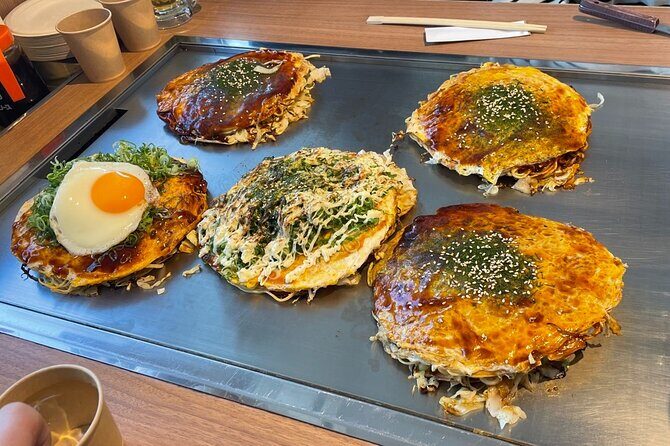
The lunch choice is flexible and based on guest request, with options like Hiroshima-style okonomiyaki, ramen, and sushi. The guide also introduces local restaurants and notes that there are some options for vegetarian/vegan/gluten-free guests.
One practical advantage: you’re not walking all the way back across town to find food. That matters because emotional sites can drain energy fast.
Keep in mind: lunch is not included in the tour price. But the way it’s handled still adds value, because you’ll likely save time figuring out where to eat and what will work for your diet.
Price and value: is $200 per person fair here?
At $200 per person for a private half-day, this isn’t a bargain deal. It’s priced like what it is: a private guide-led experience built around sensitive, high-context storytelling.
Here’s what you get that helps justify the cost:
- Guide fee is included, and the guide is a certified English-speaking guide
- The tour is private, so you’re not stuck with mismatched interests in a large group
- You cover multiple key memorial sites plus a mid-route Rest House stop with museum/origami time
- You get a lunch plan near Peace Memorial Park without the usual guesswork
What costs extra:
- Lunch is excluded
- The Hiroshima Peace Memorial Museum entrance fee is ¥200 per person (not included)
- Public transportation is listed as $4.00 per person
- Private transportation is optional, and additional charges may apply
- The tour time is about four hours, so you’re not paying for a full-day museum binge
Value-wise, I think this price makes sense if:
- You care about story context, not just seeing landmarks
- You want a route that respects the emotion and pacing of the area
- You’d rather pay for guidance than piece together multiple sites on your own
It might feel steep if you mainly want photos and you’re already comfortable navigating the Peace Park zone by yourself. In that case, you may prefer a cheaper self-guided visit plus museum time.
Who should book this Hiroshima private walking tour
This tour fits best if you want:
- A private experience with an English-speaking guide
- A walking route through Hiroshima’s most important memorial landmarks in a single half day
- A guide who can connect sites to lived family memory through clear explanations
- A day plan that includes a lunch stop near Peace Memorial Park
It also says that most travelers can participate, and service animals are allowed. If you have mobility concerns, you’ll want to confirm how much walking is comfortable for you, since the itinerary is a walking sequence through multiple stops.
If you’re traveling as a family with kids, note that the route includes the Children’s Peace Monument and a Rest House origami/museum stop—so the experience isn’t only about adult-level museum time. You’ll still want to pace yourselves emotionally.
Final thoughts: should you book it?
If you’re going to Hiroshima for the Peace Memorial Park area and you want more than facts on a sign, I think you’ll like this tour. Pancho’s family perspective turns key stops—like the hypocenter reference point, the Atomic Bomb Dome, the Peace Flame, and the cenotaph—into a guided chain of meaning.
I’d book it when you value thoughtful pacing and don’t want to spend your limited time figuring out logistics and translations. If your budget is tight or you only want a light sightseeing hit, then you might consider a less expensive option and add museum time on your own.
FAQ
How long is the Half Day Private Guided Walking Tour in Hiroshima City?
It’s about 4 hours.
Is the tour private or shared with other groups?
It’s a private tour/activity, so only your group participates.
Where can I meet the guide in Hiroshima?
You can meet the guide at the Hiroshima station bullet train platform (if arriving by bullet train), or you can have hotel reception. The tour also describes additional meetup options through reception.
Is lunch included?
No. Lunch is excluded, and you’ll choose from local options near Peace Memorial Park based on your requests.
Are entrance fees included?
Not all entrances are included. Hiroshima Peace Memorial Museum has an entrance fee of ¥200 per person, and that fee is not included.
How does transportation work?
The tour uses public transportation/taxi from your hotel or Hiroshima station if you arrive by bullet train. Public transportation is listed as $4.00 per person. Private transportation is optional and may cost extra.
Do I get a ticket on my phone?
Yes. The tour provides a mobile ticket.
Can I bring a service animal?
Yes, service animals are allowed.
What’s the cancellation window?
Free cancellation is available up to 24 hours in advance for a full refund. If you cancel less than 24 hours before the start time, you don’t get a refund.