REVIEW · HIROSHIMA
Hiroshima Walking Tour Why A Bomb was dropped to Hiroshima
Book on Viator →Operated by Localized Walking & Food Tours · Bookable on Viator
Hiroshima hits hard, and this walk explains why. This small-group route blends major landmarks with clear context about World War II, so you’re not just staring at memorials—you’re understanding the chain of events that led to August 6, 1945. I especially like the small-group feel and the way the guide connects the city’s different eras on foot.
I also really like the practical pacing: you get focused stops at the Atomic Bomb Dome area and the Peace Park memorials, with time to ask questions and take photos. The guides I’ve seen in this experience—people like Thomas, Chihiro, Katya, and Emi—tend to use visual aids like maps and photos, which makes the stories easier to follow without turning it into a lecture marathon.
One consideration: the subject matter is heavy. If you’re hoping for a lighter sightseeing day, this may feel emotionally intense, and the tour’s 2.5 hours can feel fast if you want extremely deep history at every single stop.
In This Review
- Key highlights you’ll feel right away
- Start at Hiroshima Gokoku Shrine: the tone before the tragedy
- Hiroshima Castle grounds: why the city matters before 1945
- From Hiroshima Green Arena to Orizuru Tower: modern Hiroshima in the same breath
- Atomic Bomb Dome: the closest you’ll get to the blast story
- Children’s Peace Monument: the human scale of memory
- Hiroshima Victims Memorial Cenotaph: where the park turns into a vow
- How the guides explain the why: facts, photos, and real questions
- Price and value: is $28 worth 2.5 hours?
- Timing, walking comfort, and what to bring
- Where you’ll end: Peace Memorial Museum area
- Who should book this tour (and who should plan differently)
- Final verdict: should you book this Hiroshima why-a-bomb walking tour?
- FAQ
- How long is the Hiroshima walking tour?
- What does it cost?
- What stops and sights are included?
- Is admission included?
- Is bottled water included?
- How many people are in the group?
Key highlights you’ll feel right away
- A tight 2.5-hour route that centers on the bombing story and the Peace Park area without wasting your day
- Small groups (the experience notes a cap, with details listing up to 12–15 people depending on the info you see) so questions actually get answered
- Landmarks before and after 1945, from Hiroshima Castle grounds to modern Orizuru Tower
- Multiple Peace Park memorial stops, including the Children’s Peace Monument and the cenotaph
- Guides who bring the story to life using maps/photos and sometimes personal connections
- Mostly walkable, with photo moments, and enough structure to keep moving without rushing
Start at Hiroshima Gokoku Shrine: the tone before the tragedy
Your tour starts at Hiroshima Gokoku Shrine in Motomachi. It’s a calm, formal place to begin—architectural, quiet, and a good reminder that Hiroshima wasn’t only a WWII headline. Standing there first helps you feel the before-part of the city’s story before you get pulled toward the bombing.
Expect a short orientation and then an easy transition into the city’s historical core. This opening matters. If you jump straight to the Atomic Bomb Dome without context, everything can feel like disconnected set dressing.
Other Hiroshima walking tours in Hiroshima
Hiroshima Castle grounds: why the city matters before 1945
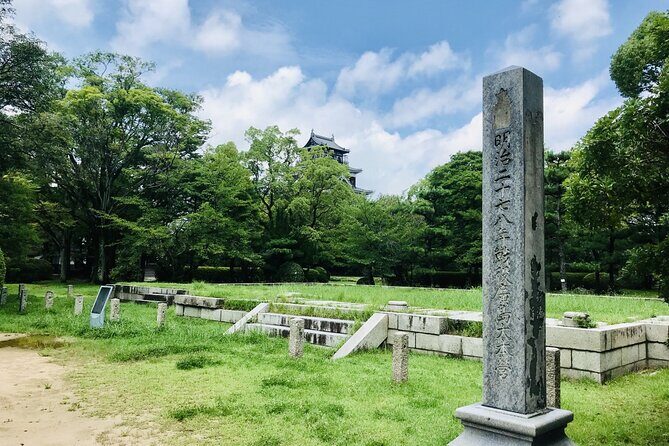
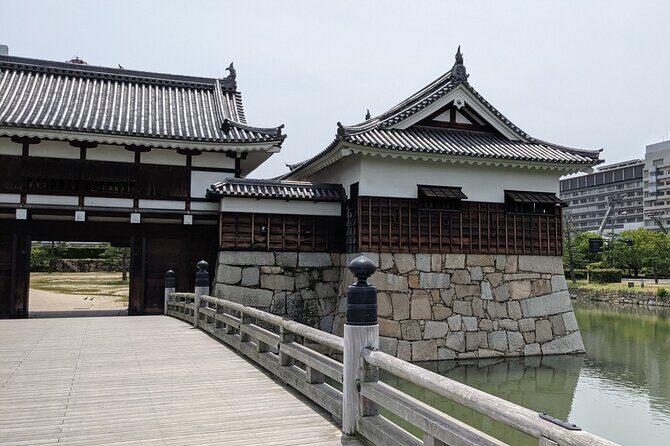
Next up is Hiroshima Castle, sometimes called Carp Castle. You’ll have time at the castle site to learn what it was used for in the feudal era—home base for the local daimyō and a symbol of power and administration.
A key detail: this tour focuses on the castle grounds and landmark area, not a long interior detour. That’s smart for a walking format. You get the “this is what Hiroshima looked like as a center” feeling without burning half your day on tickets and stairs.
Also, the castle stop helps you understand something practical about Hiroshima today. The city grew back around older layers, and that’s exactly what you’ll see as you keep walking.
From Hiroshima Green Arena to Orizuru Tower: modern Hiroshima in the same breath
Then the tour shifts gears. You’ll pass by Hiroshima Green Arena, officially the Hiroshima Prefectural Sports Center, a multi-purpose indoor arena. It’s not WWII-themed, and that’s the point. Hiroshima isn’t frozen in 1945—it’s a working city.
From there, you’ll reach Orizuru Tower, a modern 13-story building right by Peace Memorial Park. Opened in 2016, it has a distinctive design and serves as a reminder that Hiroshima is constantly reshaping itself while still honoring what happened.
This contrast can be surprisingly useful. You get to hold two ideas at once: the physical reality of modern life and the moral responsibility of memory. If you only visit memorials, you miss that second half.
Atomic Bomb Dome: the closest you’ll get to the blast story
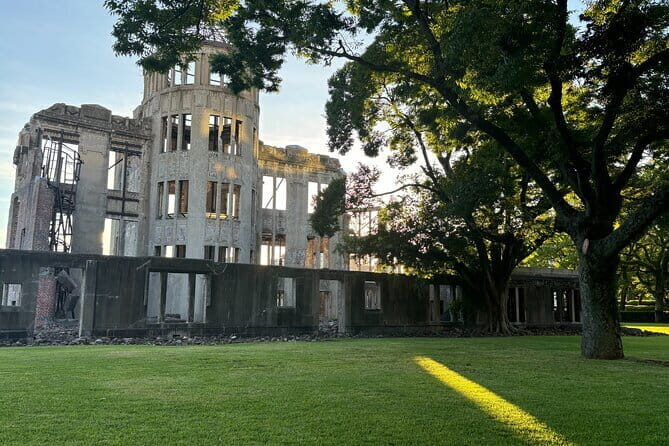
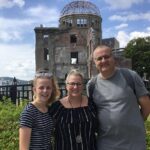
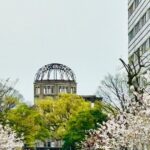
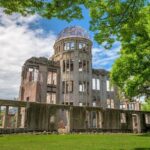
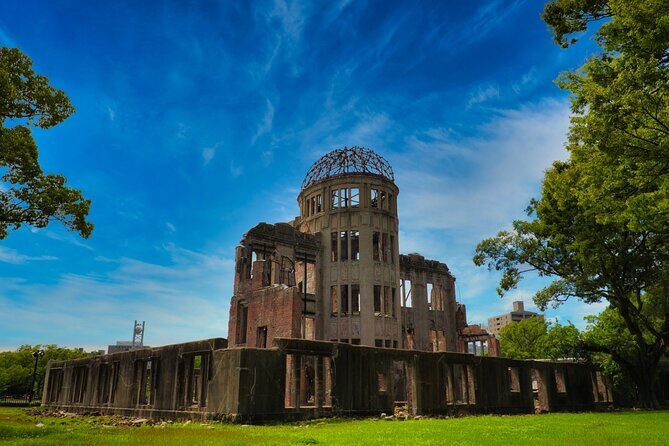
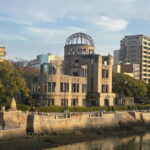
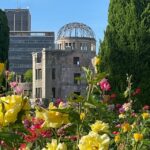
The Atomic Bomb Dome stop is the emotional center of the route. The building you see today was originally the Hiroshima Prefectural Industrial Promotion Hall, and it stands near the area associated with the blast epicenter.
This is the moment where your guide’s explanation matters most. The Dome isn’t just a photo backdrop. It’s a landmark that helps you visualize why nuclear weapons created a kind of destruction that people had no ready template for.
When I’m doing a tour like this, I appreciate the timing. You get enough time to look closely, but you’re not stuck so long that the story loses momentum and you start half-scrolling through your camera roll. You’re encouraged to keep moving toward the memorials that follow.
Children’s Peace Monument: the human scale of memory
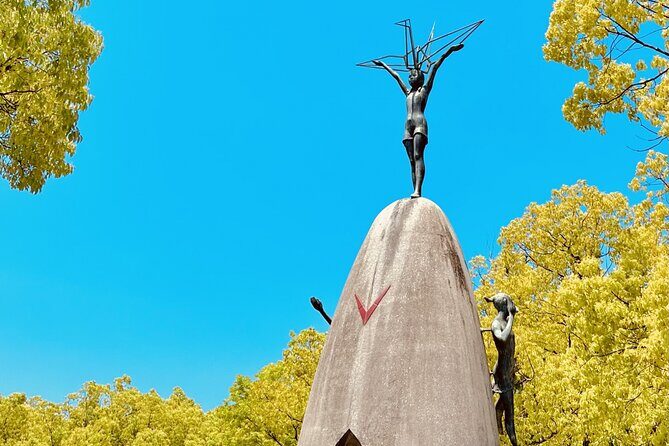
In Peace Memorial Park, you’ll visit the Children’s Peace Monument. This memorial is inspired by Sadako Sasaki and remembers child victims of the atomic bombing.
The impact here comes from the personalization. Sadako’s story is widely known, but hearing it in a guided walk is different than reading a plaque while standing under a tree. The guide can point out how the monument fits into the park’s overall message: remembrance isn’t just about dates; it’s about the people who didn’t grow up.
You’ll also get a small amount of time here. It’s enough to process the symbolism without turning it into an exhausting stop.
Other Atomic Bomb Dome tours in Hiroshima


Hiroshima Victims Memorial Cenotaph: where the park turns into a vow
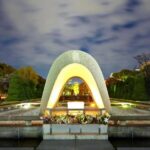
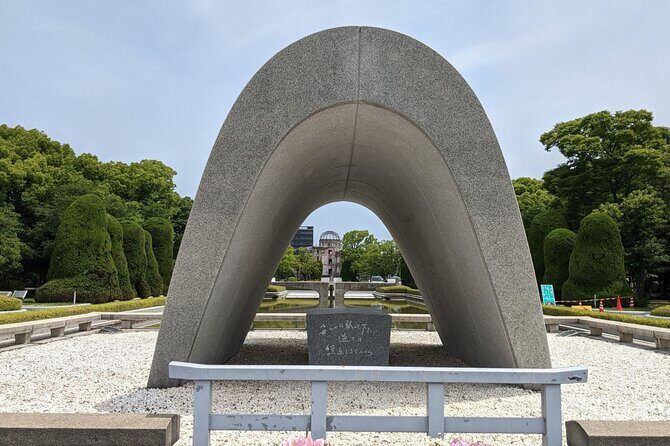
Next is the Hiroshima Victims Memorial Cenotaph, another major stop in Peace Memorial Park. This cenotaph honors the victims of the atomic bomb dropped on August 6, 1945.
The cenotaph area often feels like the park’s core statement—quiet, direct, and hard to interpret as anything other than a promise. Your guide usually ties it back to what you learned earlier: why the bomb was dropped and what the consequences became, not only immediately but also over the years.
This part of the tour is where I’d slow down a bit, even if the group is moving on schedule. Take a moment, read what you can, and let it land. You don’t need to force tears, but you do want to be present.
How the guides explain the why: facts, photos, and real questions
What really makes this tour worth the $28 price tag is how the guides teach the story of how Hiroshima reached that moment—and what happened afterward.
In my experience with guided tours like this, two things make or break it: clarity and pacing. Here, guides often use visual aids like maps and photos, which helps you connect the names of places to what’s in front of you. People I’ve seen on this tour—like Thomas, Chihiro, Katya, and Emi—also tend to answer questions in a friendly way, which keeps the walk from feeling one-directional.
Some guides also add personal context. In this experience, I’ve heard stories from guides with close family connections to survivors. That kind of detail doesn’t change the historical facts—but it changes how seriously you feel the weight of them.
One practical note: a couple of people have felt the tour leans a bit toward broader context instead of the deepest possible WWII specifics. If you’re the type who wants chapter-and-verse detail on every policy and decision, you’ll likely want extra museum time after the walk. The tour gives structure; it doesn’t replace that longer form learning.
Price and value: is $28 worth 2.5 hours?
For $28 per person, you’re paying for three things: a structured route, a guide to connect the dots, and access to time-saving navigation between key sites.
Because entrance fees at the stops listed are free (and the tour includes all fees and taxes), your money largely goes into interpretation and timing—not ticket logistics. Also, the group size stays small, which improves the odds you’ll actually ask a question and get a direct answer instead of waiting your turn.
Is it the cheapest thing you can do in Hiroshima? No. But for a topic this heavy, I think it’s fair. A good guide turns a memorial tour into a meaningful, understandable experience. If you’d otherwise wander the park alone with only plaques, the $28 can feel like a shortcut to understanding.
Timing, walking comfort, and what to bring
This tour runs about 2 hours 30 minutes. It’s a walking tour with stops that are close together, and the route is mostly flat, so it’s usually manageable even if you’re not a “fitness person.” There are multiple photo-friendly moments, which also means there are natural breaks where you can catch your breath.
What you should bring:
- Comfortable shoes (you’ll be on your feet for the full block of time)
- A light layer (Hiroshima weather can swing, and tours still run)
- Your camera (the Dome and park areas are built for photos, but pause before shooting)
- Water is not included, so plan to pick some up nearby
Also, since the tour ends at the Peace Memorial Museum area, I recommend having your next step already in mind. If you want museum time, keep your energy for that after the walk.
Where you’ll end: Peace Memorial Museum area
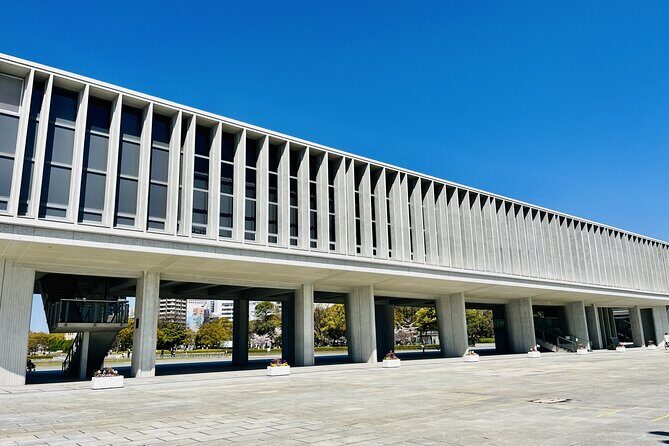
The tour finishes in front of the Peace Memorial Museum. That’s a smart way to end, because it puts you right where you can choose how much more you want to see.
If you’re feeling overloaded by emotion by the final stop, you can simply step back, take a breather, and decide later. If you want the deeper details, you’re already standing at the right door.
Who should book this tour (and who should plan differently)
This is a strong fit if you want:
- A structured walk across Hiroshima’s key bombing-related sites
- A guide to explain the why behind the bombing and the long-term impact
- A small-group experience where it’s easy to ask questions
- A mix of older Hiroshima landmarks plus Peace Park memorials plus modern city sights
It may be less ideal if you:
- Want a long, slow museum-style day with deep WWII detail at every turn
- Prefer lighter, entertainment-heavy sightseeing (this topic is emotionally serious)
In other words, this is not a casual “photos and coffee” stroll. It’s a purposeful walk that respects the subject while still letting you experience the city you’re actually visiting.
Final verdict: should you book this Hiroshima why-a-bomb walking tour?
If you’re coming to Hiroshima for meaning, this walk is an efficient, respectful way to get grounded fast. I like that you cover both the memory sites (Atomic Bomb Dome, Children’s Peace Monument, cenotaph) and the broader city context (castle grounds, Orizuru Tower). The small-group size also helps the guide’s explanations land.
I’d book it if you’re short on time and want the story connected in your head—not just viewed from the outside. If you’ve got extra time and you’re a WWII history deep-dive type, consider treating the museum as your “next chapter” after the walk.
FAQ
How long is the Hiroshima walking tour?
The tour lasts about 2 hours 30 minutes.
What does it cost?
It costs $28.00 per person.
What stops and sights are included?
You visit Hiroshima Gokoku Shrine, Hiroshima Castle, Hiroshima Green Arena, Orizuru Tower, Atomic Bomb Dome, Children’s Peace Monument, and the Hiroshima Victims Memorial Cenotaph in Peace Memorial Park. The tour ends at the Peace Memorial Museum area.
Is admission included?
The tour lists admission at the stops as free, and it includes all fees and taxes.
Is bottled water included?
No. Bottled water is not included.
How many people are in the group?
The activity info states a maximum of 15 travelers, and the tour overview also notes a maximum of 12 guests.