REVIEW · HIROSHIMA
Hiroshima/Guided Virtual Tour of Peace Park/PEACE PARK TOUR VR
Book on Viator →Operated by (株)たびまちゲート広島 · Bookable on Viator
Peace Park hits hard in real life. With VR, it hits in a new way. This guided Hiroshima Peace Park Tour VR takes you through key moments—life before the bombing, the day itself, and the road toward recovery—using historical reenactments, survivor testimonies, and old photographs. You’re also not stuck guessing what you’re seeing because an English-speaking guide walks you through the experience and how to use the goggles.
I especially like the short, focused route. You move through a small set of stops in about 1 hour 20 minutes, so it works even if you do not want a long walking tour. I also like the human scale of the stories—starting with Eizo Nomura and later connecting the bridges to survivor accounts and the city’s recovery.
One thing to consider: this is a small number of VR scenes, not a big, high-production VR game marathon. If you already visited the Peace Memorial Museum the day before, you may feel the value depends on how much you want the guided VR storytelling.
In This Review
- Key highlights before you go
- VR in Hiroshima Peace Park: how this 1h20 tour works
- Getting started at the Rest House and meeting Eizo Nomura
- Stop 2: Peace Clock Tower and the Atomic Bomb Dome
- Stop 3: Aioi Bridge and the city turned into a sea of fire
- Stop 4: Motoyasu Bridge, recovery over time
- Stop 5: River of Hope and leaving a message
- Price and value: $33.03 for VR goggles and an English guide
- VR quality and timing: the one drawback to plan around
- Who this Peace Park VR tour fits best
- Quick practical tips before you book
- Should you book Peace Park Tour VR?
- FAQ
- How long is the Hiroshima Peace Park Tour VR?
- Where does the tour start?
- What time does the tour begin?
- What’s included in the ticket price?
- Is admission to any attractions included?
- Are food and drinks included?
- How big is the group?
- Does the tour end at the same meeting point?
- What is the cancellation refund window?
Key highlights before you go
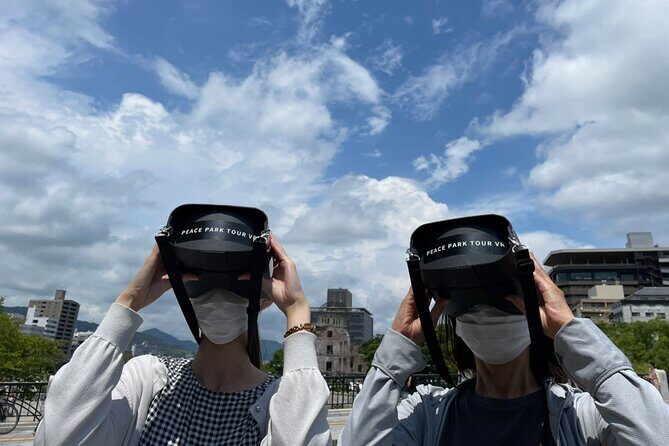
- English guide plus VR setup: clear help with the goggles at the start
- A route that stays short (about 1h20): focused stops instead of a long walk
- Eizo Nomura and survivor testimony: personal stories tied to specific locations
- The Atomic Bomb Dome explained in VR context: what it looked like, what happened, and what remains
- Bridge viewpoints across time: Aioi Bridge (two months after) and Motoyasu Bridge (first year to present)
- River of Hope message wall: a final moment to write and leave your wishes
VR in Hiroshima Peace Park: how this 1h20 tour works
This experience is built around a simple idea: Hiroshima is a place you understand best when you connect locations to real human accounts. The VR reenactments do that by layering historical visuals over the Peace Memorial Park area, then guiding you step-by-step from one key site to the next.
You’ll start at the Hiroshima Peace Park Rest House, where the guide meets you at reception and shows you how to use the VR goggles. That matters more than it sounds. When the tech part is handled well, you spend your attention on the story, not on the controls.
The tour then moves through a handful of stops. Each one focuses on a time period or theme, so you’re not bouncing randomly. For most people, that structure feels calmer, especially with a subject as heavy as the atomic bombing.
Other Peace Memorial Park tours in Hiroshima

Getting started at the Rest House and meeting Eizo Nomura
Stop 1 is where the tour earns your attention right away. After you get instruction on the goggles, you go down to the basement area tied to the Peace Park Rest House. From there, the focus shifts to Eizo Nomura, described in the tour as the only survivor of the fuel building.
This first segment is useful because it doesn’t start with big facts only. It starts with a person. You get an anchor character, so the rest of the timeline later makes more sense. If you’ve ever tried to learn Hiroshima’s story by reading panels alone, you know how easy it is to lose the thread. Starting with a single life story helps you keep track.
A practical note: you’ll be wearing VR equipment, and you’ll be asked to follow the guide’s timing. If you prefer slow pacing, this start segment gives you a clear “first chapter” without dragging on.
Stop 2: Peace Clock Tower and the Atomic Bomb Dome
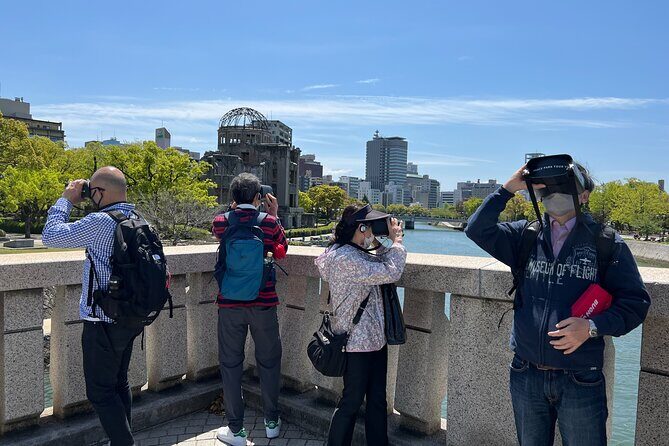
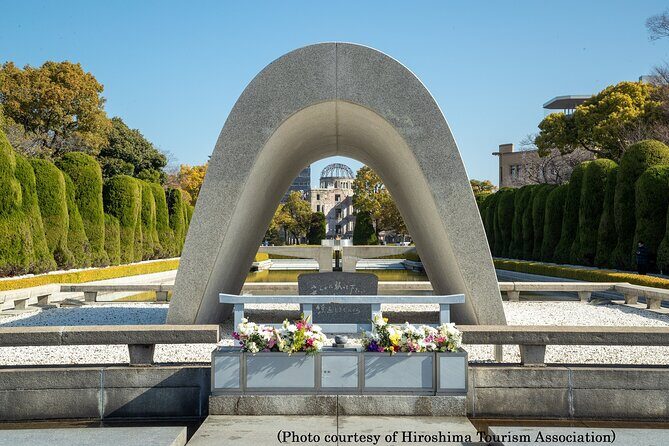
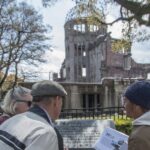
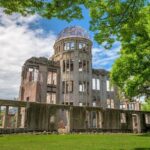
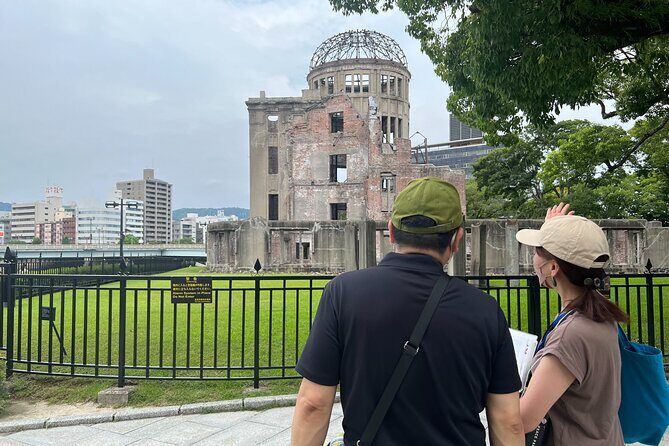
At the Peace Clock Tower, the VR headset takes you into a before-and-after experience. The tour specifically connects what happened to the Atomic Bomb Dome with what you can see today.
Why this stop works: the Dome can look confusing from the outside. It’s a surviving structure, so your brain starts searching for the reason it still exists, and what it represents. This segment gives you the missing connection between the destruction and the way the Dome became what it is today.
Also, the setup feels purposeful. This isn’t just sightseeing. It’s an explanation in a time-compression format. You get a guided storyline rather than leaving you with questions.
Stop 3: Aioi Bridge and the city turned into a sea of fire
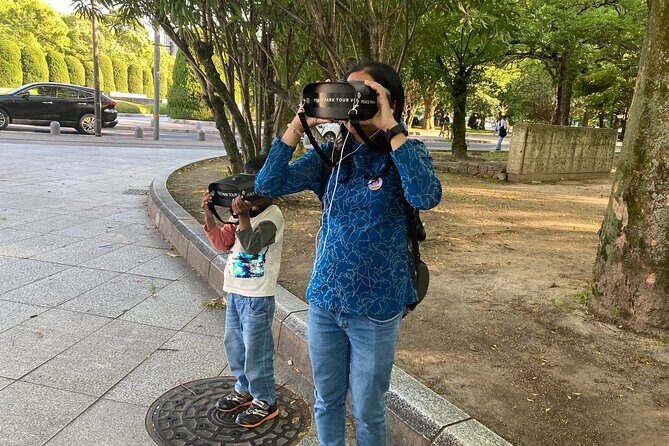
Then you reach Aioi Bridge, focused on about two months after the bombing. This part is built around the townscape that had become, in the tour’s wording, a sea of fire, along with testimonies from A-bomb survivors.
This is the section where the tour’s “location + memory” approach really shows. Bridges are natural story anchors because they’re both physical landmarks and points you can imagine people crossing. Aioi Bridge becomes more than a photo spot; it turns into a perspective for understanding what the area looked like and what survivors described.
One consideration: expect emotion here. VR can make stories feel more immediate, and the subject matter is not light. If you’re someone who gets overwhelmed easily, you may want to go in with the expectation that the tour moves from explanatory to deeply personal.
Stop 4: Motoyasu Bridge, recovery over time
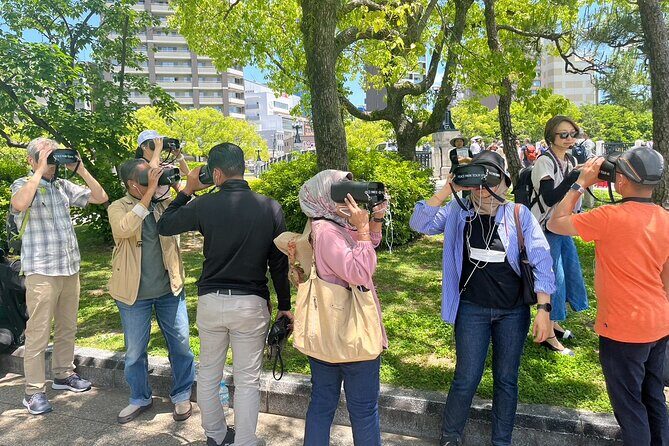
Stop 4 is Motoyasu Bridge, and the timeline shifts forward. This scene covers from the first year after the atomic bombing to the present day, with an emphasis on people rising to their feet amid chaos and taking steps toward recovery. The stop also ties back to a message of peace.
I like how this part prevents the story from ending in destruction. It doesn’t deny what happened; it follows it. That matters because Hiroshima’s Peace Memorial Park is about more than remembering the worst day. It’s about what people built afterward and what the city decided to say to the future.
If you only had time for one VR stop, I’d still recommend going through the full sequence—because this recovery segment is the payoff for the timeline you’ve already followed.
Other Hiroshima VR tours in Hiroshima
Stop 5: River of Hope and leaving a message
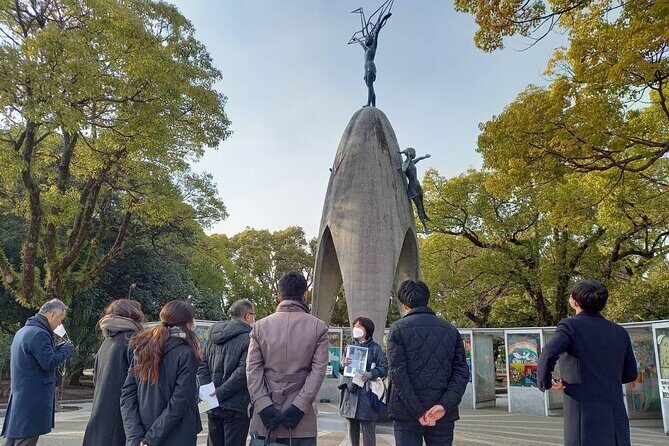
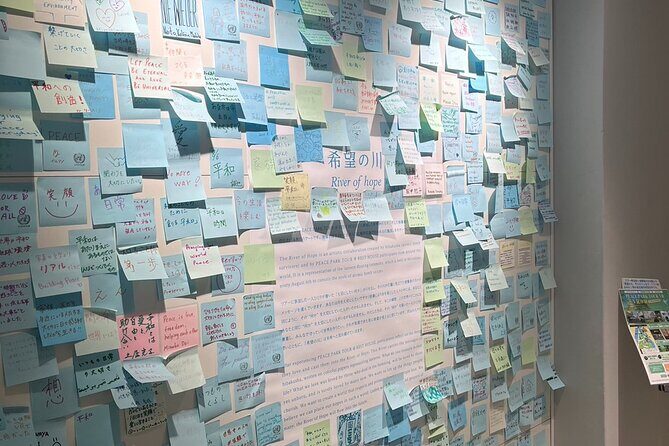
The final stop returns you to the Rest House of Hiroshima Peace Park. This segment is shorter and more reflective. You write your feelings on the wall of the River of Hope and express condolences.
What I like here is that the tour ends with an action, not just an exit. You’re given a prompt to convert what you just experienced into a personal message. That helps the memory stick in a different way than seeing visuals alone.
It also gives you a quiet moment after the heavier scenes at Aioi Bridge and earlier stops. If you like tours that include a practical ritual, this one delivers.
Price and value: $33.03 for VR goggles and an English guide
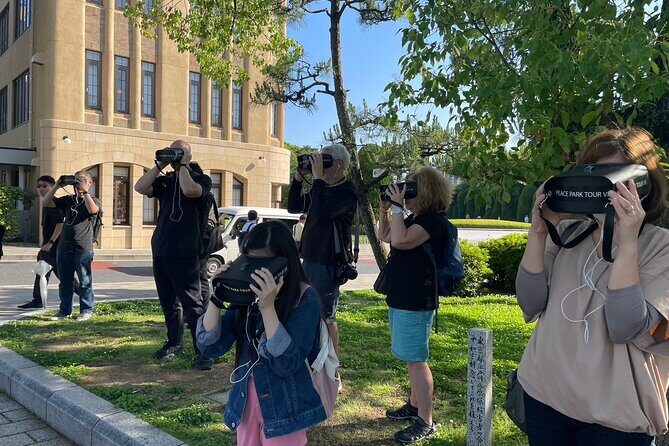
At $33.03 per person, the price can look like a lot if you compare it to a self-guided walk. But here’s the tradeoff: you’re paying for VR goggles rental and an English-speaking guide, plus a structured timeline that you’d otherwise need to piece together on your own.
This is also a small group experience, with a maximum of 6 people. That typically means more room for questions and less feeling like you’re waiting in a long line while your attention drifts.
What’s not included is also important to understand. Transportation to the meeting point and food and drinks are not part of the package. So budget a little extra for getting to Nakajimacho and for what you do before or after the tour.
One more value angle: the tour is about 1 hour 20 minutes. That time efficiency can matter in Hiroshima, where you may want to fit the Peace Memorial Museum or other sights around your schedule. If your day is already packed, this format can be a smart use of limited time.
VR quality and timing: the one drawback to plan around
The VR scenes are the core product, and that’s where people can feel two different things at once. On the positive side, the guidance, historical framing, and survivor testimonies make the technology feel meaningful rather than flashy.
On the caution side, VR here is not marketed like a full-on game experience. You should expect a handful of scenes, not endless interactivity or cinematic production quality like the most polished commercial VR titles. If you’re comparing it directly to high-end VR media you’ve seen elsewhere, you might find this feels more “guided documentary” than “VR entertainment.”
Timing is also worth thinking about. The tour has a set start time—10:30 am—and the experience returns back to the meeting point. That means you’ll want to build your day around it rather than trying to squeeze it in last minute.
Who this Peace Park VR tour fits best
This tour makes sense if you:
- Want a short, guided experience instead of a long walk through the Peace Park area
- Prefer having someone explain what you’re seeing in English
- Like learning through testimony and place-based storytelling rather than only reading signs
- Want an experience that helps you connect the Dome and bridges to a timeline
It may be less ideal if you:
- Only want the biggest possible VR library or highly interactive VR worlds
- Already covered the key museum information the day before and you’re hoping VR will add a totally different type of content
A small personal note, based on the kind of feedback the guide receives: guides can be the whole difference in how moving the experience feels. The guide name Kazuko comes up positively in reviews, and that matches the overall structure here—this is a tour where the person doing the narration matters.
Quick practical tips before you book
- Go in knowing this is a structured, emotional timeline, not just sightseeing.
- If you’re sensitive to strong stories, plan your day so you have a little breathing room afterward.
- Wear comfortable clothes. You’ll be in goggles for multiple segments and you’ll want to move without fuss.
- If you’re trying to pair this with other Hiroshima activities, consider whether you want to put the Peace Memorial Museum before or after. This tour can either complement museum learning or feel repetitive if you do both back-to-back.
Should you book Peace Park Tour VR?
If you want a short, guided, English-friendly way to understand Hiroshima through specific places and survivor accounts, I think you should book it. At $33.03, the inclusion of VR goggles and an English-speaking guide makes it feel more like a service than a gadget rental.
I’d skip or reconsider if you’re the kind of visitor who expects a long, interactive VR experience or if you’re already relying on the Peace Memorial Museum to carry the whole learning load that day. In that case, you might feel like the VR scenes are too few.
For most people, though, the combination of Eizo Nomura, the Atomic Bomb Dome explanation, bridge time capsules, and the River of Hope message gives you a complete arc—before, during, and after—without stealing half your day.
FAQ
How long is the Hiroshima Peace Park Tour VR?
It lasts about 1 hour 20 minutes.
Where does the tour start?
The tour starts at the Hiroshima Peace Park Rest House in Naka Ward, Nakajimacho, Hiroshima, Japan.
What time does the tour begin?
The start time shown is 10:30 am.
What’s included in the ticket price?
The ticket includes VR goggles rental and an English-speaking guide.
Is admission to any attractions included?
The tour notes that admission ticket is free for the listed stops.
Are food and drinks included?
No. Food and drinks are not included.
How big is the group?
The tour has a maximum of 6 travelers.
Does the tour end at the same meeting point?
Yes, it ends back at the meeting point.
What is the cancellation refund window?
You can cancel for a full refund if you cancel at least 24 hours before the experience’s start time. If you cancel less than 24 hours before, the amount paid is not refunded.