REVIEW · HIROSHIMA
Hiroshima:Guided Virtual Tour/PEACE PARK TOUR VR
Book on GetYourGuide →Operated by TABIMACHI-GATE HIROSHIMA CO.,LTD · Bookable on GetYourGuide
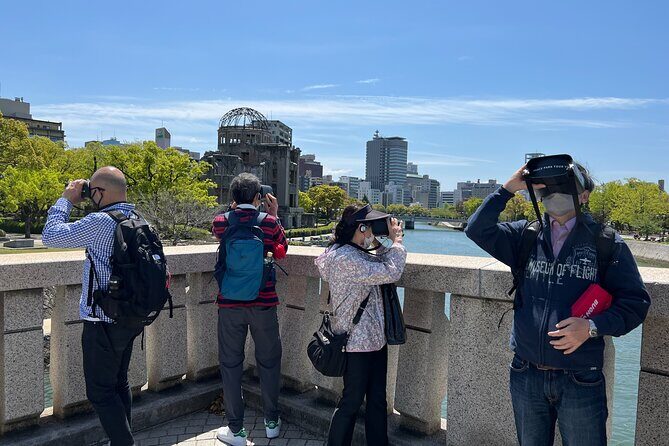
A headset can change how you see Hiroshima. This guided VR Peace Park tour pairs an English-speaking local guide with short time-travel scenes built from atomic bombing survivor testimony and wartime photos, while you walk the real grounds. I love that the VR happens in place, not in some separate presentation room.
I also love the human rhythm of the tour: the guide asks field questions, keeps the pace thoughtful, and ends with a conversation about what you noticed about each other’s reactions. You’ll hear how guides like Yoko Shimada or Hiroshi (names from past groups) bring both history and personal perspective. One possible drawback: this is emotionally heavy, and the headset format may feel intense if you prefer only quiet, outdoors memorial time.
In This Review
- Key highlights worth your attention
- Entering the Hiroshima Peace Park Rest House: where you get oriented fast
- Time travel through testimony: what the VR is really doing
- Stop-by-stop in Peace Park: Rest House, Atomic Bomb Dome, and the bridges
- The Rest House segment: setting context before the headset
- Atomic Bomb Dome: the landmark with a time-travel contrast
- Aioi Bridge (T-Bridge): connecting the story to the waterline
- Motoyasu Bridge: the final spatial piece before you return
- Why the guide matters more than the tech
- Price and value: $32 for 80 minutes of guided VR
- Rain plans, luggage reality, and time rules
- Who this tour suits best (and who should think twice)
- Quick tips so the VR moment lands well
- Should you book this Hiroshima Peace Park VR tour?
- FAQ
- Where does the tour start?
- How long is the tour?
- What’s included in the price?
- What language is the tour in?
- What happens if it’s raining heavily?
- Can I store luggage at the Rest House?
Key highlights worth your attention
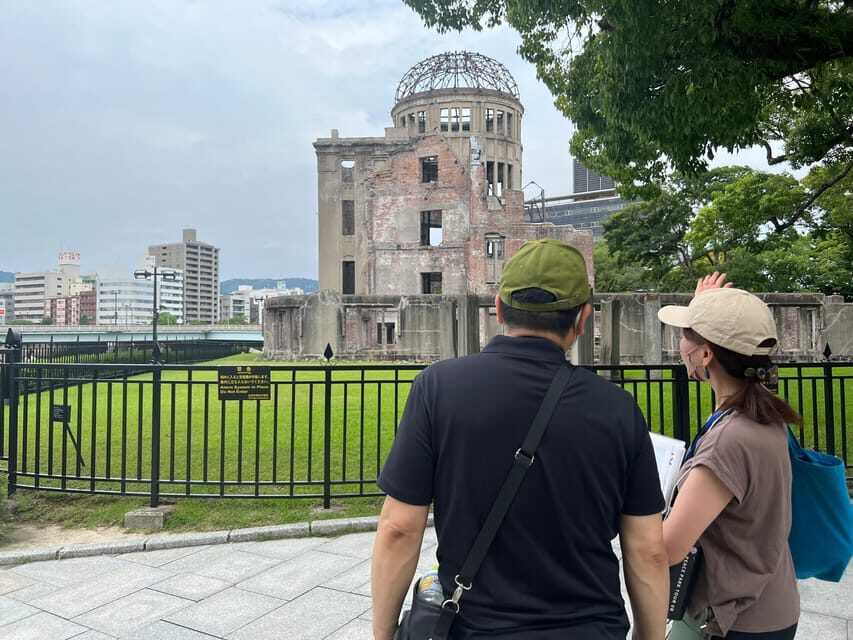
- VR experience inside Hiroshima Peace Park (and presented as the only VR option there)
- Small group of up to 6 for a calmer pace and more back-and-forth
- Guides with local perspective such as Yoko Shimada, Kazuko, and Hiroshi
- Time-travel scenes grounded in testimony and photos, including life before Aug 6 and the aftermath
- Stop-and-talk fieldwork style, with questions during the walk—not just a slideshow
- Rain-or-shine approach, with a shortened VR option during heavy rain
Entering the Hiroshima Peace Park Rest House: where you get oriented fast
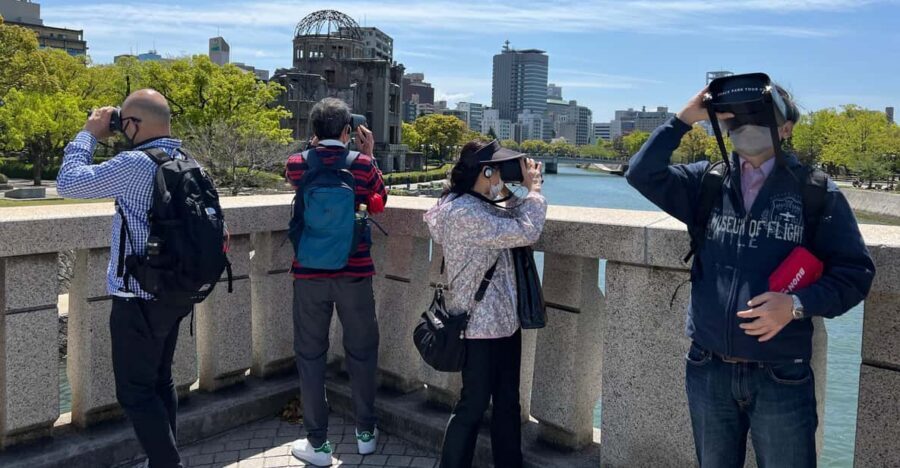
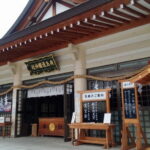
Your tour starts at the Hiroshima Peace Park Rest House area. There’s a guide waiting at the tourist information counter on the 1st floor. The whole point of meeting here is simple: you’re in the right place, with the right context, before the headset ever goes on.
Plan to arrive early. The guidance asks you to be at the reception at least 5 minutes before your reservation time. And if you miss the start window by about 10 minutes, you won’t be able to join (the policy specifically calls out 10:40 a.m. as the cutoff). In other words, treat this like a show with a start time, not a casual walk-in.
Once you’re sorted, you begin with a guided walk and sightseeing time around the Rest House area. This first segment matters more than it sounds. It helps you get your bearings fast, so when the VR later overlays the past onto what’s in front of you, your brain can connect the two timelines.
Other Peace Memorial Park tours in Hiroshima

Time travel through testimony: what the VR is really doing
The tour’s premise is both powerful and delicate. Nearly 80 years after the bombing, the number of Hibakusha (atomic bomb survivors) giving public testimony has been decreasing. This VR experience leans on that reality by using survivor accounts and period photos to reconstruct what Hiroshima looked like before, during, and after the Aug 6 event.
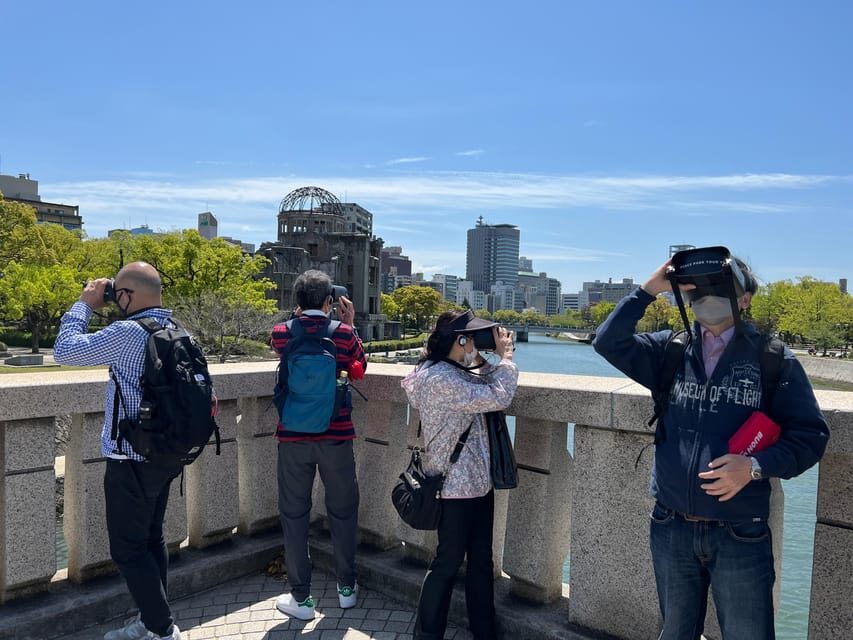
Here’s what you should expect the headset to show: you’ll be transported to major moments in Hiroshima’s story, with VR renderings that aim to recreate the cityscape before the atomic bombing, the burnt plain of Aug 6, and the city’s recovery afterward. The effect isn’t just visual. It’s meant to give you a grounded sense of distance, scale, and impact while you’re physically standing at real memorial locations.
I like that this isn’t sold as a thrill ride. The pacing is structured. You stop at specific points along the way, then put on the VR headset for short segments. Between those segments, you’re walking and talking with your guide. That back-and-forth keeps it from turning into passive staring.
One more thing: the guide doesn’t just hand you information. The format includes field questions and dialogue along the route, so you’re not only watching history—you’re processing it. Reviews mention guides starting with a survivor story and continuing from there, which is exactly how the tour seems designed to work.
Stop-by-stop in Peace Park: Rest House, Atomic Bomb Dome, and the bridges
The itinerary is intentionally short and focused, about 80 minutes total. That means you won’t see everything in the park in the way a half-day self-guided plan would. Instead, you’ll visit a tight set of places that connect visually and emotionally.
The walking segments are: about 20 minutes near the Rest House, 20 minutes around the Atomic Bomb Dome, then 15 minutes each at Aioi Bridge and Motoyasu Bridge, before you return to the Rest House.
The Rest House segment: setting context before the headset
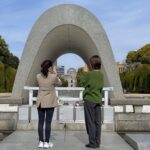
Your first stop is still within the Peace Park Rest House area. You’ll get guided sightseeing and a walk for around 20 minutes. This is where the tour typically establishes its emotional and historical frame.
Why it helps: early on, you’re gathering mental anchors. The guide can explain what you’re about to see next, and you can ask questions before you get your first VR segment. That reduces the feeling of confusion that sometimes happens with tech-based tours.
It also prepares you for the fact that this is a memorial site with an active, ongoing educational purpose. The Rest House segment keeps the tone respectful and grounded so the VR doesn’t feel disconnected from real space.
Atomic Bomb Dome: the landmark with a time-travel contrast
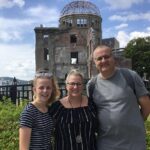
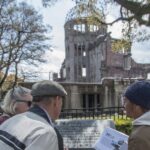
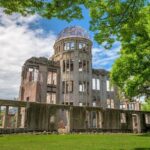
Next is the Atomic Bomb Dome area, again with about 20 minutes of guided time and sightseeing. This stop is the tour’s visual center. Even if you’ve seen photos before, standing nearby changes the experience. The building’s presence forces you to confront scale and survival in a way that a screen can’t fully replicate.
In this VR setup, the Dome stop becomes a kind of reference point. The headset segments are designed to connect what’s around you now with what was there then: city life before the bombing, the Aug 6 devastation, and the longer arc of recovery afterward. When you look at the Dome while the VR overlays earlier Hiroshima in your vision, your brain has to reconcile two realities at once.
Potential drawback to consider: if you get overwhelmed easily with heavy topics, this is likely the moment that lands hardest. It’s not a flaw in the tour; it’s just where the emotional weight concentrates.
Other Hiroshima VR tours in Hiroshima
Aioi Bridge (T-Bridge): connecting the story to the waterline
Then you move to Aioi Bridge (T-Bridge) for about 15 minutes. Bridges can sound like filler on a tight tour, but in Hiroshima, they do real work. Bridges help you understand movement and proximity. They also add a geographic layer: you’re not only seeing memorial structures, you’re tracking how the city’s layout shapes lived experience.
For this tour, the bridge stop continues the pattern: walk, look, listen, and then connect it to the VR timeline. Because you’re not just photographing, you’re trying to understand cause and effect, the bridge feels like a “where things happen” marker, not just a place to take a picture.
Motoyasu Bridge: the final spatial piece before you return
The final major stop before you head back is Motoyasu Bridge, also about 15 minutes with guidance and sightseeing. By the time you reach Motoyasu Bridge, you’ve usually built a clearer sense of how the city’s key locations relate to each other.
This stop helps with spatial comprehension. Even if you don’t leave with a perfect map in your head, you’ll likely feel that the story isn’t abstract. The tour keeps bringing you back to real places, then using the VR to show how life changed around them.
You then return to the Rest House, where the tour closes with time for dialogue. Some groups include a discussion of what you thought of each other’s perspectives. That last part may sound odd until you experience the format: you’ve just been through a carefully structured educational experience, and the guide helps convert that into reflection rather than silence.
Why the guide matters more than the tech
VR can be impressive. The guide is what makes it humane.
Multiple reviews praise the guides for openness and the way they respond to questions. Names that show up in past feedback include Yoko Shimada, Kazuko, and Hiroshi. Reviews also mention guides sharing personal family or local experiences alongside historical details, which often makes the tour feel less like a lesson and more like a conversation with someone who understands what this place means.
One review highlights how the tour may begin with a story about Eizo Nomura, a Hiroshima A-bomb survivor (Hibakusha). That kind of framing matters. When a survivor’s name and proximity are introduced early, the VR scenes don’t feel like generalized tragedy. They feel like something tied to specific people and specific distances.
The tour also emphasizes dialogue along the way. The guide doesn’t just talk at you; they facilitate conversation. That’s one of the reasons small group size matters so much here. With a group capped at 6 participants, there’s space for questions and for your own reactions to be heard.
If you like tours where you can ask questions and adjust the pace of understanding, this format will likely suit you.
Price and value: $32 for 80 minutes of guided VR
At $32 per person for about 80 minutes, this isn’t a cheap add-on. But the price is easier to justify when you look at what you get for it:
- VR goggles rental fee included
- English-speaking guide included
- Small group size (up to 6), which reduces crowd noise and makes dialogue possible
- Audio guide included in English
- A guided route that pairs real memorial stops with VR time-travel scenes
For value, I think the biggest factor is the blend of tech and human facilitation. If it were only VR, you could argue it’s entertainment. If it were only a walking tour, you might lose the “before and after” contrast the VR is meant to show. This tour is trying to do both, and it does it in short, controlled segments.
You’ll also want to think about opportunity cost. Hiroshima Peace Park is easy to explore on your own. This tour costs money, but it buys you structure and a guided interpretation that can help you connect the sites without building your own narrative from scratch.
Rain plans, luggage reality, and time rules
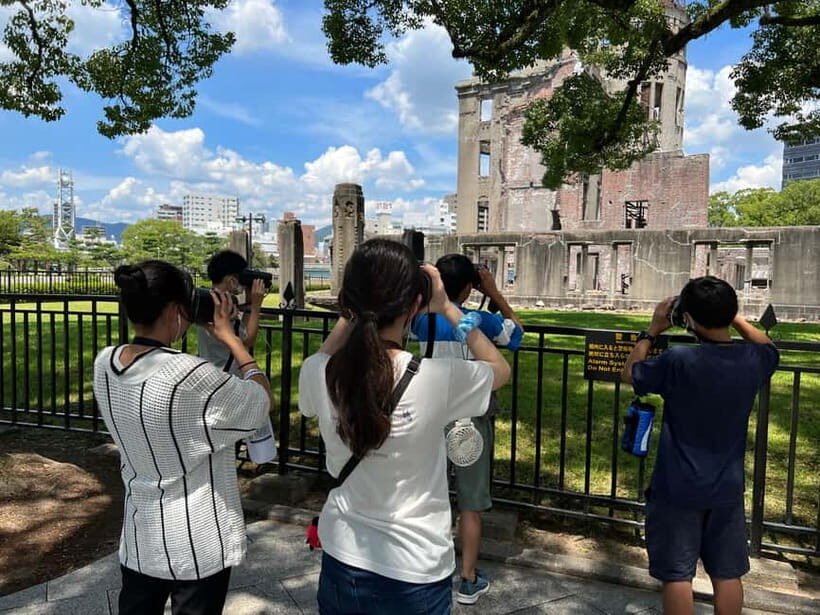
The tour runs rain or shine. If it’s raining heavily, you’ll watch a shortened version of the VR for 5 minutes at the Rest House after the fieldwork in the Peace Park.
That’s important. It tells you the organizers are prioritizing the memorial walk portion, and VR becomes the flexible component. If weather might affect your day, this is still one of the more resilient ways to see the specific VR concept.
Two other practical issues to plan for:
- You can’t store luggage inside the Peace Park Rest House building. Manage your own bags.
- Don’t show up late. The guide needs everyone ready on time, and the policy is strict enough that being more than about 10 minutes late can mean you miss the tour.
Also remember this is not a private tour. You’ll likely share the experience with other participants. In a memorial context, sharing isn’t automatically a negative, but you should know you won’t get a one-on-one pace.
Who this tour suits best (and who should think twice)
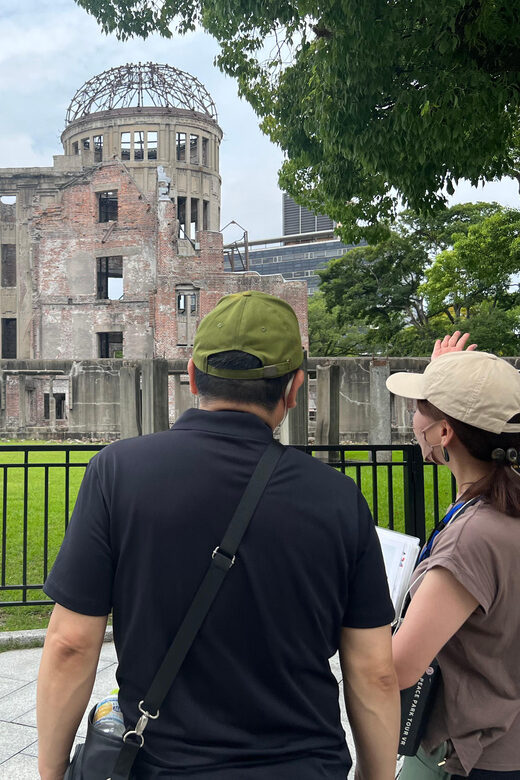
This experience fits best if you want a memorial visit that’s structured, guided, and interactive.
You’ll probably like it if:
- You want English guidance and space to ask questions.
- You’re curious how VR can be used responsibly for education, tied to survivor testimony and wartime photos.
- You prefer a small group over big bus tours.
- You’re okay with an emotionally heavy setting and want help processing it through conversation.
You might want a different approach if:
- You strongly dislike VR headsets or feel anxious about being in a tech-based viewing setup.
- You want a quiet, independent memorial walk with no structured dialogue.
- You’re traveling with a schedule that’s tight enough that you can’t comfortably arrive before the tour start.
The tour’s strength is the way it combines the real locations with careful narrative. If you want that blend, it’s an efficient choice.
Quick tips so the VR moment lands well
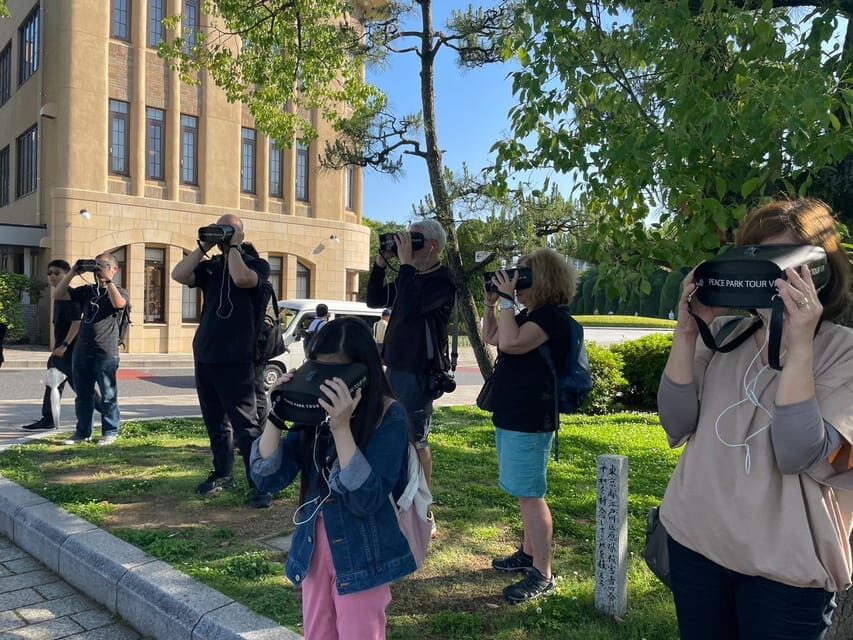
A few small moves can make this smoother:
- Wear comfortable shoes. The tour involves multiple guided walks across Peace Park areas.
- Bring your questions. The guide actively facilitates dialogue, so it’s worth having something you genuinely want to understand.
- If you’re sensitive to emotion, plan a little decompression time afterward. The VR and the survivor framing can be sobering by design.
- Aim to be early and ready. This tour works best when everyone is lined up at the meeting counter on the 1st floor at the Rest House.
And one more practical note: because the VR happens at specific stops, you’ll get more out of it if you treat each location as part of a sequence, not just as a photo stop.
Should you book this Hiroshima Peace Park VR tour?
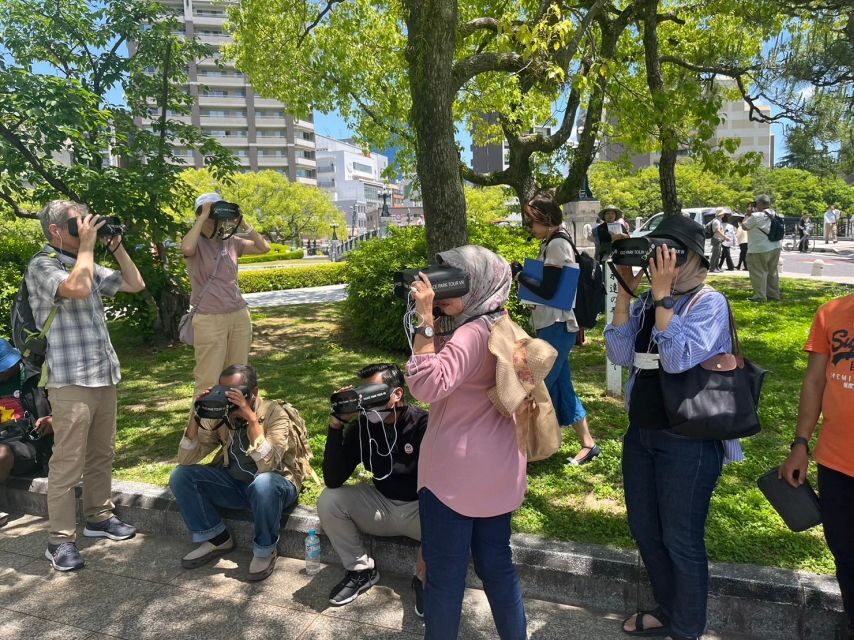
If you’re choosing between a self-guided Peace Park walk and a guided educational experience with VR, I’d lean toward booking this if you want structure and interpretation. The combination of real memorial sites, a local English-speaking guide, and short VR segments grounded in survivor testimony is exactly the kind of careful storytelling that helps a first visit feel both understandable and respectful.
But be honest with yourself about intensity. The tour is designed to be sad and sobering, not light. If you’re looking for a casual overview, you might find it too heavy. If you’re looking for a focused way to connect Hiroshima’s physical sites to the human story behind them, this is a smart use of time at $32 for 80 minutes in a small group.
FAQ
Where does the tour start?
You meet your guide at the tourist information counter on the 1st floor of the Hiroshima City Peace Memorial Park Rest House.
How long is the tour?
The tour is about 80 minutes.
What’s included in the price?
The price includes English speaking guide time, the VR goggles rental fee, and an English audio guide.
What language is the tour in?
The live tour guide is English, and the audio guide is also in English.
What happens if it’s raining heavily?
If rain is heavy, you can watch a shortened VR segment for 5 minutes at the Rest House after the fieldwork in Peace Park.
Can I store luggage at the Rest House?
No. The tour information says they cannot store luggage inside the Hiroshima City Peace Memorial Park Rest House building.