REVIEW · HIROSHIMA
Hiroshima: Shukkei-en Garden with local guide 90min
Book on GetYourGuide →Operated by DeepExperience, Inc. · Bookable on GetYourGuide
Quiet gardens in the middle of Hiroshima. This guided walk in Shukkei-en turns a busy city stop into a calm, feudal-style reset, built around a big central pond and scenic “borrowed views” from classic daimyo design. You’ll also get context from an English- or Japanese-speaking guide, which is the difference between seeing a pretty garden and understanding why it was planned that way.
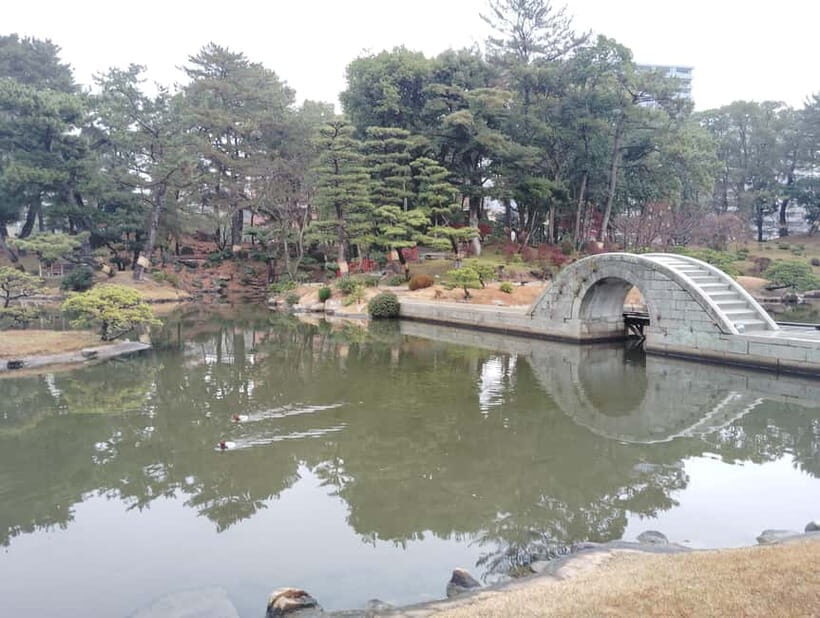
What I like most is how the garden’s layout does the work for you: the curved stone bridge and the boat landing pull your eyes across the water, then the pathways let you keep finding new angles without rushing. I also appreciate the short, focused format—just 90 minutes—so you’re not stuck on a long tour day. The only drawback to consider is timing: if you want a slow, linger-all-afternoon kind of garden visit, this won’t feel long enough.
In This Review
- Key things that make this guide tour worth it
- Shukkei-en’s core idea: a feudal pond garden inside the city
- Why a local guide changes the experience
- Meeting point and timing: keep this stop focused
- Arriving at Shrink-Garden mode: what you’ll notice right away
- The central pond and daimyo-style scenic planning
- Curved stone bridge: the photo moment that’s also a viewpoint
- Boat landing and the sense of staged nature
- The moon-viewing stage: quiet, seasonal meaning
- Strolling paths: how the walk creates the pacing
- Where this tour fits in a Hiroshima day
- Price and value: what you’re paying for at $58 per person
- Practical tips to get more out of the 90 minutes
- Should you book it?
- FAQ
- How long is the Shukkei-en Garden tour with a local guide?
- Where does the tour start?
- What is the price per person?
- What’s included in the tour price?
- Is the tour private?
- What languages are available for the live guide?
- Does the tour include food and drinks?
- Is there a guided walking component?
- What is the cancellation policy?
- Is there a reserve now & pay later option?
Key things that make this guide tour worth it
- Daimyo garden layout: central pond first, scenery framed second
- Signature views: curved stone bridge, boat landing, and a moon-viewing stage
- Guides add meaning fast: you’ll understand the planning behind what you see
- Peace in the city: you get nature time without leaving downtown
- Private group feel: you can move at a comfortable pace with your guide
Shukkei-en’s core idea: a feudal pond garden inside the city
Shukkei-en is a 300-year-old feudal garden in central Hiroshima, and it follows a classic daimyo style. The key is that it’s not just a pretty park. It’s designed so the “main character” is the large central pond, and the rest of the garden works like supporting cast: bridges, viewing spots, and buildings positioned to shape how you move and where you look.
That’s why this experience feels satisfying even if you’re not a hardcore garden person. You don’t need to memorize details to enjoy it. As you walk, the view naturally shifts—water, stones, and paths—so your attention stays on what the designers wanted you to notice. And because it’s in the center of Hiroshima, it also works well as a breather between heavier history stops.
Other private guided tours in Hiroshima


Why a local guide changes the experience
If you’ve ever walked through a garden and thought, Nice—what am I actually looking at?, a guide solves that. With Shukkei-en, the big value is explanation of the daimyo garden concept: lords in different regions built large-scale gardens centered on ponds, and these gardens were meant to reflect famous scenic spots. In other words, the garden isn’t random. It’s a deliberate “version” of nature and landscape ideas, staged for daily walking pleasure.
From what I’ve seen with guides (like Shoko and Emiko, both known for friendly, clear guidance), the tour tone tends to be simple and practical. You’ll get quick answers to why certain structures exist and what to pay attention to as you move around the pond. That kind of context helps you enjoy the garden more immediately—without turning it into homework.
Meeting point and timing: keep this stop focused
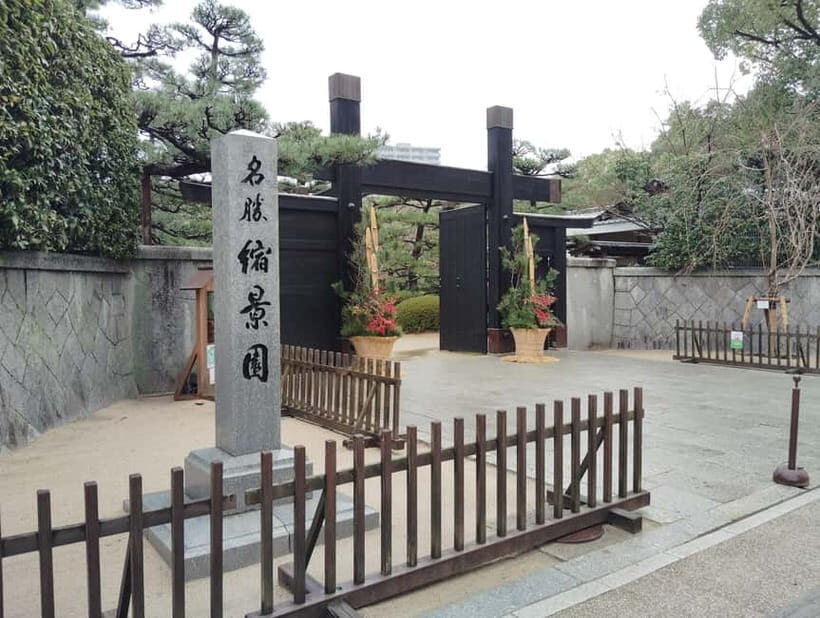
You meet in front of Shukkei-en, with the guide holding a yellow sign with the DeepExperience logo. The tour runs 90 minutes, including time for a photo stop, visiting, and guided sightseeing with a walk.
For planning, that timing is the sweet spot if you want something restful but not too slow. You’ll have enough time to circle key areas, but you won’t be out there all day. Bring comfortable shoes. Gardens are walk-first experiences, and this one is built around strolling paths by the pond.
Arriving at Shrink-Garden mode: what you’ll notice right away
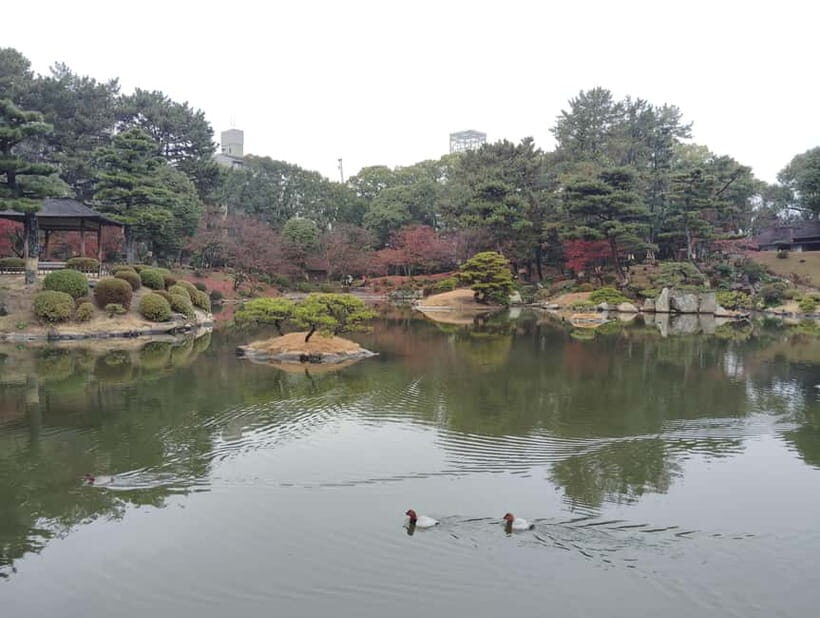
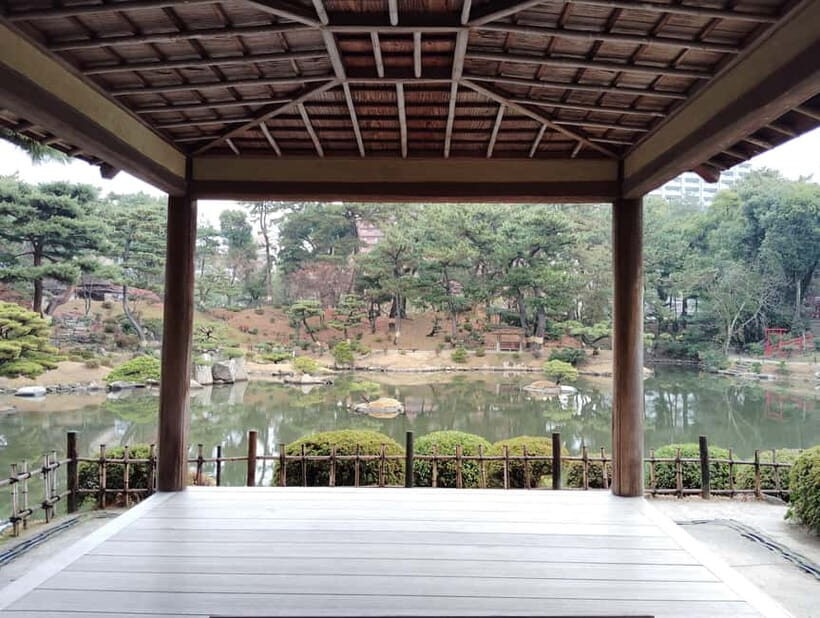
Once you’re inside, your eyes tend to lock onto the pond. That makes sense because the garden’s layout puts the water in the center, and everything else connects to that focal point. Buildings and structures are arranged so your views keep “opening up” as you follow the pathways.
This is also where having a guide matters. It’s easy to treat the garden as a set of isolated photo spots. But with explanation, you’ll start noticing the relationships: how a bridge view frames the pond, how a landing suggests a particular function in the overall scene, and how viewing platforms guide where your attention should go.
The central pond and daimyo-style scenic planning
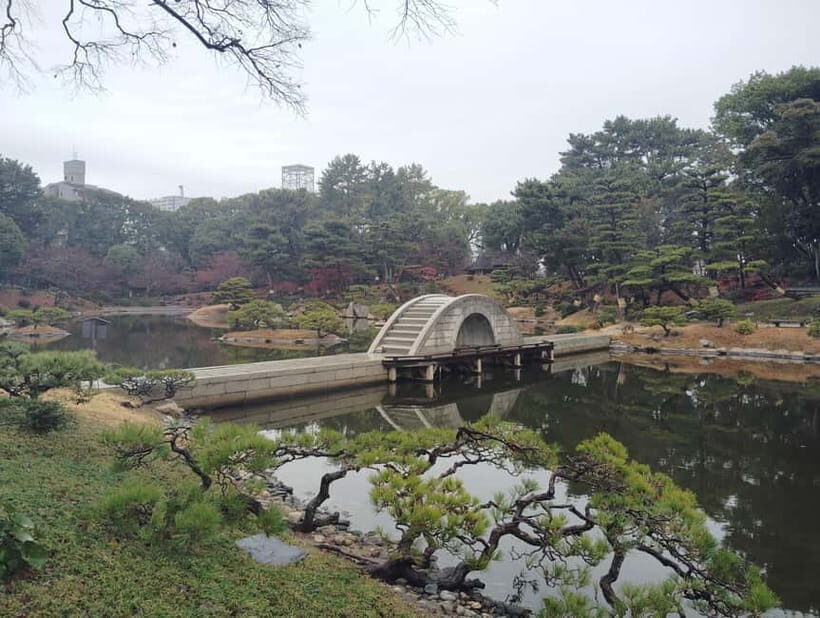
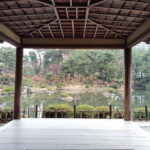
The standout feature is the large central pond, typical of daimyo gardens. In these gardens, the pond isn’t decorative only—it’s the organizing principle. It creates reflections, slows your perception of time, and anchors multiple viewpoints.
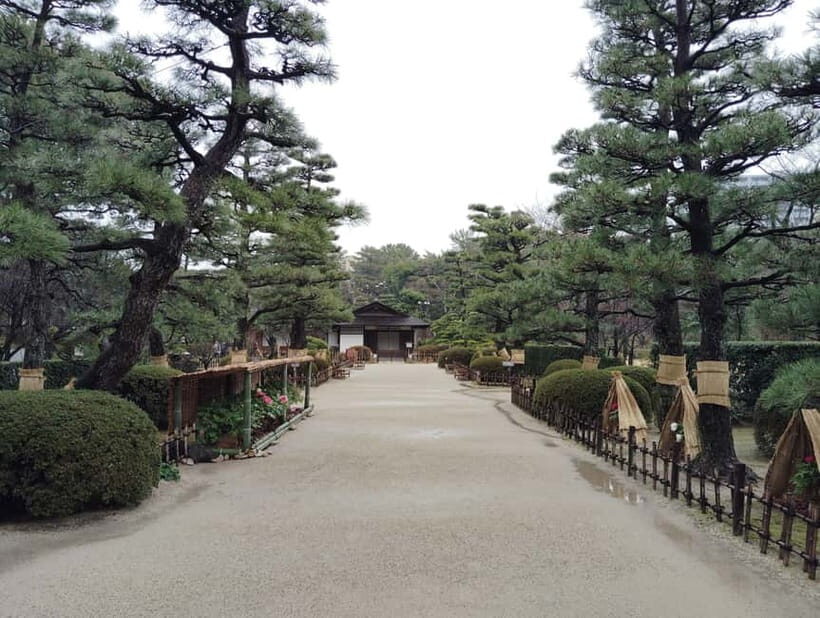
You’ll likely spend real time along the pond pathway. That’s where the tour feels most “designed”: you’re not just passing through; you’re moving through a sequence of views. If you’re the type who enjoys noticing composition—how paths curve, where sight lines go—this portion will make the most impact.



Curved stone bridge: the photo moment that’s also a viewpoint
One of the most memorable structures is the curved stone bridge. In many gardens, bridges are just crossings. Here, the curve is part of the experience because it controls perspective. A straight bridge gives you one “snapshot.” A curved one encourages you to see the pond from multiple angles as you approach and as you step into new sight lines.
If you take photos, you’ll probably find the best shots aren’t just from one spot. The guide can help you time your turn so you’re capturing the bridge with the right background view, not just a bridge by itself.
Boat landing and the sense of staged nature
Another distinctive feature is the boat landing. It adds a practical, almost story-like detail to the garden. Even if you’re not seeing any boats in motion, the landing makes the space feel like it has a “routine” in mind—movement on the water, gentle arrival, and people linking shore to scene.
This is the kind of detail that can be missed if you’re simply scanning for the biggest sights. A guide’s explanations help you understand why these elements are placed where they are: they’re not random decoration, they’re part of the overall theatrical garden plan.
The moon-viewing stage: quiet, seasonal meaning
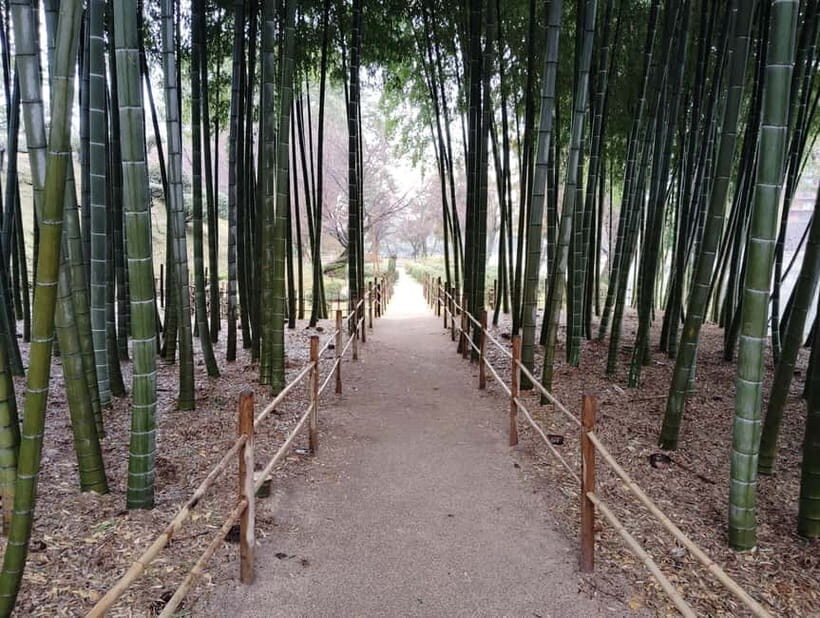
Shukkei-en also includes a stage for viewing the moon. That might sound like a niche feature, but it actually reveals something important about how daimyo gardens were used. Gardens like this weren’t only for daytime strolling; they were crafted to support special viewing moments, like evening or seasonal highlights.
Even if you visit in daylight, you can still sense the purpose of the layout. The stage is a cue. It tells you that this garden is meant for observation—taking your time and looking outward across water, rather than rushing through as a checklist.
Strolling paths: how the walk creates the pacing
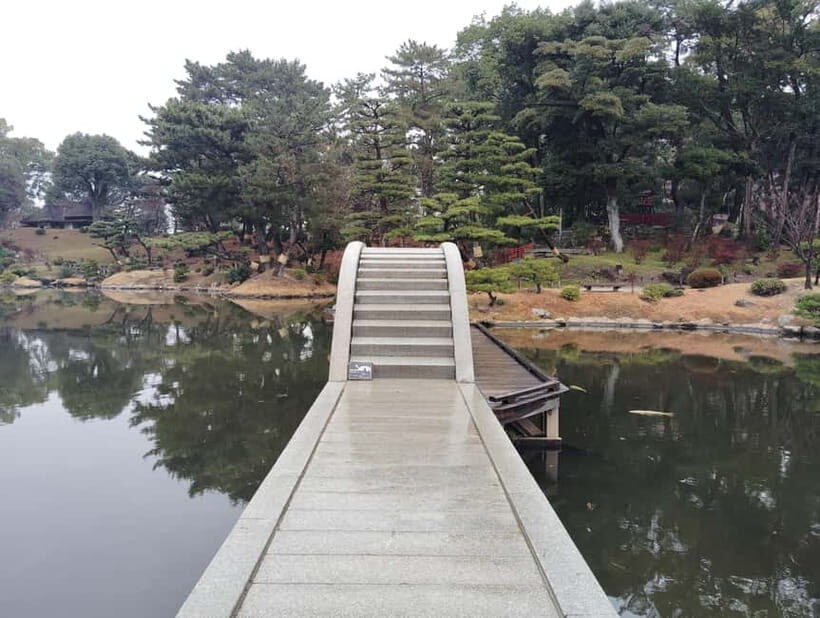
The itinerary is built around walking along the pond pathway and enjoying the changing scenery. That matters because Shukkei-en’s charm comes from the shift in perspective. A pond garden can feel static if you stand still too long. Move slowly and the garden “re-writes” the view for you—water angles, structures framed differently, and paths guiding your next glance.
In a short 90 minutes, you’ll still get that rhythm. The guided portion keeps it from feeling random, while the walking keeps it from feeling like a lecture. It’s a nice balance when you want both meaning and calm.
Where this tour fits in a Hiroshima day
This is a great choice when you want a lighter, restorative stop. Shukkei-en is located in central Hiroshima, so it works well between museum or memorial visits and your next meal or train connection. Think of it as a change of pace: you’re still in the city, but you’re shifting gears from hard history to carefully composed nature.
It’s also a strong option for mixed groups: older folks, couples, first-time visitors, and people who might not care about every garden term. The guide helps everyone connect the dots quickly, so you don’t need prior knowledge to enjoy the design.
Price and value: what you’re paying for at $58 per person
At $58 per person for 90 minutes, you’re paying for three main things that matter in real-world value:
- The entrance fee to Shukkei-en
- A professional guide fee (English or Japanese)
- The benefit of not wandering blindly—your guide explains what you’re seeing and where to look
You’re not paying for a full-day production. This is a focused, high-return garden tour. If you planned to visit on your own, the entrance is only one part of the story. The rest is understanding why the pond, bridges, and viewing spots are arranged the way they are. For many people, that explanation is exactly what turns a short visit into a memorable one.
Practical tips to get more out of the 90 minutes
Because this is short, you’ll get more by planning a couple things in your head:
- Wear comfortable shoes. Paths around ponds can be uneven or slippery depending on conditions.
- Bring a phone camera, but also take moments to look without framing. The moon-viewing stage idea works best when you pause.
- If you like photos, tell the guide you want a slow photo moment—so you don’t feel rushed.
And since food and drinks aren’t included, plan to grab a snack or drink before or after. This helps you keep the tour calm instead of thinking about lunch mid-walk.
Should you book it?
Book this Shukkei-en garden guide if you want a calm, well-explained Hiroshima stop that fits into a busy day. It’s especially worth it if you appreciate garden design, enjoy learning what you’re seeing, or you prefer a guided pace over wandering on your own.
Skip it if you’re looking for a long, unstructured garden day or you don’t care about context at all. In that case, you might enjoy Shukkei-en more with time to roam slowly on your own.
FAQ
How long is the Shukkei-en Garden tour with a local guide?
It lasts 90 minutes.
Where does the tour start?
The meeting point is in front of Shukkei-en.
What is the price per person?
The price is $58 per person.
What’s included in the tour price?
The entrance fee for Shukkeien Garden and the professional guide fee are included.
Is the tour private?
Yes, the tour is a private group.
What languages are available for the live guide?
The live guide is available in English and Japanese.
Does the tour include food and drinks?
No, food and drinks are not included.
Is there a guided walking component?
Yes. The experience includes a guided tour and walking around the garden.
What is the cancellation policy?
You can cancel up to 24 hours in advance for a full refund.
Is there a reserve now & pay later option?
Yes, there is a reserve now & pay later option.