REVIEW · HIROSHIMA
Hiroshima’s Heart: A 4-Hour Private Storytelling Walk
Book on Viator →Operated by Alex · Bookable on Viator
Hiroshima hits harder when you get the context. This private 4-hour walk strings together gardens, samurai-era streetscapes, Shinto traditions, and the Peace Memorial area with a local guide, Alex, who has lived here for 20+ years. You’ll see the big sights, but you’ll also get the small details that explain how Hiroshima thinks, grieves, and carries on.
I like that the pace stays relaxed—time for questions and reflection, not a rushed photo parade. I also like that you can choose where you start (Shukkeien Garden or Peace Memorial Park), so the day fits your mood. One possible drawback: it’s a walking tour, so you’ll want comfortable shoes and a willingness to cover a fair bit on foot.
In This Review
- Key Highlights You’ll Actually Feel on the Day
- A Private 4-Hour Storytelling Walk, Not a Checklist
- Picking Your Starting Point: Shukkeien Garden or Peace Memorial Park
- Shukkeien Garden: Calm Before the Hard Parts
- Hiroshima Castle Grounds: Life Before 1945, and What Replaced It
- Gokoku Shrine: Traditions That Keep the City Moving
- Peace Memorial Park and the Peace Line: The Context Many Miss
- A-Bomb Dome and the Peace Memorial Museum: Choose How Deep You Go
- Logistics That Matter: Price, Walking Time, and Comfort
- Who This Tour Suits Best (And Who Might Want a Different Plan)
- Should You Book Hiroshima’s Heart Private Story Walk?
- FAQ
- How long is the Hiroshima private storytelling walk?
- How many people can be in a group?
- Where do we meet the guide?
- Can the guide pick us up or help with meeting logistics?
- Is Shukkeien Garden admission included?
- Is the Peace Memorial Museum included?
- What’s included in the tour price?
- Is this tour accessible for most people, and are service animals allowed?
- Can I cancel for a full refund?
Key Highlights You’ll Actually Feel on the Day
- A private guide who lives in Hiroshima (Alex, 20+ years)
- Your choice of start point: Shukkeien Garden or Peace Memorial Park
- A calm pace with time to ask questions, plus reflection stops
- Peace Memorial Park context along the Peace Line, not just monuments
- Optional museum time when you want deeper clarity at your own speed
A Private 4-Hour Storytelling Walk, Not a Checklist
This tour is built for understanding, not box-checking. You’re not just moving from landmark to landmark. You’re learning how Hiroshima’s layers fit together—what the city looked like before 1945, what changed, and how daily life continues around the memorial message.
What makes it work is the storytelling style. You’ll get perspective tied to each place, including the kinds of details that usually get missed when you’re reading plaques alone. The guide keeps it approachable, with room for questions, so the experience feels like a conversation rather than a lecture.
You also control the flow more than most standard tours. It runs about four hours, but the pace stays flexible, and the itinerary can be customized around what you want more of—gardens, castle atmosphere, shrine traditions, or the Peace Memorial message.
Other Hiroshima walking tours in Hiroshima

Picking Your Starting Point: Shukkeien Garden or Peace Memorial Park
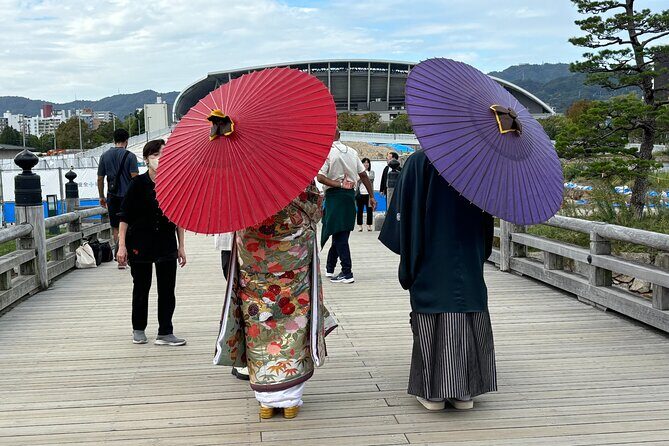
You choose your starting mood. Start at Shukkeien Garden and you’ll ease into Hiroshima with calm paths, ponds, and bridges before the day turns heavier. Start at Peace Memorial Park and you’ll begin with the city’s central message of peace, then walk outward to see the wider picture.
Either way, the guide meets you at a convenient spot in central Hiroshima—either in Peace Memorial Park or in front of Shukkeien Garden. The exact meeting point is confirmed in advance, which helps when you’re trying to get your bearings in a new city.
This choice matters more than it sounds. Hiroshima can feel emotionally intense. If you want a gentler ramp-up, beginning in the garden gives your brain a soft landing before the Peace area. If you already know you want the Peace message first, starting there helps you feel grounded before you explore what was around the city before 1945.
Shukkeien Garden: Calm Before the Hard Parts
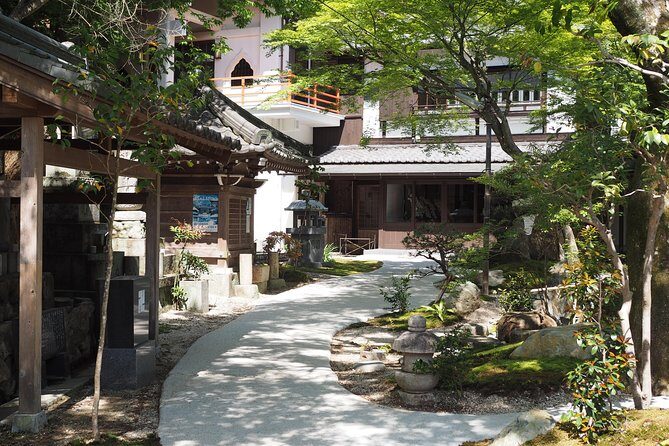
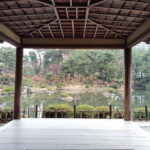
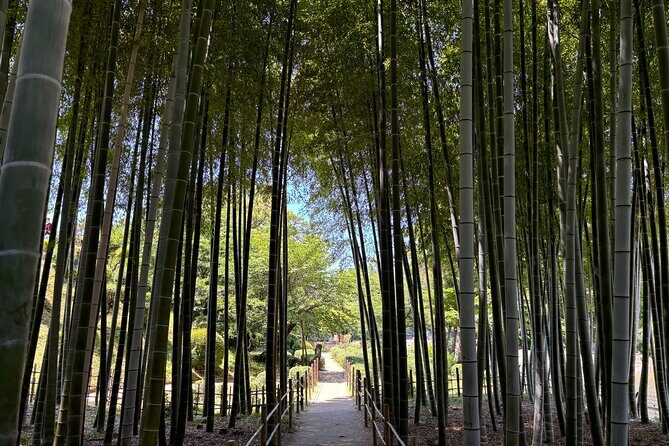
Shukkeien Garden is a strong opening because it slows you down on purpose. You’ll walk winding paths and spend time looking closely at the ponds and bridges while learning how Hiroshima’s early cultural roots connect to what you see today.
This stop works well for two reasons. First, it’s visually quiet, so you’re not rushing your attention. Second, the guide uses the garden as a way to talk about Hiroshima as a living place, not only as a historical site.
Plan for about an hour here. The admission fee is not included, so you’ll want to budget an extra ¥360 per person for the garden. If you start here, it also sets up a contrast that lands later: the Peace area will feel less abstract because you’ll have already seen another side of Hiroshima.
Hiroshima Castle Grounds: Life Before 1945, and What Replaced It
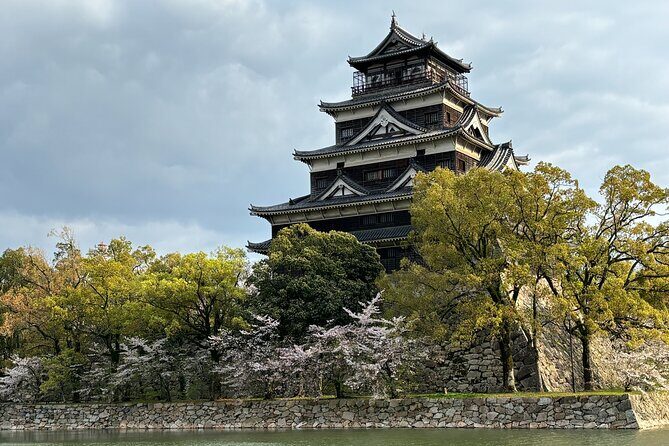
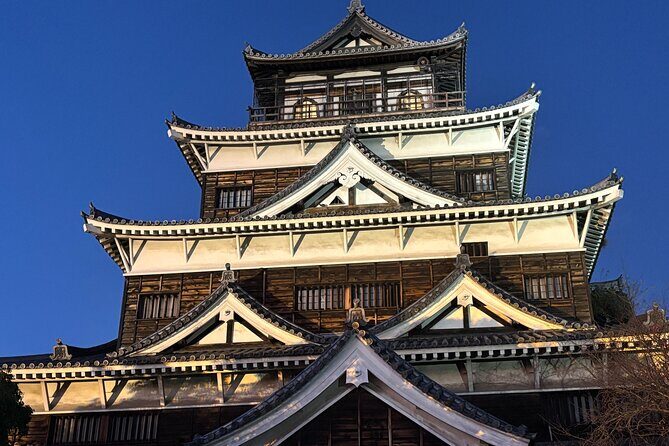
Next comes Hiroshima Castle, where you get a sense of the city’s samurai-era center—then you learn how this area changed after the bombing. The castle building you see now is a reconstruction, but the grounds still help you grasp why this location mattered historically.
Even if you don’t go inside, the time here is worth it. It gives you spatial context. You begin to understand how the city was organized and why certain neighborhoods and landmarks became symbolic later on. The guide ties the layout and surroundings to the everyday life that existed before 1945, then connects that to postwar transformation.
This stop is shorter—about 30 minutes—and the admission is free for the grounds visit. That makes it a good use of time inside a four-hour day: you get perspective without losing momentum.
A practical tip: look beyond the main view. Notice the edges, the approach paths, and the way the site sits in relation to the rest of what you’ll visit. The guide’s stories will make those small observations click.
Gokoku Shrine: Traditions That Keep the City Moving
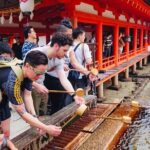
Hiroshima Gokoku Shrine is a peaceful break that adds depth in a way most visitors don’t expect. You’ll spend around 30 minutes here, and the point isn’t just to see a shrine building—it’s to understand the rituals, festivals, and spiritual routines that shape everyday Hiroshima.
Shinto life often feels invisible to visitors who focus only on museums and memorials. This stop corrects that. It reminds you that Hiroshima isn’t defined only by one event. Traditions continue, and they influence how people interpret time, community, and remembrance.
The shrine admission is free, and the experience fits well in the middle of the day, right before you step into the Peace Memorial area. It acts like a mental reset: quieter, slower, and more local.
If you’re the type who likes to notice how locals move—where they pause, how they behave, what details they pay attention to—this is the kind of stop you’ll appreciate.
Other walking tours we've reviewed in Hiroshima

Peace Memorial Park and the Peace Line: The Context Many Miss
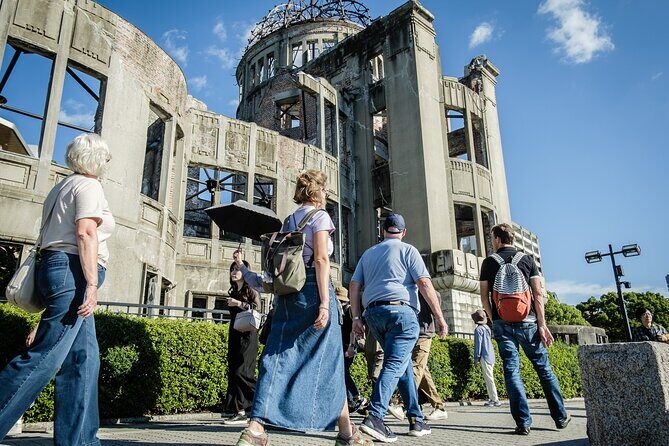
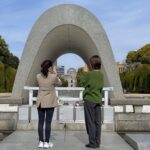
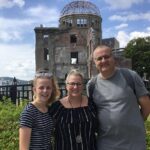
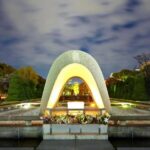
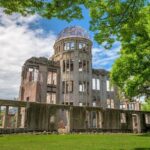
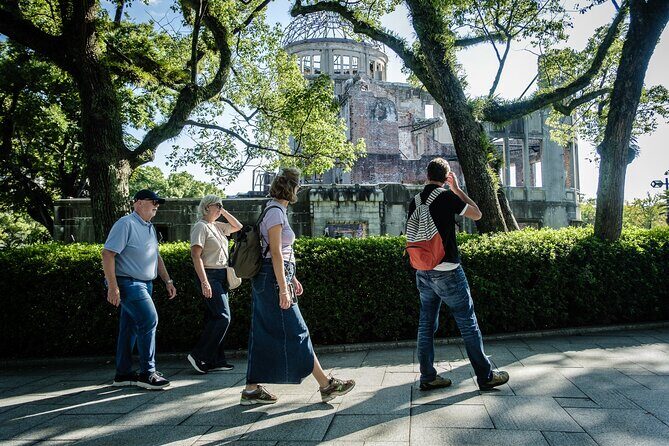
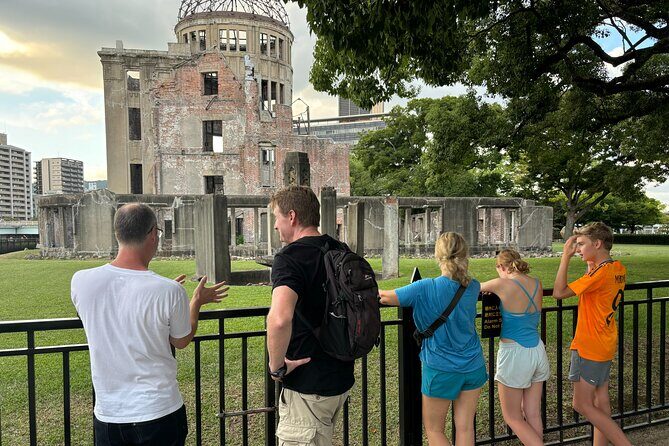
Peace Memorial Park is where Hiroshima speaks most clearly. You’ll walk through key points such as the A-Bomb Dome and the Children’s Peace Monument while your guide shares stories from survivors and from local families.
This is the heart of the tour, and it’s handled with care. The guide explains what you’re seeing and why it matters, and the pace stays relaxed so you can digest what you’re learning. You’ll also have time to reflect and ask questions, which is important here—your emotional reaction is part of the experience.
The tour specifically follows the Peace Line into the park, which helps you understand how the memorial message is physically laid out. Instead of seeing monuments as separate stops, you’ll experience them as a connected route.
Park time is about an hour, and admission is free for the monuments and grounds. Use that time actively: read slowly, look at the details, and don’t rush the darker moments just to keep up. The guide is there to help you hold meaning, not just facts.
A-Bomb Dome and the Peace Memorial Museum: Choose How Deep You Go
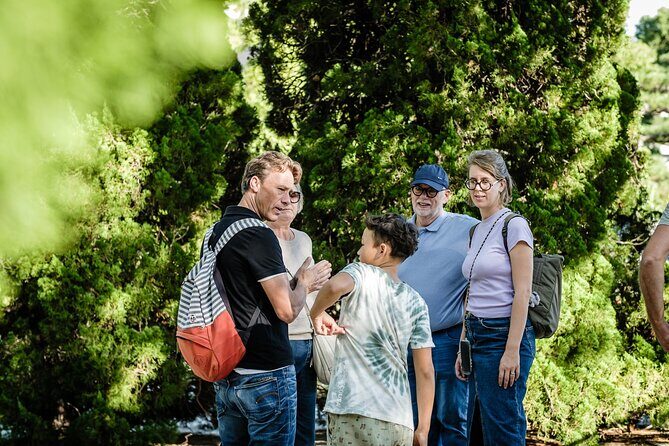
After the main Peace area walk, you can add the Peace Memorial Museum if you wish. This is about getting clarity, especially when you want more than the stories outside.
Museum time is about an hour, and admission is not included. The entrance fee is ¥200 per person. Your guide can guide you through key sections when conditions allow, which matters because crowding changes how well you can read and process exhibits.
If the museum is crowded or you prefer a quieter approach, the guide can adjust—offering introductions and guidance without forcing a strict, go-go schedule. That flexibility is a big deal in a place like this, where everyone’s pace is different.
The best way to use museum time on a short day is to focus. Don’t try to see everything like it’s a race. Pick what you want to understand most and let the guide help you find the strongest sections for your questions. You’ll leave with a more coherent picture.
Logistics That Matter: Price, Walking Time, and Comfort
This tour costs $209.03 per group, up to 6 people. That’s a surprisingly good deal if you travel with family or a small group and can fill the group size. If you have fewer people, the per-person value drops—but you still get something you can’t buy in a group bus: a private, story-led walk that adapts to your questions and mood.
The total cost isn’t just the base price, though. You should budget for Shukkeien Garden and the museum if you choose to include them. Shukkeien is ¥360 per person, and the Peace Memorial Museum is ¥200 per person. The good news is that the key memorial areas and the castle grounds are free, so you’re not paying admission for every stop.
The tour runs about four hours. That’s manageable, but you should expect real walking. Wear comfortable shoes, bring water, and dress for weather. Hiroshima can be hot, rainy, or chilly depending on season, and a relaxed pace still means moving from area to area.
Pickup is offered, and you can also start from a central meeting point near public transportation. If you’re staying near Peace Memorial Park or Shukkeien Garden, this is especially convenient.
One more small planning note: this experience is often booked about 83 days in advance on average. If you’re traveling in a popular season, book early so you can lock in your preferred start time.
Who This Tour Suits Best (And Who Might Want a Different Plan)
This is a great match for people who want more meaning than a quick sightseeing sweep. If you care about context—why things are placed where they are, how the past informs daily life, and what locals carry forward—this will feel rewarding.
It’s also ideal for families who want structure without stiffness. The guide’s style seems to work with kids who have energy and questions, and the pace allows curiosity to stay alive instead of shutting it down.
If you’re someone who wants maximum museum time and full deep-reading sessions, you might find four hours a bit short for an intense dive into every exhibit. In that case, you could consider adding extra time on your own after the tour.
And if you strongly dislike walking, this may not be the best fit. It’s not a sit-and-stroll with long breaks. It’s a real walking tour built around moving between story points.
Should You Book Hiroshima’s Heart Private Story Walk?
If you’re visiting Hiroshima for the first time, I’d lean yes—especially if you want the day to feel thoughtful and coherent. The biggest value here is the balance: gardens and castle context before the Peace area, plus a guide who helps you understand what you’re seeing without rushing you.
Book it if you want:
- A calm, private pace
- A guide with deep local roots (Alex has lived in Hiroshima for 20+ years)
- Meaningful time at Peace Memorial Park, with space for questions
- An option to include the Peace Memorial Museum when you’re ready
Skip it or consider an alternative if you’re trying to do Hiroshima like a strict checklist and you don’t want walking time or guided interpretation. Also, plan your day around shoe comfort and the museum admission costs, so there are no surprises.
FAQ
How long is the Hiroshima private storytelling walk?
It runs about 4 hours.
How many people can be in a group?
It’s a private experience for your group, up to 6 people.
Where do we meet the guide?
You’ll meet at a convenient central Hiroshima location. You can start in Peace Memorial Park or in front of Shukkeien Garden, depending on what you choose.
Can the guide pick us up or help with meeting logistics?
Pickup is offered, and the meeting point can be flexible within central Hiroshima. The exact meeting point is confirmed when you book.
Is Shukkeien Garden admission included?
No. Shukkeien Garden costs ¥360 per person and is not included.
Is the Peace Memorial Museum included?
It’s optional. If you choose to go, the museum entrance costs ¥200 per person and is not included.
What’s included in the tour price?
The private 4-hour walking tour includes an English-speaking local guide, a customizable itinerary, flexible meeting point options in central Hiroshima, and personal recommendations afterward.
Is this tour accessible for most people, and are service animals allowed?
Most travelers can participate, and service animals are allowed. The tour is a walking experience, so comfortable footwear is important.
Can I cancel for a full refund?
Yes. You can cancel up to 24 hours in advance for a full refund. If you cancel less than 24 hours before the start time, the amount paid is not refunded.