REVIEW · HIROSHIMA
Hiroshima Peace Memorial and Atomic Bomb Dome Private Tour
Book on Viator →Operated by Tahir · Bookable on Viator
Peace Park hits hard, on purpose. This private tour strings the Hiroshima story together at the museum and key monuments, with a guide to help you make sense of what you’re seeing and why it still matters today. You get private guide context plus a focused walk through Hiroshima Peace Park instead of wandering and guessing.
I love the way the visit builds in layers. The Peace Memorial Museum gets you real artifacts and survivor stories, and you get a solid 1 hour 30 minutes to take it in without feeling rushed. I also like the stop at the Hiroshima National Peace Memorial Hall, where the setup includes access to a victim database on screens, so the memorial isn’t just about ideas, it’s about names and lives.
One consideration: this is emotionally intense and very stop-and-stand. If you’re sensitive to heavy topics, plan for slower moments, comfortable shoes, and a little breathing room so your brain can keep up.
In This Review
- Key highlights to look for
- Why this private Peace Park tour feels different from going alone
- Peace Memorial Museum: your best chance to understand the tragedy clearly
- Hiroshima National Peace Memorial Hall: names, screens, and victim context
- Peace City Monument Cenotaph: the view that puts everything in one picture
- Children’s Peace Monument and the Sadako Sasaki focus
- Atomic Bomb Memorial Mound: ashes recovered, sadness in the design
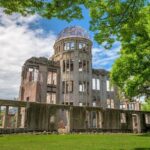
- Atomic Bomb Dome (A-Dome): the walk that turns history into a place
- Meeting point, route flow, and how to plan your time in Hiroshima Peace Park
- Price and value: what $85 covers and where it pays off
- Best fit: who should book this private tour
- Should you book the Hiroshima Peace Memorial and Atomic Bomb Dome private tour?
- FAQ
- How long is the Hiroshima Peace Memorial and Atomic Bomb Dome private tour?
- How much does the tour cost?
- What admission tickets are included?
- Where do we meet, and where does the tour end?
- Is this a private tour?
- Can I cancel for a full refund?
Key highlights to look for
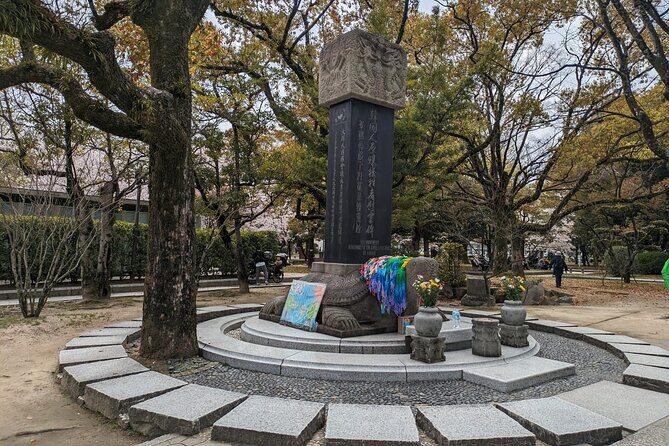
- Private guide storytelling that connects each monument into one clear sequence
- 1.5 hours at the Peace Memorial Museum with admission included
- Victim database screens at the Hiroshima National Peace Memorial Hall for a more human context
- Free memorial stops with short, manageable time blocks for Children’s Monument, the Ashes Mound, and the A-Dome
- Mobile ticket for easier entry and less on-the-spot hassle
- A route that ends at the Atomic Bomb Dome, so you finish right where the images are most iconic
Why this private Peace Park tour feels different from going alone
Hiroshima’s Peace Memorial Park is not the kind of place where you want to wing it for the main details. Even if you’ve read a book or watched a documentary, the park works better when someone helps you connect the dots. In this format, a guide is there to translate what the monuments are communicating and how each stop fits into the larger message of remembrance and nuclear disarmament.
The biggest practical win is pacing. You spend enough time where it matters most, then you hit the surrounding memorial points without burning your whole day. The route is also designed around short visits that still leave space to look carefully—important when the subject is so heavy that your eyes and your heart both need time.
And yes, it’s emotional. You’re looking at remnants of catastrophe and built-in reminders of the human cost. The upside of having a guide is that you don’t just absorb sadness; you also come away with a framework for understanding what happened and why the park’s message keeps getting repeated around the world. One family-friendly detail I liked from real-world experience reports: guides have shown patience with young children on tour, including a case where a guide managed a very small baby calmly while staying focused on the sights.
Other private guided tours in Hiroshima
Peace Memorial Museum: your best chance to understand the tragedy clearly
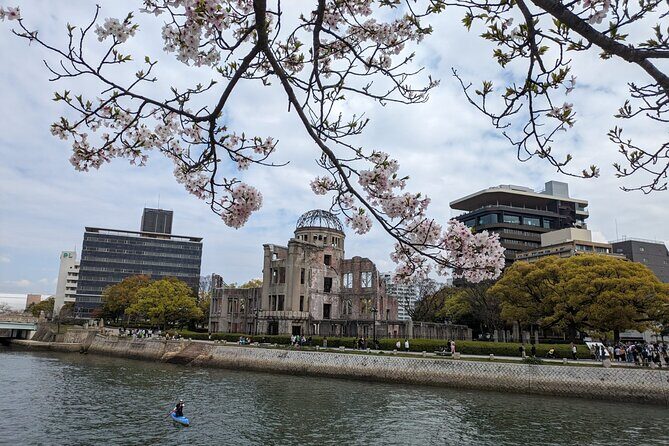
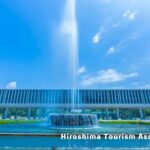
This is the core stop, and it’s given the time it deserves: about 1 hour 30 minutes, with the admission ticket included. The museum isn’t just a timeline. It uses damaged artifacts and personal effects to make the event feel real in a way that basic photos can’t. People often mention seeing surviving objects and personal items of victims in the exhibits, paired with visuals and explanations that place Hiroshima in a wider wartime context.
What you gain with a private guide here is efficiency with meaning. Alone, you might get pulled toward the most shocking display and miss the structure that helps the story click. With a guide, you can expect help turning the museum from a collection of rooms into a coherent narrative: what led up to the bombing, what the immediate aftermath looked like, and how Hiroshima rebuilt while pushing for peace.
A drawback to plan for: the museum can feel draining. If you’re the type who needs a break after intense exhibits, treat the museum as the place where you slow down. The guide’s job is to keep the flow moving, but you can still pause and take a breath before moving on to the next section.
Hiroshima National Peace Memorial Hall: names, screens, and victim context
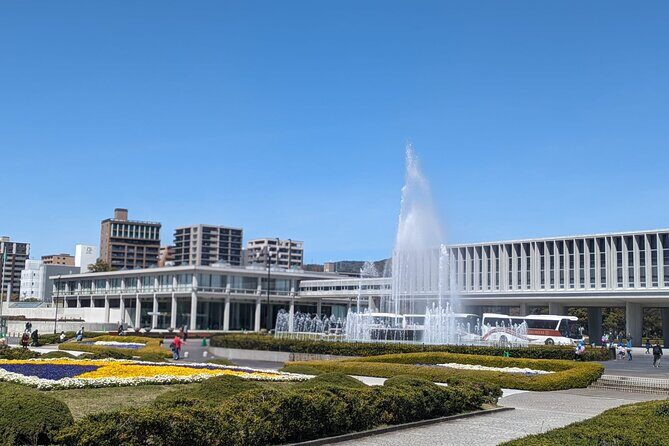
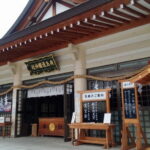
After the museum, you shift from general history into a more reflective, personal zone at the Hiroshima National Peace Memorial Hall for the Atomic Bomb Victims. This stop is shorter—about 20 minutes—but it packs a specific kind of weight.
The hall includes screen displays with access to a database of victims. That means the memorial’s focus isn’t only on the event as history; it also supports the idea of the victims as individuals. For many people, that database function is what turns the story from distant to immediate. You can look for more concrete details and feel how remembrance works when it includes records, not just monuments.
One practical note: because this is a short stop, you’ll want to arrive ready to concentrate. If you’re tired from the museum already, you might want a quick sip of water and a couple of slow breaths before you begin reading what’s on the screens.
Peace City Monument Cenotaph: the view that puts everything in one picture
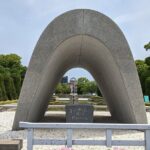
At the Peace City Monument Cenotaph for the Atomic Bomb Victims, you get a panoramic look over Hiroshima Peace Memorial Park, with the Peace Memorial Museum, the Atomic Bomb Dome, and other monuments in view. This part takes about 20 minutes and is free to enter.
This is one of those moments where the geography matters. From here, the park stops being a set of separate stops and starts acting like a designed message. You can see how the museum and the A-Dome relate, how the monuments are positioned, and why the park is laid out the way it is: for attention, for contemplation, and for an overall call toward peace.
The main consideration is timing and emotion. This is a great viewpoint, but it’s also a place to absorb grief. Don’t plan to treat this like a quick photo moment. If you want photos, take them, but also give yourself a minute to look without the camera.
Children’s Peace Monument and the Sadako Sasaki focus
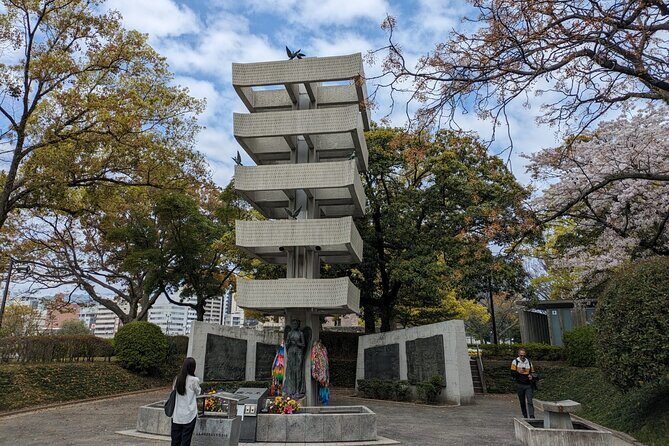
Next comes the Children’s Peace Monument, where the memorial is dedicated to Sadako Sasaki and other child victims who died from the effects of the atomic bomb. The visit is brief—about 10 minutes—and it’s free.
This stop hits different because it narrows the focus. The message isn’t abstract anymore. You’re dealing with the reality that the bombing’s consequences reached children and families in a direct, personal way. Even without extra background, the memorial’s focus makes the history feel urgent rather than distant.
If you’re traveling with kids or you’re bringing older teens, this is often where conversations start. Not in a casual way, but in a real, respectful way where questions come up. A guide can help you answer those questions without getting lost in details you might not want to handle on your own.
Other Peace Memorial Park tours in Hiroshima

Atomic Bomb Memorial Mound: ashes recovered, sadness in the design
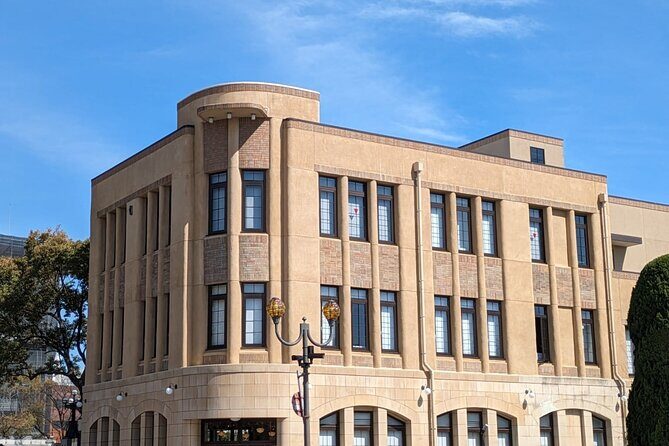
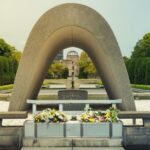
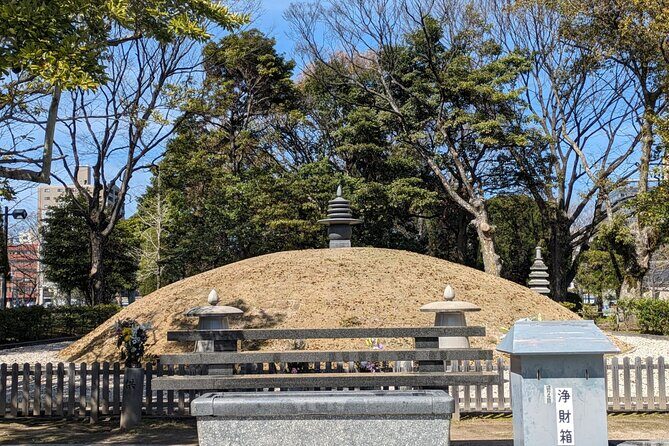
The Atomic Bomb Memorial Mound is where the memorial turns sacred and still. This is about 20 minutes and free to enter. It’s described as a place with strong feelings and a beautiful form—but sad in representation.
The key detail here is that the mound holds ashes recovered from the victims of the bomb. That matters. It’s one thing to look at a photo of destruction. It’s another to understand that the remains were collected and placed here as part of an act of remembrance.
What I’d do in this stop: slow down your pace. This isn’t the place to hurry for your next monument. If you’re the type who needs to move around to regulate emotions, you’ll still find that it’s hard to fully shake the gravity of the mound.
Atomic Bomb Dome (A-Dome): the walk that turns history into a place
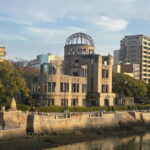
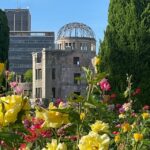
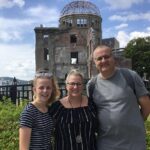
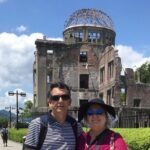
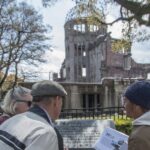
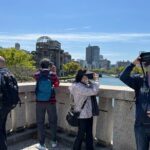
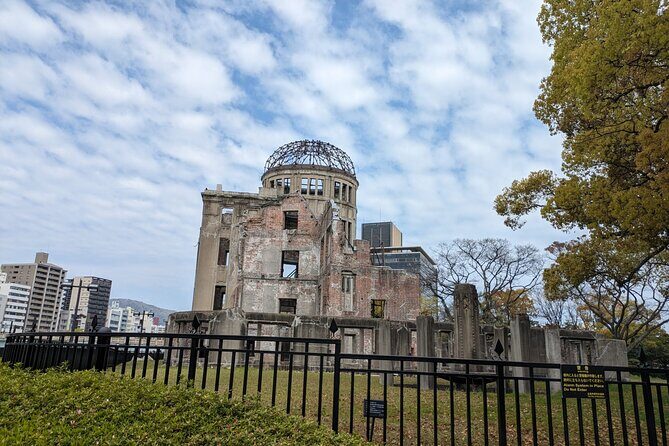
You finish with time around the Atomic Bomb Dome, often called the A-Dome. Plan on about 20 minutes, and it’s free to enter. This is the stop that most people picture before arriving in Hiroshima. The dome’s ruined form has become one of the world’s clearest symbols of nuclear war’s devastating impact.
Walking around the dome gives you a different perspective than a single front-facing photo. It helps you see angles, how the structure looks from different sides, and how it sits within the rebuilt city. Even if you know the basics, seeing the dome’s survival in a modern urban setting can land in a deeper way than you expect.
A practical tip: treat this as your “end-of-tour decompression” moment. If you still have questions, a good guide can tie things together. If you’re worn out, that’s normal too. This area invites reflection more than it invites speed.
Meeting point, route flow, and how to plan your time in Hiroshima Peace Park
The tour starts at the Peace Memorial Mailbox 1 at Nakajimacho in Naka Ward. It ends at the Atomic Bomb Dome area (Otemachi, Naka Ward). Because your route finishes at the dome, you’re not stuck retracing your steps back to where you began.
Two time-saving thoughts for you:
- Start with realistic energy. If you’re arriving after a long train day, budget extra care for the museum portion.
- Build in a buffer after the tour. You’ll likely want a little time to walk slowly, take in the final view, and reset before dinner.
Since this is near public transportation, getting to the start point is generally straightforward. Also, the tour uses a mobile ticket, so you won’t be scrambling for printed paperwork at the last minute.
Price and value: what $85 covers and where it pays off
At $85 per person for about 3 hours, this isn’t a “just buy a ticket and get a sticker” kind of experience. You’re paying for a private guide plus built-in entry where admission is included.
Two stops include admission tickets: the Hiroshima Peace Memorial Museum and the Hiroshima National Peace Memorial Hall for the Atomic Bomb Victims. The other memorial stops in the park are free, so you’re not paying twice for each piece of the route.
So what’s the real value? Time and interpretation. You’re not only paying for access; you’re paying for someone to help you understand what each monument is saying so you leave with more than a checklist of sites. In multiple reported experiences, guides like Khan, James, Hans, and Ali are praised for turning the park into a structured story with respectful explanations. One guide was specifically described as sending detailed meeting information and being patient with a family traveling with an 8-month-old, which tells you something important: the human side matters in a place that can overwhelm.
One small caution from real-world experience: tour start times can change if adjustments happen close to the day of travel. I’d check your confirmed time carefully the evening before you go, not only on the booking day. It’s the easiest way to protect your plans.
Best fit: who should book this private tour
This tour works best if you want:
- A guided sequence that helps you connect museum details to monuments
- A clearer explanation than you’ll get from signboards alone
- A time-efficient Peace Park experience that still respects the emotional weight
It’s also a strong choice for families who want structure. People have described guides as accommodating when someone in the group needed extra physical help, including support getting a wheelchair and assistance around basic needs during the visit. That doesn’t mean you should assume every situation will be handled the same way, but it does suggest the guides pay attention to the practical realities of your group.
If you’re the type who already knows Hiroshima’s history deeply and prefers to read every panel at a slow pace on your own, you might feel less need for a guide. But if you want understanding without spending hours building context yourself, this private format makes that easier.
Should you book the Hiroshima Peace Memorial and Atomic Bomb Dome private tour?
I’d book it if you’re visiting Hiroshima for the first time—or if you’ve visited before but want a stronger understanding the next time around. The mix of museum depth, a stop with victim database screens, and the walk around the A-Dome creates a complete arc: history, remembrance, and symbolism in one structured outing.
Skip it only if you’re looking for a casual sightseeing loop, because this is emotionally serious. Also, if your schedule is super tight and you can’t tolerate any start-time adjustments, double-check before you commit to other timed plans.
If you do book, give yourself a clear half-day mindset. Bring comfortable shoes. And when the Peace Park gets quiet in your head, that’s not a bug. That’s the point of the place—and the guide helps you meet it with understanding.
FAQ
How long is the Hiroshima Peace Memorial and Atomic Bomb Dome private tour?
It’s about 3 hours (approx.).
How much does the tour cost?
The price is $85.00 per person.
What admission tickets are included?
Admission tickets are included for the Hiroshima Peace Memorial Museum and the Hiroshima National Peace Memorial Hall for the Atomic Bomb Victims. Other stops in the park are free to enter.
Where do we meet, and where does the tour end?
You meet at Peace Memorial Mailbox1 Nakajimacho, Naka Ward, Hiroshima (north corner of Hiroshima Peace Park). The tour ends at the Atomic Bomb Dome area (Ōtemachi, Naka Ward).
Is this a private tour?
Yes. Only your group participates.
Can I cancel for a full refund?
Yes. You can cancel up to 24 hours in advance for a full refund.