REVIEW · HIROSHIMA
History of Hiroshima: Small Group Night Walking Tour
Book on GetYourGuide →Operated by GhaniExplorer · Bookable on GetYourGuide
Night turns history into something you feel. This Hiroshima Peace Memorial Park night walking tour puts you among the memorials when the crowds thin out and the mood gets quieter and heavier, with Hiroshima Peace Memorial Park as your core stage.
I really like two things. First, you get an expert-led explanation from a PhD scholar, with room for questions and real context, not just recited plaques. Second, the Atomic Bomb Dome glowing against the night sky lands in a way daytime photos can’t match. In the middle, you also get thoughtful stops that connect loss to hope.
The main drawback is simple: it’s only 2 hours, so each site gets a guided moment rather than long free time. If you want to linger over the Hiroshima Peace Memorial Museum or read every name and detail at street level, you’ll likely need extra time on your own.
In This Review
- Key highlights at a glance
- Why a night walking tour in Hiroshima Peace Memorial Park hits different
- Starting at Gates of Peace: getting your bearings fast
- Prayer Fountain to the Peace Memorial Museum: the story begins at ground level
- Memorials of loss: cenotaphs, names, and the Flame of Peace
- Hiroshima National Peace Memorial and Children’s Peace Monument
- Korean Atomic Bomb Victims Cenotaph: expanding the perspectives you’ll see in Hiroshima
- Aioi Bridge to the Atomic Bomb Dome: the view becomes part of the meaning
- Ending at the Hiroshima Atomic Bomb Hypocenter Monument: a clear final focus
- Small-group pacing and the PhD scholar guide style
- Price and value: is $28 worth it for 2 hours?
- Practical tips: umbrella, shoes, and what to plan around
- Who this tour suits best (and who should think twice)
- Should you book this Hiroshima Peace Memorial Park night tour?
- FAQ
- How long is the History of Hiroshima: Small Group Night Walking Tour?
- What does this tour cost?
- Where do we meet?
- Is the tour wheelchair accessible?
- What language is the guide?
- How big is the small group?
- What should I bring for a night tour?
- Is food included?
- Does the route include the Peace Memorial Museum?
- How does free cancellation work?
Key highlights at a glance
- Small group of up to 10 for a more personal, question-friendly pace
- Atomic Bomb Dome at night with the Peace Memorial Park ambience working for the view
- PhD scholar-led history with the story framed from destruction to peace
- Memorial variety: cenotaphs, the Flame of Peace, children’s monument, and more
- Easy-to-follow route that ends at the Hypocenter Monument for a strong final focus
Why a night walking tour in Hiroshima Peace Memorial Park hits different
Daytime in Hiroshima Peace Memorial Park is meaningful, but night changes the emotional math. The lighting softens the edges of the memorial architecture. The sounds get quieter. And the walk becomes less like sightseeing and more like a guided, steady walk through consequences and remembrance.
That matters because this isn’t a tour that only aims for memorable pictures. You’re learning why Hiroshima mattered before the bombing, why it was chosen, and how the city rebuilt its identity around peace. At night, those explanations feel less academic and more immediate. You’re standing in the same places people still visit today, only in a different rhythm.
You also benefit from the practical side of doing it after dark: fewer crowds usually mean you can actually hear the guide. The tour is designed for attentive listening, and the setting supports that.
Other Hiroshima walking tours in Hiroshima
Starting at Gates of Peace: getting your bearings fast
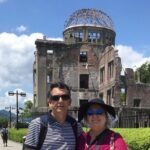
Your meeting point is at the Gates of Peace, in front of an Italian restaurant. That’s a helpful landmark. It also means you’re not hunting for a bus stop or a subway exit while trying to coordinate with a guide and time-sensitive nighttime hours.
From the start, the tour tone is set right away at the Gates of Peace area. You’ll get a guided orientation so you understand what you’re about to see and why it was built the way it was. That first introduction is important on a short tour. With only 2 hours, you want your mental map working from minute one.
Prayer Fountain to the Peace Memorial Museum: the story begins at ground level
Next comes the Prayer Fountain stop, followed by a brief visit to the Hiroshima Peace Memorial Museum. Even though the museum time is short, it’s a smart inclusion for this format. It gives you a frame before the memorials deepen.
Here’s the practical advice I’d give you: if the museum is one of your top priorities, plan to focus there as much as possible within the tour window. One of the strongest bits of feedback on this tour is that the pacing is very effective for the time you have, and it’s best to treat the museum stop as your early anchor rather than something to postpone until the end.
The tour’s goal at this stage is not to make you memorize every exhibit. It’s to connect the locations you’ll see next to the larger story: Hiroshima before the bombing, the reasons behind the attack, and what followed as the city pushed for peace.
Memorials of loss: cenotaphs, names, and the Flame of Peace
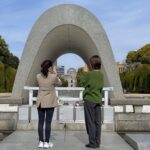
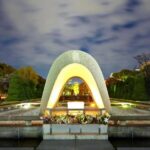
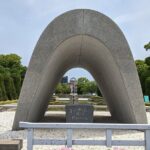
As you continue, you’ll hit a sequence of sites that broaden the story beyond a single iconic image. You’ll visit the Hiroshima Victims Memorial Cenotaph and then the Flame of Peace. These stops are designed to slow you down, even if the overall pace is brisk.
A cenotaph can feel abstract unless someone connects it to what it’s preserving: memory, absence, and the insistence that lives mattered, even when tragedy was total. The guide explanations—led by PhD scholar level expertise—help turn these structures into specific meaning. You’re not just moving from one statue to the next.
The Flame of Peace is also a key moment. It’s not just a photo stop. It’s a symbol of ongoing commitment, and it sits in a part of the park where the air feels more reflective than theatrical. The lighting at night helps here, too. You’ll often get a quieter, more intimate atmosphere around the memorial spaces after dark.
Hiroshima National Peace Memorial and Children’s Peace Monument
Then the tour moves into the Hiroshima National Peace Memorial area and the Children’s Peace Monument. These are powerful stops because they force you to think beyond the word victims.
A memorial for children shifts the emotional center of gravity. It’s not only about what happened; it’s about what should never happen again, and what innocence means when history goes wrong. The tour doesn’t treat this subject like a checklist item. The guide approach is built for reflection while still keeping momentum.
One review highlighted how the tour stays informative and engaging even with a tough theme. That balance is hard to get right. Here, it comes from how the guide explains the connections between each site and the broader peace message.
Other walking tours we've reviewed in Hiroshima
Korean Atomic Bomb Victims Cenotaph: expanding the perspectives you’ll see in Hiroshima
Another stop is the Korean Atomic Bomb Victims Cenotaph. This is one of the most valuable additions on the route because it adds a layer many first-time visitors might not expect to see emphasized.
If you only come with a single story in your head, the tour works to broaden that perspective. You’ll hear context about the people remembered here, and why it matters to include their names in the larger narrative of the bombing and its aftermath.
This is also where the small-group format pays off. With fewer people, it’s easier to ask questions and hear answers that match what you didn’t know yet.
Aioi Bridge to the Atomic Bomb Dome: the view becomes part of the meaning
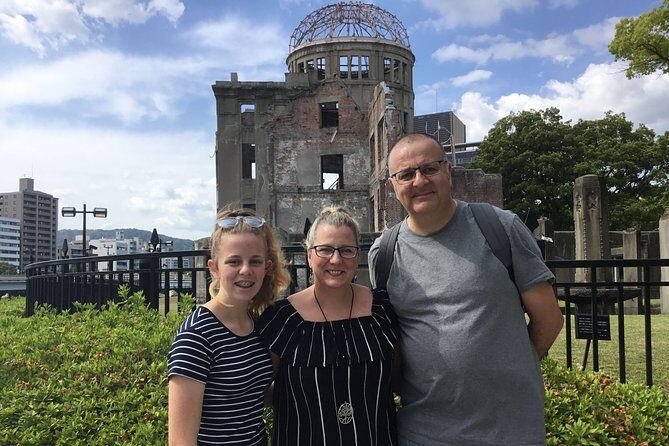
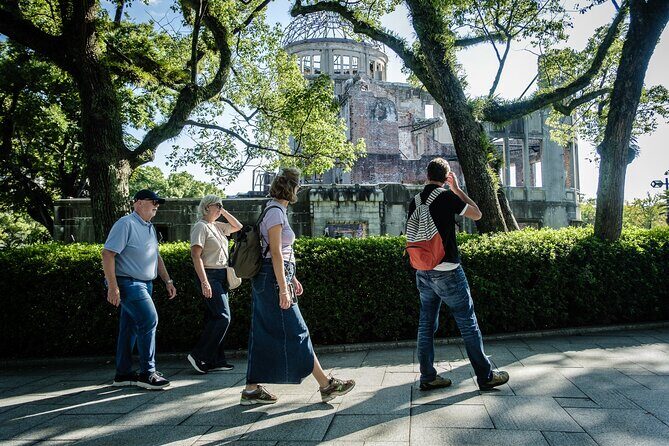
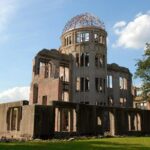
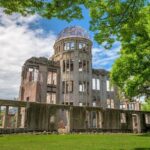
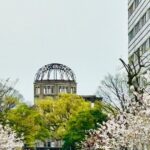
As twilight deepens, you’ll reach the Aioi Bridge area and then the highlight for many visitors: the Atomic Bomb Dome.
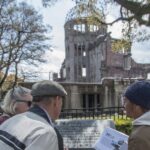
The Dome glowing at night is iconic for a reason. In daylight, you can still appreciate the building’s silhouette, but night gives it a different emotional weight. The guide framing matters too. You’re not just looking at a landmark. You’re seeing a structure that represents destruction and survival, held in place as a reminder rather than a ruin to move past.
This is a great time to pay attention to what the guide points out: the sightlines, the significance of the location, and how the surrounding memorial spaces were designed to preserve meaning in the long term. And since this is a guided stop, you’re more likely to notice details you might otherwise miss while focusing only on the photo.
Ending at the Hiroshima Atomic Bomb Hypocenter Monument: a clear final focus
The tour finishes at the Hiroshima Atomic Bomb Hypocenter Monument. Ending here gives the walk a physical logic and a thematic closure. You’re brought back to the point where the bombing’s impact was centered, and the tour’s earlier historical context ties into that final moment.
This end is valuable because it prevents the tour from feeling like disconnected stops. You leave with a sense of progression: orientation, historical framing, memorial reflections, iconic visual markers, and then a return to the core location of the event.
Small-group pacing and the PhD scholar guide style
This tour is limited to 10 participants, and that’s a big deal for a subject like this. You want to hear the guide without competing with crowds. You also want the chance to ask what you’re actually wondering, not what the guide is prepared to mention in a one-size-fits-all talk.
In the feedback, both Ghani and Sheraz are mentioned as guides who bring strong detail and answer questions well. That lines up with the tour’s overall design: expert-led, with the explanations connecting the dots rather than throwing facts at you.
Also, the pacing is built to work within a short timeframe. You’ll have guided time at many stops—often around 10 minutes—plus a longer orientation at the Gates of Peace. It’s enough to get oriented and understand the significance, without turning the experience into a long endurance walk.
Price and value: is $28 worth it for 2 hours?
At $28 per person for about 2 hours, you’re paying for several things at once: guided nighttime access to the park’s major memorial points, structured explanations that connect what you see, and a guide who can handle questions in a small group.
If you tried to do this on your own, you’d still be able to visit the park and see the Dome and Flame of Peace. But you’d miss a lot of the connective tissue—why each place was chosen, how the story of Hiroshima is framed from destruction to peace, and the context that helps you interpret symbols rather than just observe them.
This tour’s value is strongest for two types of visitors:
- You want the park’s main elements covered in one efficient night.
- You prefer guided context over reading alone while standing in the dark.
If you’re the kind of person who loves deep, self-paced museum time, you may feel the 2-hour structure is tight. But for most first-time visitors, it’s a solid value because it compresses the important story beats into one coherent route.
Practical tips: umbrella, shoes, and what to plan around
Because this is a night tour, come prepared for weather and walking. The one item called out clearly is an umbrella. I’d also treat this as a cue to dress in layers. Night air can feel different than daytime, and you’ll be moving.
Wear comfortable shoes. Even though the route is manageable, you’ll be standing at multiple sites and walking between them. In a memorial park, your pace will slow when the guide asks you to focus, so plan on time on your feet.
If you’re someone who wants a few extra minutes at one stop for photos or quiet reading, understand the tour schedule is structured, so you’ll need to be efficient with any extras. The best strategy is to decide which moment matters most to you—usually the Dome—and let the guide handle the rest.
Who this tour suits best (and who should think twice)
This tour is a great match if you:
- Want an English-language guide to connect the memorials to Hiroshima’s larger history.
- Like the idea of seeing the Atomic Bomb Dome and Flame of Peace with a quieter nighttime atmosphere.
- Prefer a small group where your questions can actually get answered.
It might not be the best fit if you:
- Need lots of unstructured time to read and linger, especially at the museum.
- Expect a tour that feels like casual sightseeing rather than reflective history.
Also keep your expectations aligned with the format. This is designed for focus and meaning, not entertainment.
Should you book this Hiroshima Peace Memorial Park night tour?
If your goal is to understand Hiroshima’s journey from destruction to peace, and you want a guided route that hits the park’s most significant places in just 2 hours, I think this is an excellent booking. The small group size, expert-led explanations, and the night setting all work together—especially for the Atomic Bomb Dome glowing at night.
I’d book it if you’re a first-time visitor or if you want a structured way to revisit the area with better context. I’d skip it or pair it with more time on your own if you’re the type who needs long museum hours and lots of quiet reading before you move on.
FAQ
How long is the History of Hiroshima: Small Group Night Walking Tour?
It runs for about 2 hours.
What does this tour cost?
The price is $28 per person.
Where do we meet?
You meet at the Gates of Peace, in front of an Italian restaurant.
Is the tour wheelchair accessible?
Yes, it’s listed as wheelchair accessible.
What language is the guide?
The tour is offered with an English-speaking live guide.
How big is the small group?
The group is limited to 10 participants.
What should I bring for a night tour?
Bring an umbrella, and wear comfortable shoes for walking at night.
Is food included?
No. Food and drinks are not included.
Does the route include the Peace Memorial Museum?
Yes. The Hiroshima Peace Memorial Museum is included as a guided stop.
How does free cancellation work?
You can cancel up to 24 hours in advance for a full refund.