REVIEW · HIROSHIMA
Miyajima: Private Rickshaw Tour to Itsukushima Shrine
Book on GetYourGuide →Operated by Ebisuya Rickshaw · Bookable on GetYourGuide
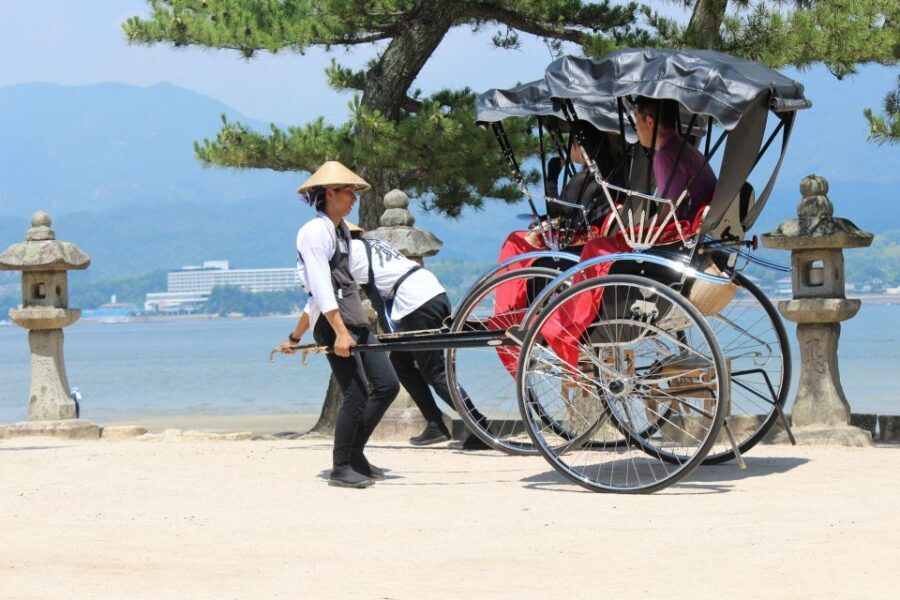
A shrine town, powered by a rickshaw. On Miyajima, this private ride is an easy way to see the island’s big sights without turning your day into a full-on leg workout, and you get a personal guide doing the navigating.
I especially love the chance to catch the floating red torii gate when the tide is high, plus the stops feel organized instead of rushed. You’ll also roll past old town lanes, waterfront views, and the kind of atmosphere where the deer seem like they belong on a postcard.
One drawback to plan around: this is not recommended for pregnant travelers or anyone with back problems, since it’s a traditional rickshaw ride and you’re sitting for most of the tour.
In This Review
- Key Things I’d Bet You’ll Remember
- Miyajima by Rickshaw: why this beats walking (most days)
- Picking the right tour length: 70, 130, or the full 190 minutes
- From the ferry terminal to the old streets: your warm-up before the torii
- Itsukushima Shrine: the torii at high tide is the whole point
- Daishoin Temple on the 70-minute option: views plus the “power spot” idea
- Senjokaku Shrine on the 130-minute option: Toyotomi Hideyoshi and sea views
- The 190-minute scenic routes: parks, seaside, and a slower rhythm
- Price and value: is $51 per person worth it?
- Comfort, rules, and who should book (and who should skip)
- What the guide experience feels like in real life
- Should you book this private Miyajima rickshaw tour?
- FAQ
- Where is the meeting point for the rickshaw tour?
- Which tour option includes Daishoin Temple?
- Does the tour include admission fees to shrines and temples?
- What’s the cost to enter Senjokaku Shrine?
- Is a selfie stick allowed?
- How many adults can ride in one rickshaw?
Key Things I’d Bet You’ll Remember
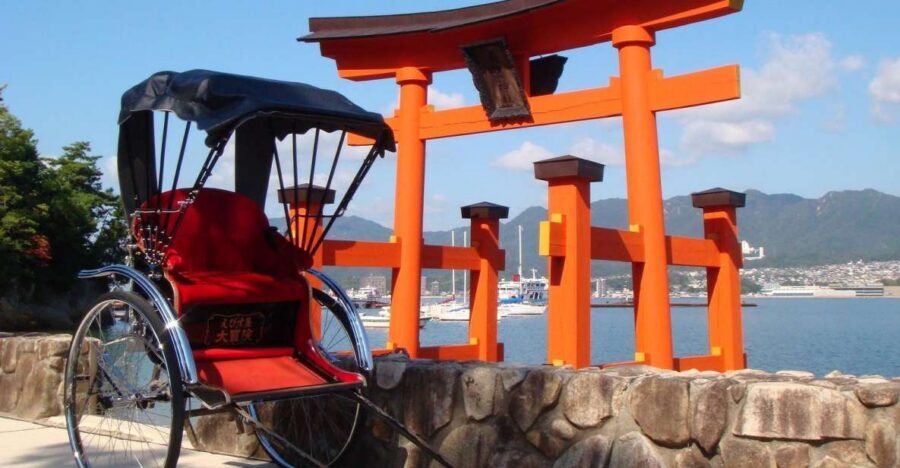
- High-tide torii photos: If timing lines up, the water level turns Itsukushima Shrine into the main event.
- Daishoin Temple viewpoint option: The 70-minute choice adds a 1200-year-old temple with sweeping Miyajima views.
- Senjokaku Shrine stop: The 130-minute option brings in the Toyotomi Hideyoshi connection and sea views.
- Flexible route and endpoint: Your guide can adjust the plan to your interests.
- Small-group comfort rules: Up to two adults per rickshaw, with tight seat widths.
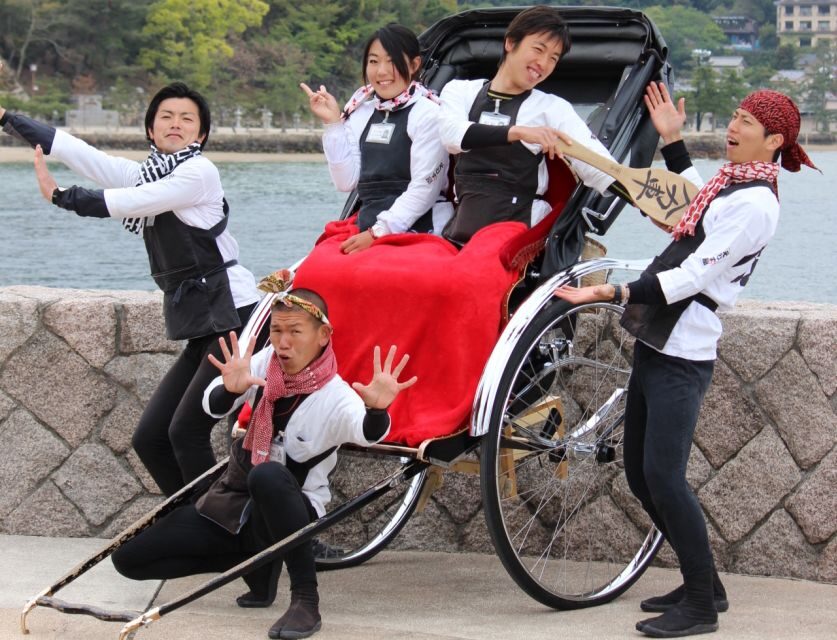
- Guide energy and photo help: Based on what I’ve seen in this experience, guides often take photos and share stories that keep you moving.
Miyajima by Rickshaw: why this beats walking (most days)
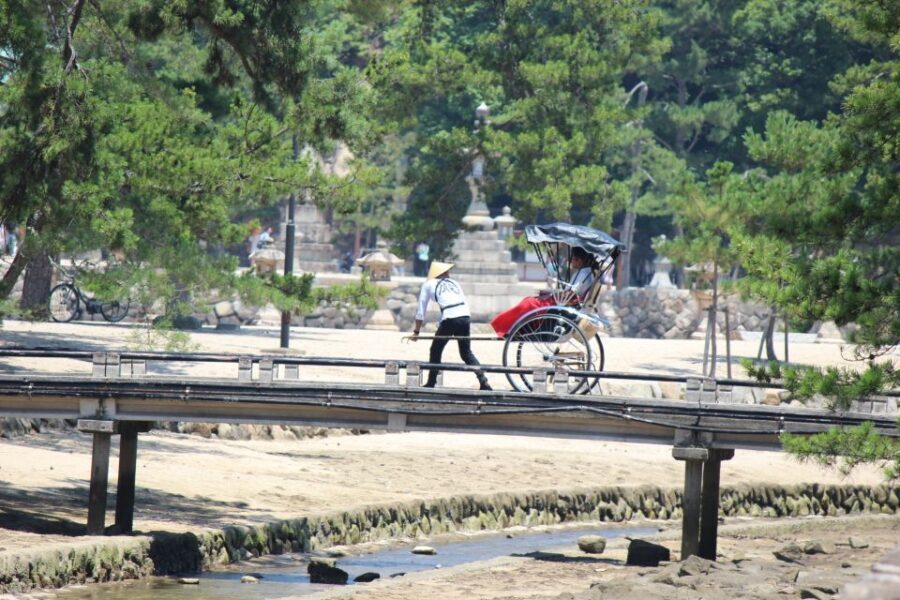
Miyajima is one of those places where you can absolutely do everything on foot. But you’ll also quickly learn that the island has hills, crowds near the main sights, and plenty of winding lanes that eat up time.
A private rickshaw tour solves the big problem: you keep your energy for the views and the shrine moments. Instead of constantly checking directions and slowing down to navigate pedestrians, you can focus on the experience—shrines, waterfront, and those classic red-and-green scenes.
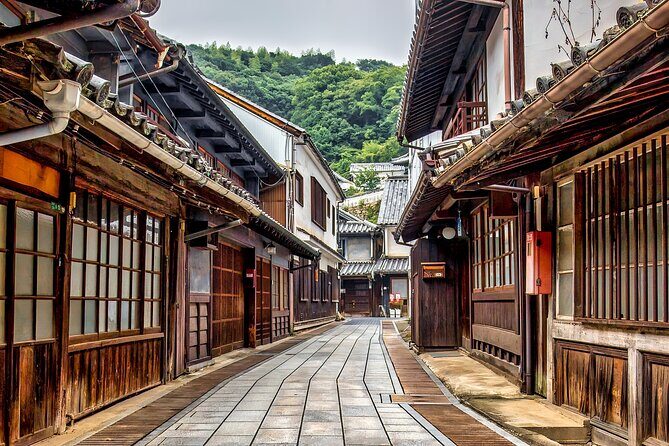
The other win is how the day flows. You’re meeting your guide right outside the Miyajima Ferry Terminal and then rolling straight into the town. That first hour matters. It’s where you start noticing details: townhouse-style facades, older shopping arcades, and the way the island changes as you move from street life toward the shrine area.
Other Miyajima Island tours in Hiroshima

Picking the right tour length: 70, 130, or the full 190 minutes
This tour offers multiple time options (45 to 190 minutes), and the longer you go, the more you trade speed for breathing room.
Here’s the practical way to choose:
If you want the core highlights, pick the 70-minute option. You’ll cover the main Miyajima flow—streets, waterfront, and the big Itsukushima Shrine torii view—and you’ll also add Daishoin Temple. That temple is known for its long heritage (it’s described as 1200 years old) and the idea of visiting a “power spot,” plus you get a phenomenal view over Miyajima from up there.
If you want more structure and a second major shrine complex, choose the 130-minute option. In addition to the earlier highlights, it adds Senjokaku Shrine. You’ll also learn about the shrine’s background tied to Toyotomi Hideyoshi, and you’ll have time for sea views that feel different from the torii perspective.
If you want scenic time—less “hit the checklist,” more “see the island’s mood”—go with the 190-minute option. Besides the torii, Daishoin, and Senjokaku, you’ll travel down special scenic routes through parks and along the seaside. The tradeoff is obvious: it’s the longest sitting time in the rickshaw, so it’s better for folks who don’t mind relaxing while you move.
One small planning tip: the “floating torii” look depends on tide timing. Your guide can’t change the ocean, but going for the longer options often gives you more flexibility to enjoy the shrine area without feeling like you’re sprinting.
From the ferry terminal to the old streets: your warm-up before the torii
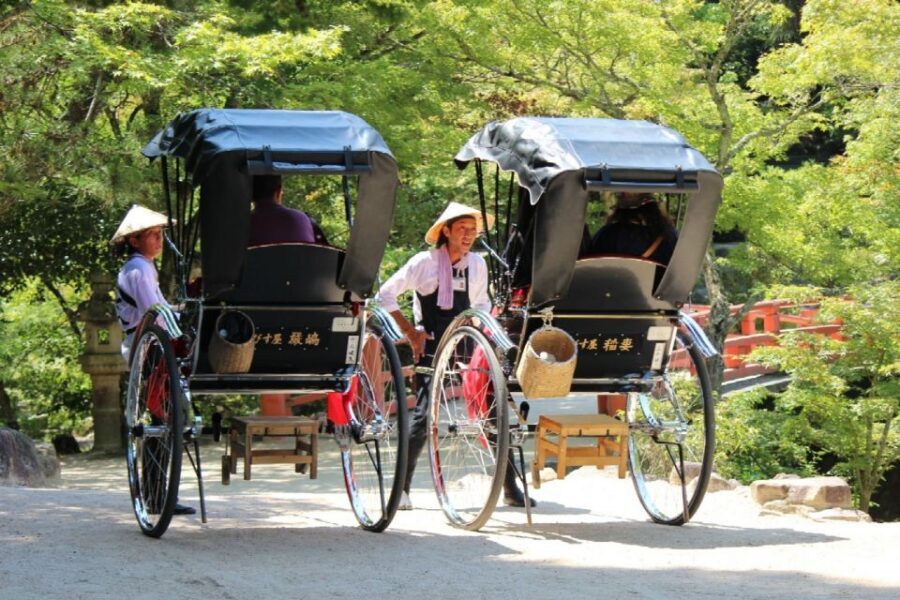
Meeting your guide outside the Miyajima Ferry Terminal is a simple setup. After booking, you get an email with a map and a photograph of the meeting spot, which helps you avoid the usual “where exactly are they?” moment.
Once you’re on the rickshaw, you’ll head down charming town streets toward the center of the island’s action. This is where I think people most underestimate the value of a guided route. You’re not just getting transportation—you’re getting context, and that changes how you notice things.
You’ll pass:
- Traditional townhouse-style buildings, which help you understand why Miyajima feels like a living cultural space, not just a photo stop.
- An old-fashioned shopping arcade, which gives you a sense of everyday island life around the shrine tourism.
Then you’ll move toward the waterfront. That transition matters. The air feels different near the water, and suddenly everything points toward the shrine area.
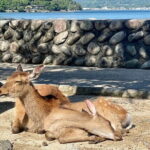
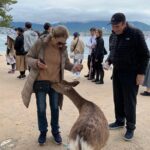
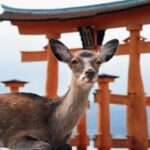
And yes, you’ll meet the deer. On Miyajima, they’re part of the scenery, and you’ll likely see them along the way. It adds an extra bit of charm—like the island is casually reminding you to slow down and look around.
Itsukushima Shrine: the torii at high tide is the whole point
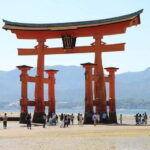
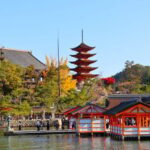
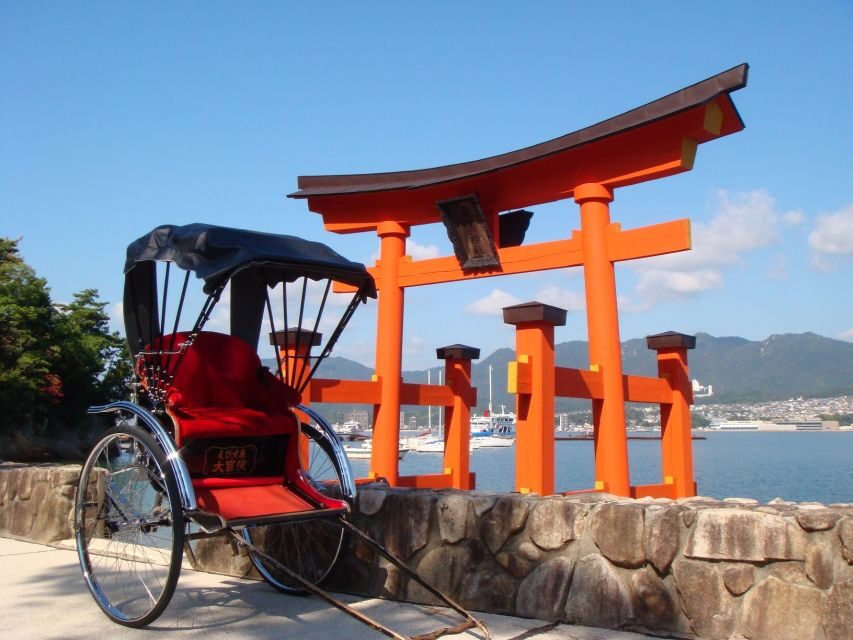
If you’re visiting Miyajima, you’re coming for Itsukushima Shrine’s signature view. The rickshaw tour’s best moment is when you see the large orange torii gate standing in the water.
That “floating” effect is tied to high tide, and it’s the kind of visual that’s hard to recreate from memory. When the water level is right, the gate looks like it’s hovering over the bay—bright red, dramatic setting, and a shrine architecture style that feels almost theatrical.
What I like about approaching this by rickshaw is timing and pacing. You’re not trying to manage your body, your camera, and a crowd all at once. You can look, take photos, and just absorb the way the shoreline frames the torii.
Also, even if you’ve seen the torii in pictures before, being there in person changes the scale. The water lines, the reflections, and the overall color tone feel more real than any screen.
Practical note: entry fees to temples and shrines aren’t included, so plan for small extra costs. The big torii view itself is what most people focus on, but you may want to plan around paid areas depending on what you choose.
Daishoin Temple on the 70-minute option: views plus the “power spot” idea
The 70-minute itinerary includes a stop at Daishoin Temple, a site described as 1200 years old and known as a “power spot”—basically a place people go for good energy and a calmer reset.
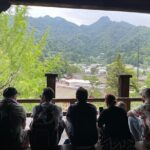
The main reason to add it isn’t just the age. It’s the view over Miyajima. From up at the temple area, you get a different perspective than you do near the waterfront. It’s a good way to balance the shrine’s coastal drama with a broader look at the island itself.
The rickshaw approach also helps you make the stop feel like part of the day instead of a detour. You arrive with less effort, and your guide can help you understand what you’re looking at so the viewpoints feel meaningful, not just scenic.
If you love photo moments and want a solid “one extra temple” plan, Daishoin is a smart add-on.
Other private guided tours in Hiroshima

Senjokaku Shrine on the 130-minute option: Toyotomi Hideyoshi and sea views
If you want a little more cultural and historical framing, the 130-minute option adds Senjokaku Shrine.
This shrine has a specific connection to the former Shogun Toyotomi Hideyoshi, and the tour includes time to learn about that background. That context matters because Senjokaku isn’t only about one iconic angle; it’s about understanding what the site was built to represent.
You’ll also enjoy sea views, and that’s important if your day is already anchored to the torii at the shoreline. The torii gives you a narrow, high-impact composition. Senjokaku lets you see a broader relationship between shrine space and open water.
Cost note: entry into Senjokaku Shrine is not included and is listed as 100¥. So keep a bit of cash or an easy-to-use payment method handy.
The 190-minute scenic routes: parks, seaside, and a slower rhythm
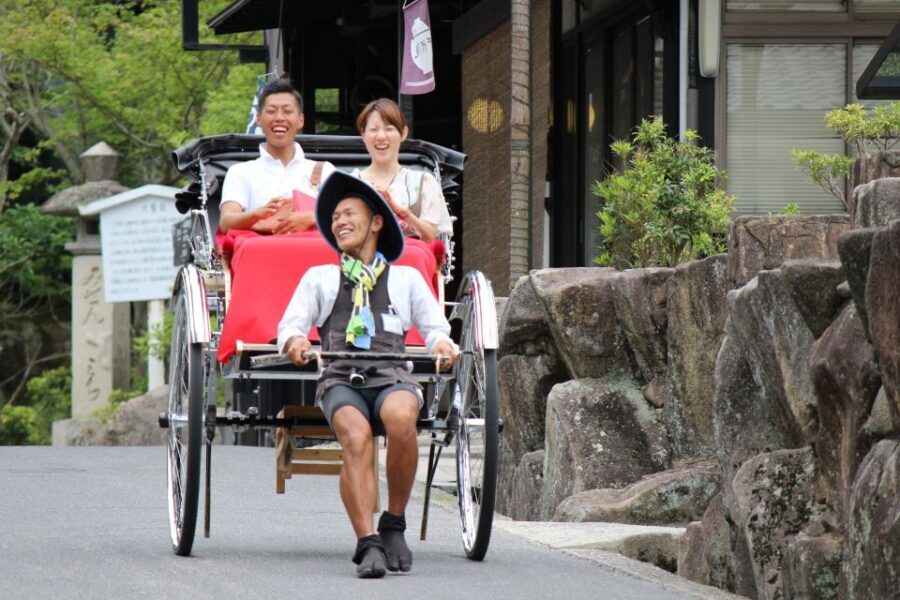
The 190-minute option is for the traveler who wants the island’s mood, not just the checklist.
Besides the torii, Daishoin, and Senjokaku, you’ll ride down special scenic routes that snake through parks and along the seaside. That wording matters. It suggests routes chosen for views, shade, and the slower rhythm of the ride—more “watch the shoreline change” than “just get to the next stop.”
This longer option also tends to reduce stress. When you’re not racing your own schedule, you’re more likely to:
- pause for a deer sighting without worrying about time,
- spend an extra minute on a viewpoint,
- and get a cleaner set of photos because you’re not fighting a crowd to stop quickly.
Just keep in mind the earlier caution: sitting in a rickshaw for a long time may not be ideal if you have mobility or comfort issues.
Price and value: is $51 per person worth it?
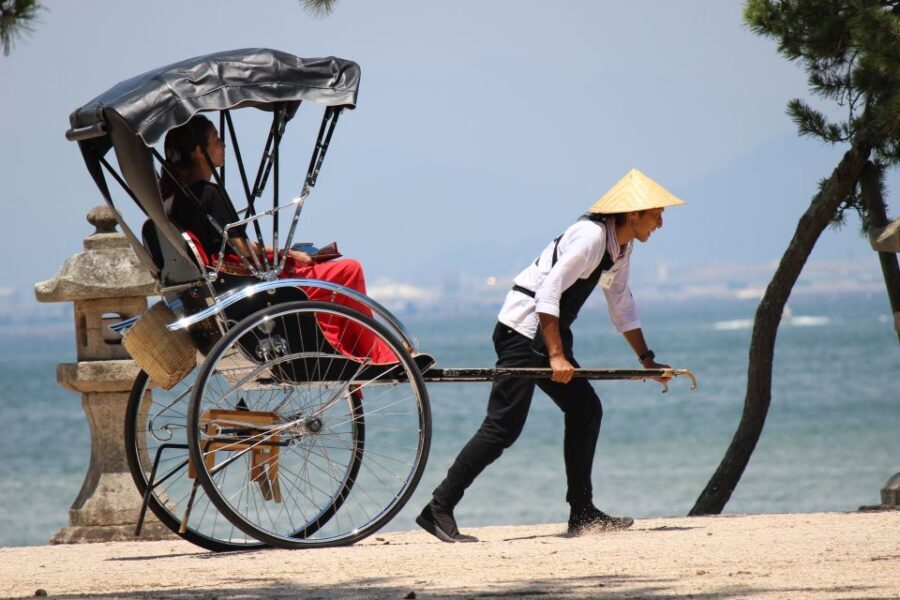
At $51 per person, this tour can be a great deal if you value three things: time saved, local guidance, and an experience style that feels personal.
Here’s why the value holds up:
- Private setup: You’re not sharing the rickshaw with strangers.
- A local guide: The guide helps you understand what you’re seeing—streets, shrines, and the meaning behind places like Daishoin and Senjokaku.
- Practical inclusions: You get a souvenir postcard and sticker, which sounds small, but it’s one of those nice extras that makes the day feel complete.
What’s not included matters, too. Food and drinks are on you, and temple/shrine admission fees aren’t included (with Senjokaku specifically noted as 100¥). Also, since the guide language is listed as Japanese, if you don’t speak any Japanese, you’ll want to be comfortable using translation help.
In my view, this tour is worth the money if you want the shrine highlights with less hassle and better flow. If you’re the kind of traveler who loves walking long distances and building your own route, you might save money on a DIY day. But if you want a smoother experience—especially around the torii-at-tide moment—this is a strong choice.
Comfort, rules, and who should book (and who should skip)
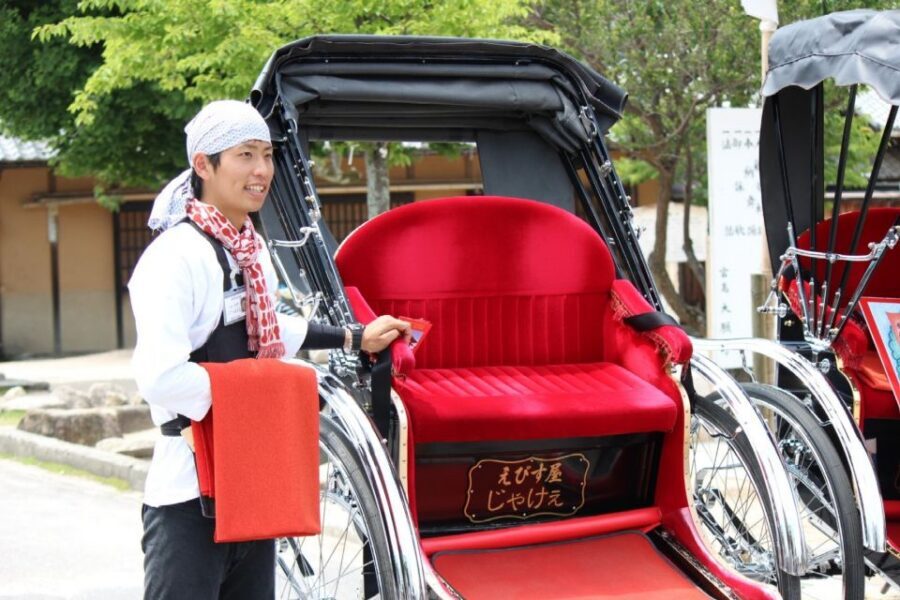
This is a private rickshaw, but it’s not like a car service. It has real physical limits, and you should plan around them.
Key points you should know:
- There’s a maximum of 2 adults per rickshaw.
- Rickshaw seats are 74 cm wide, so space can feel tight depending on your build and the passenger mix.
- Children 6 and under can ride for free if they sit on an adult’s lap (max one child per adult, and still no more than two adults and two children per rickshaw).
- If your child is 6 or older and will use one of the two seats, they need to book a seat as an adult.
- Selfie sticks are not allowed.
There are also clear health cautions:
- Not recommended for expecting mothers in the first 16 weeks of pregnancy.
- Not suitable for pregnant women.
- Not recommended for people with back problems.
If you fit the comfort profile, this tour is a very pleasant way to see Miyajima without overdoing it. If you don’t, I’d steer you toward a walking-focused plan or a different style of sightseeing.
Also, if you’re a group bigger than two adults, you might find it more comfortable to book separate rickshaws rather than squeezing into the shared seating.
What the guide experience feels like in real life
One reason this tour scores so well is the energy of the rickshaw guide. In examples I’ve seen, guides like Kim and Jose are praised for being fun, storytelling-focused, and photo-helpful. Another name tied to this kind of experience is Shinemasa, who’s described as attentive and interested in sharing island secrets in a way that keeps you moving.
You should expect Japanese language guidance as the default. If your Japanese is limited, don’t panic—some guides have used translation tools when needed. The takeaway is that the ride usually feels more like a guided conversation than a silent transfer from stop to stop.
Should you book this private Miyajima rickshaw tour?
I’d book it if you want:
- the Itsukushima torii gate moment, especially tied to high tide,
- a well-paced route through town, waterfront, and major shrines,
- less walking stress and more time for photos and viewpoints,
- and a private guide who can shape the day based on your interests.
I would skip it if:
- you’re pregnant, in the early weeks category noted, or have back issues,
- you’re determined to do everything by foot and love navigating on your own,
- or you know you’ll hate sitting in a rickshaw for 70 to 190 minutes.
If you’re on the fence, here’s my simple rule: choose the shortest option that still includes what you came for. If your must-see is the torii view, the core ride gets you there. If you want more “temple day” energy, go longer for Daishoin or Senjokaku.
FAQ
Where is the meeting point for the rickshaw tour?
Your guide will be waiting just outside the Miyajima Ferry Terminal at the scheduled time. After booking, the local partner emails you a map and photograph of the meeting place.
Which tour option includes Daishoin Temple?
The 70-minute option includes a stop at Daishoin Temple.
Does the tour include admission fees to shrines and temples?
No. Admission fees to temples and shrines are not included.
What’s the cost to enter Senjokaku Shrine?
Entry into Senjokaku Shrine is not included and costs 100¥.
Is a selfie stick allowed?
No. Selfie sticks are not allowed on this tour.
How many adults can ride in one rickshaw?
There is a maximum of 2 adults per rickshaw. Seats are about 74 cm wide, so space can be tight—sometimes it’s more comfortable to book individual rickshaws.