REVIEW · HIROSHIMA
History of Hiroshima Group Walking Tour
Book on Viator →Operated by Ali · Bookable on Viator
Footsteps lead you through history’s turning point. This 2-hour Hiroshima walk is built for people who want more than plaques: you get a guide with a degree in Peace Studies and clear, human details about how the city changed after the atomic bombing. I especially liked the way the route pairs major landmarks (like the Atomic Bomb Dome) with smaller, story-based monuments, so the meaning sticks. I also like that the pace is compact—easy to fit into a tight schedule. One thing to consider: the subject matter is heavy, and the tour is mostly outdoors, so plan for comfort and time to process.
The format is straightforward. You’ll move through a focused circuit of Hiroshima Peace Memorial Park and nearby sites, with admissions listed as free at the stops. You also get a mobile ticket, and the group stays small enough (up to 30) for questions without feeling lost in the crowd.
Because there’s no lunch included, you’ll want a snack plan before you start. And if your day is packed, remember this walk ends at the Ground Zero area, so it’s a good choice when you want to finish near the heart of the memorial complex.
In This Review
- Key highlights you’ll feel from the start
- Entering Hiroshima with the right framing
- Meeting point near Nakajimacho, then walking to Ground Zero
- The 10 Gates of Peace: why you start here
- Mothers, victims, and names: monuments that hit personal memory
- The Rest House and the distance to ground zero
- Small pauses with big meaning: Peace Bell and timing for the Dome
- How this itinerary works when you only have limited time
- Price and value: why $32.84 makes sense for this route
- What it’s like on the ground: pace, questions, and respectful focus
- Practical tips to make your two hours smoother
- Guide variety: Ali and other Peace Park standouts
- Who should book this walk—and who might want a different plan
- Should you book History of Hiroshima Group Walking Tour?
- FAQ
- How long is the Hiroshima Peace Park walking tour?
- Where does the tour start and where does it end?
- Are entrance fees included for the sites you visit?
- What sites are included on the walk?
- Is the tour suitable for children?
- What if the weather is bad?
Key highlights you’ll feel from the start
- A Peace Studies degree behind the narration: you get context that connects the memorial pieces to the wider story of war, survival, and peace.
- A tight route that still covers the essentials: Gates of Peace, multiple cenotaphs/monuments, and the Atomic Bomb Dome in about two hours.
- Personal stories in the middle of big history: mothers, victims, child deaths, and Korean victims and survivors all get direct attention.
- Built for limited time: compact walking makes it practical if Hiroshima is a stopover, not a week-long deep trip.
- Easy to follow, easy to ask questions: shorter stops keep momentum while still giving you time to read and look closely.
Entering Hiroshima with the right framing
Hiroshima can feel overwhelming at first. Even if you’ve read about the bombing, the real weight shows up in how the city remembers—carefully, publicly, and with names. What I like about this tour is that it gives you a framework before you step into the memorial grounds. The guide starts by explaining why the bomb was dropped and how it changed world history. That matters because it turns what could be a list of sites into a connected story.
You’re not just seeing monuments. You’re learning how Hiroshima decided to speak about loss and survival, decade after decade. The guide’s Peace Studies background shows up in the way the route is explained: the emphasis stays on people, not just dates.
Other Hiroshima walking tours in Hiroshima
Meeting point near Nakajimacho, then walking to Ground Zero
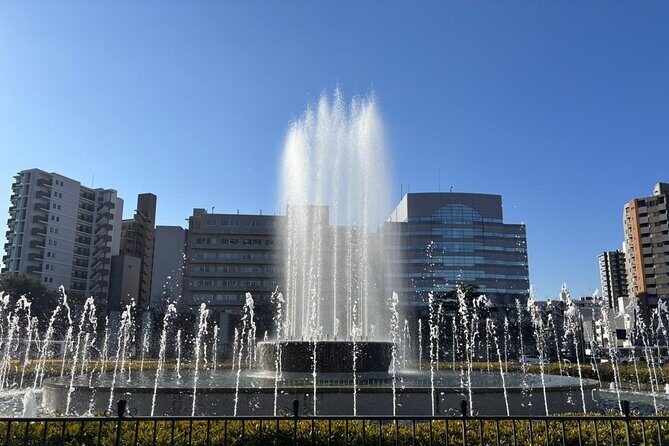
The tour begins at Ristorante Mario (4-11 Nakajimachō, Naka Ward, Hiroshima). That’s a useful detail for planning because it’s not tucked away in a hard-to-find corner. If you’re using public transport in the area, you should be able to reach the start without a complicated detour.
You’ll finish at the Hiroshima Atomic Bomb Hypocenter Monument. I like ending there because it puts a clean bow on the experience. You don’t wander back and forth guessing where “the center” is. Instead, your last moments line up with the symbolic center of the memorial story.
The group size cap (max 30) helps too. The tour doesn’t feel like you’re trapped in a single-file line with zero chances to ask, point, or slow down.
The 10 Gates of Peace: why you start here
Stop 1 is the Gates of Peace. The meeting point includes context on the atomic bombing before you even reach the gates, then you begin at the ten gates themselves. The tour highlights that nine gates represent different categories connected to the bombing’s impact and outcomes, with the tenth gate framing the meaning.
This is a smart start. People often jump straight to the Dome or the museum. Starting at the gates gives you the tour’s thesis early: this isn’t only about what happened; it’s about what came after—how Hiroshima became a symbol of peace and resilience.
Also, the guides tend to set a calm tone here. Even though the topic is tragic, the atmosphere often feels intentional, like you’re being guided into a respectful way of looking.
Mothers, victims, and names: monuments that hit personal memory
From there, the walk moves into shorter, focused stops that carry heavy emotional information without turning into a lecture marathon.
Stop 2 is the Arashi no Naka no Boshi Statue—the Mother and Baby in the Storm monument. It’s dedicated to mothers who sacrificed their lives trying to save their children. I find this kind of memorial especially powerful because it doesn’t hide behind general wording. It points at a specific kind of courage and a specific kind of loss.
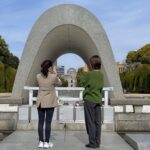
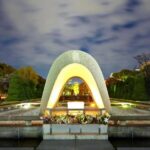
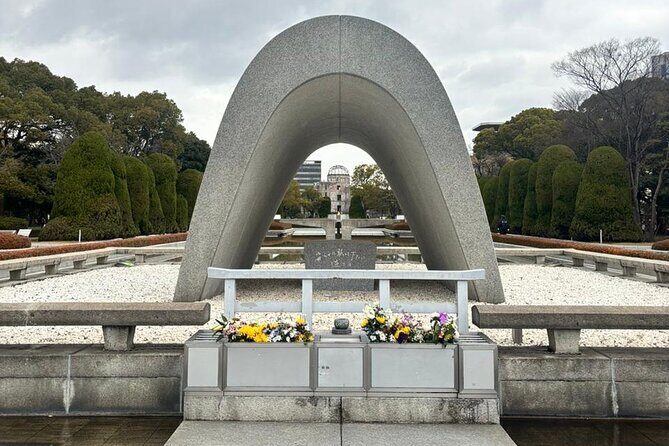
Stop 3 is the Cenotaph for the Atomic Bomb Victims. This is where the names matter. The tour gives you time—about 20 minutes—to take in the idea that this is a place of remembrance for individuals, not just a tragedy in history books. If you’ve ever felt that memorials can blur together, this stop helps prevent that. Names pull you out of abstraction.
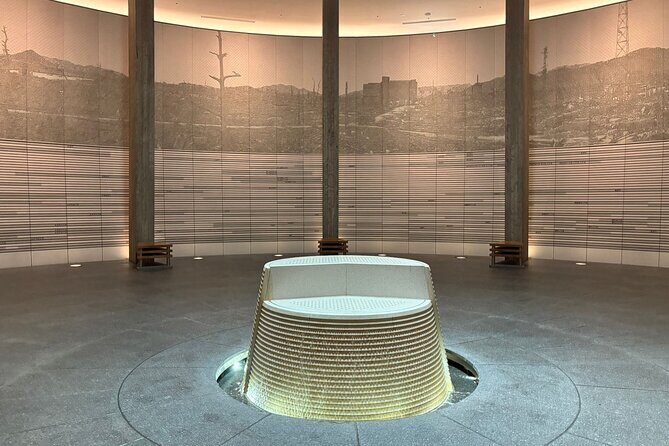
Stop 4 is the Hiroshima National Peace Memorial Hall for the Atomic Bomb Victims, where you see the destruction of the city. The guide’s role here is important because the hall can be visually intense on your own. With the right explanation, you start connecting what you see to what you were told earlier—how the bombing reshaped daily life and the future.
The Rest House and the distance to ground zero
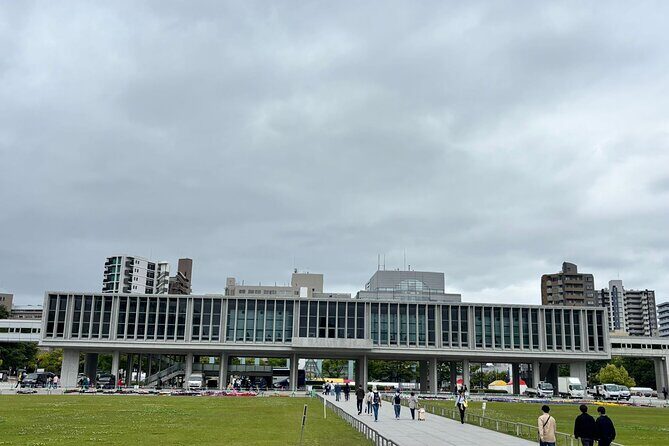
Stop 5 is the Rest House of Hiroshima Peace Park, known for being a rare survival case. The tour notes that it was about 170 meters from the ground zero area.
This is one of those details that changes how you picture the blast. Instead of thinking only in vague terms—big explosion, big damage—you start thinking in space and proximity. The guide’s explanation helps you understand why that “survival” story became part of Hiroshima’s memorial language.
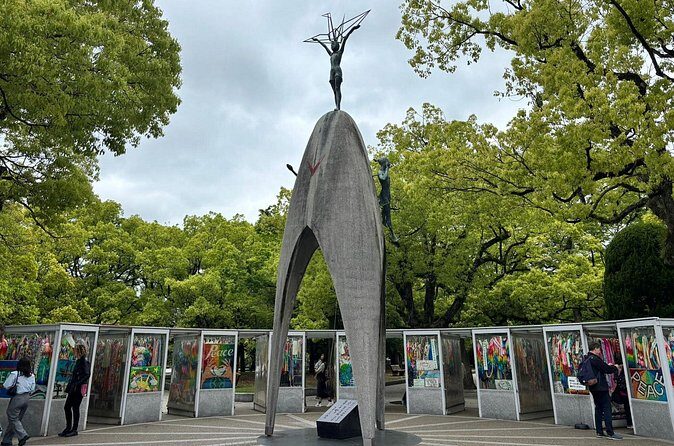
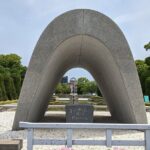
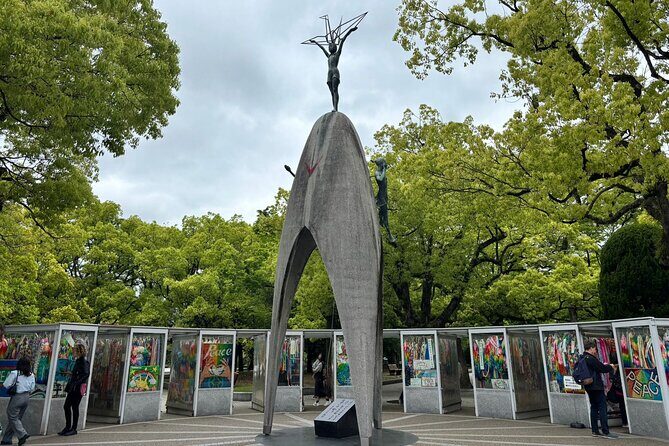
Stop 6 moves to the Children’s Peace Monument. The focus here is on Sadako and other children who died in the bombing, and the story behind the paper crane as a peace symbol. Even if you’ve heard the crane legend before, it lands differently when you’re standing where the city has chosen to remember children directly.
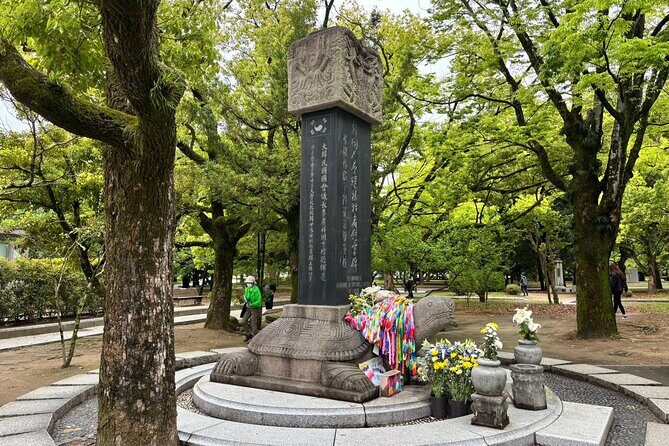
Stop 7 is the Monument to Korean Victims and Survivors, which is dedicated to Korean victims. This stop is crucial because it broadens the memorial lens beyond what many first-time visitors expect. It helps you see Hiroshima’s story as part of a wider network of war-era suffering, not only a single national narrative.
Other walking tours we've reviewed in Hiroshima

Small pauses with big meaning: Peace Bell and timing for the Dome
Stop 8 is the Peace Bell. It’s a short stop, but I like how it functions as a pause. You get a moment of silence-like reflection before the walk’s final anchor.
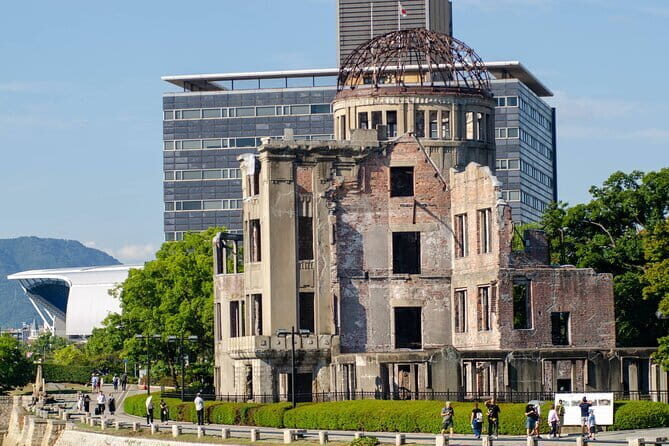
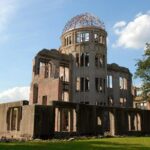
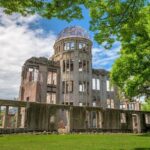
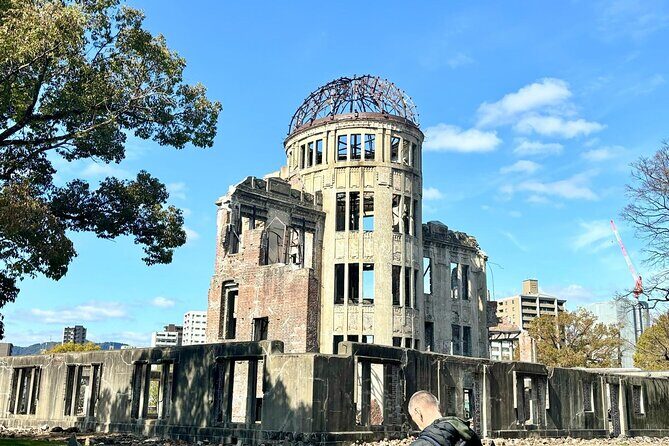
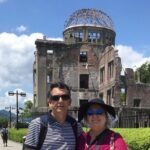
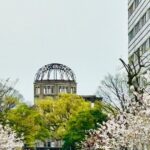
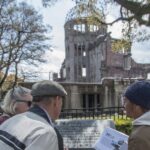
Then you reach Stop 9: the Atomic Bomb Dome. The tour emphasizes that the building survived the atomic bombing. That single sentence is the backbone of why the Dome matters globally. It’s not just a ruined structure; it’s a physical reminder that something was preserved amid the destruction.
The guide helps you look at the Dome in a more grounded way. You’re not only taking photos. You’re learning how the city uses the Dome as a lasting symbol—one that forces a conversation about violence, survival, and the long work of peace building.
How this itinerary works when you only have limited time
Two hours sounds tight, but the route is designed for a quick, meaningful sweep. You’re not trying to cover every museum room or every side street. Instead, you move through a sequence that adds up: gates first, then human memorials, then the survival/damage story, then the peace symbols, and finally the Dome.
That pacing is what makes the experience practical. If Hiroshima is a one-day stop or you’re juggling other stops that day, this tour helps you avoid the common problem of spending too much time figuring out where to start and not enough time understanding what you’re seeing.
The short stop durations (some as little as 5 minutes) also help you avoid doom-scrolling your phone while you stand in front of something important. The structure nudges you toward reading closely and listening actively.
Price and value: why $32.84 makes sense for this route
At $32.84 per person, you’re paying for an organized guided walk and interpretation. The guided portion is what makes the cost feel worth it here. The memorial sites are the main draw, and the tour includes the guidance that turns them into a readable story.
A major value detail: the stops are listed as free-entry in the schedule you’re given. That means your money isn’t covering ticket fees for individual buildings. You’re paying for someone to connect the pieces, explain the symbolism, and answer questions on the spot.
In other words, the value is in the thinking. If you’re the type of person who reads signs but wishes there was a human to translate the deeper meaning, this is the sweet spot.
What it’s like on the ground: pace, questions, and respectful focus
This tour is built to be easy to follow. It’s a walking route with frequent stops, and the guide keeps the pace moving without rushing you through everything. I’d treat it like an active lesson, not a sightseeing stroll.
The best tours here are the ones that keep the mood balanced. The guide tone seems to do that: warm, sometimes with a little humor to lighten the load, but never turning the topic into a joke. That balance matters in a place like this.
The group format also helps. With a maximum of 30 people, you’re less likely to feel like a spectator. You can ask questions, and you hear other people’s questions too, which often changes what you notice afterward.
Practical tips to make your two hours smoother
Here’s how to get the most out of the day without feeling hurried:
- Wear comfortable shoes. You’ll be walking steadily and stopping often.
- Bring a light layer. Weather can swing quickly, and the tour notes it needs good weather.
- Think about snacks. Lunch isn’t included, so plan something nearby before or after.
- Bring water if you can. Even on a short tour, you may get dehydrated in warm conditions.
- Pace your phone use. If you’re filming everything, you’ll miss the guide’s connections.
One more tip: if you want to take in the atmosphere, arrive ready to slow down. Hiroshima asks you to look. This tour gives you a structure for doing that well.
Guide variety: Ali and other Peace Park standouts
The experience provider is listed as Ali. In the real world, guides can vary by departure, and the same tour format has included guides such as Cva, Malek, Moe, and Shiva. What stays consistent is the focus on clear explanations, strong English ability (when noted), and answering questions in a way that helps the sites make sense.
If you’re hoping for a guide who can handle questions without dodging hard topics, the pattern in the experience descriptions suggests you’ll be in good hands.
Who should book this walk—and who might want a different plan
This is a strong fit for:
- First-time visitors who want the Hiroshima Peace Memorial area explained fast.
- People short on time who still want meaningful context, not just photos.
- Anyone who appreciates memorial sites with names and personal stories.
It may be less ideal if:
- You’re searching for a purely light, casual walking day. This route is emotionally heavy.
- You want long, museum-only time. This tour is built for a compact circuit, not slow indepth museum wandering.
If you’re the kind of person who prefers to understand before you look, you’ll likely enjoy it a lot.
Should you book History of Hiroshima Group Walking Tour?
I’d book it if you want to leave Hiroshima Peace Memorial Park with your questions answered, not just your phone full of pictures. The price is fair for what you’re getting: a guided, structured walk through the places that explain the bombing’s impact and Hiroshima’s message of peace and resilience.
This works especially well if you only have a couple of hours and you want a clear path through the most meaningful sites, including the Gates of Peace and the Atomic Bomb Dome. Just go in with the right mindset—comfortable shoes, time to reflect, and a plan for food—and you’ll get a tour that feels guided and human, not rushed or generic.
FAQ
How long is the Hiroshima Peace Park walking tour?
It runs for about 2 hours.
Where does the tour start and where does it end?
It starts at Ristorante Mario (4-11 Nakajimachō, Naka Ward, Hiroshima) and ends at the Hiroshima Atomic Bomb Hypocenter Monument (Ground Zero).
Are entrance fees included for the sites you visit?
The stop details list admission as free for each listed stop on the route. The tour includes a guided tour, and lunch is not included.
What sites are included on the walk?
You’ll visit the Gates of Peace, Mother and Baby in the Storm statue, cenotaph for the atomic bomb victims, Hiroshima National Peace Memorial Hall, Rest House, Children’s Peace Monument, monument to Korean victims and survivors, the Peace Bell, and the Atomic Bomb Dome.
Is the tour suitable for children?
The info says 2 children (0-10 years) can join free of charge.
What if the weather is bad?
The experience requires good weather. If it’s canceled due to poor weather, you’ll be offered a different date or a full refund.