REVIEW · HIROSHIMA
Okunoshima Rabbit Island Cycling Tour with Local Guide
Book on Viator →Operated by 竹原DMO · Bookable on Viator
Rabbits and wartime ruins share one island. This Okunoshima cycling tour pairs wild rabbits with a guide who connects what you see today to why the island was hidden. I like how the pace stays active, yet the story stays clear and human-scale.
I also like the chance to watch rabbits in the wild in a setting that feels calm, not staged. The only real drawback is that several key sites are view-only because entry is prohibited, even though you get good angles and context from the ride.
In This Review
- Key highlights you’ll care about
- Okunoshima Rabbit Island: What This Ride Really Shows You
- Price and Value: Is $59.12 a Good Deal?
- Cycling the Island: Pace, Bike Time, and Who It Fits
- Stop-by-Stop: The Route and What Each Stop Is Like
- Stop 1: Okunoshima Lighthouse (View Only)
- Stop 2: Okunoshima Island (Main Ride and Island Time)
- Stop 3: Okuno Shrine (Rabbits Live Here Too)
- Stop 4: Nagaura Poison Gas Storage Ruins (View From a Distance)
- Stop 5: Power Plant Ruins (Also View Only)
- Stop 6: Northern Cannon Battery Remnants (You Can See Closer)
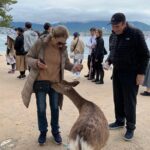
- The Rabbits Part: Cute, Yes, But Also Context-Heavy
- What You’ll Need for a Smooth Ride
- Logistics That Affect Your Day (Without Making It Complicated)
- Who Should Book This Tour?
- Should You Book Okunoshima Rabbit Island Cycling Tour with Local Guide?
- FAQ
- How long is the Okunoshima rabbit island cycling tour?
- What is the price per person?
- What’s included in the tour price?
- Is it a private tour?
- Are any of the stops accessible to enter?
- What ferry cost should I plan for?
- What if the weather is bad?
- What are the main stops on the route?
- Where does the tour start and end?
Key highlights you’ll care about
- Small-group feel (max 5): more time for questions and rabbit detours
- Two-layer experience: cute wildlife moments plus serious wartime context
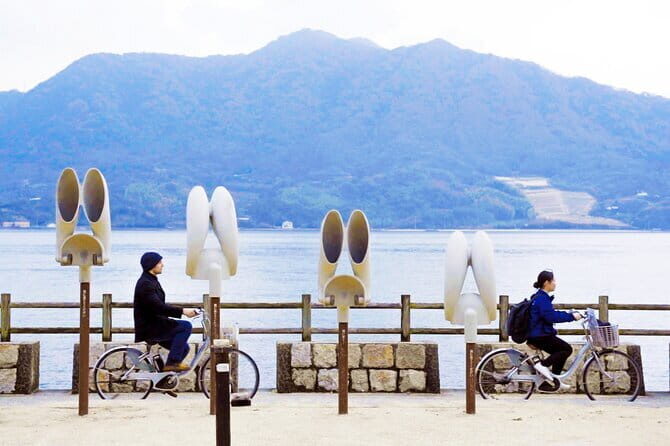
- Cycling makes it easier: an island visit without long walks between stops
- A guide like Junko may be on your tour: praised for kindness and passion for the island’s past
- Most restricted areas are still worth seeing: you view the lighthouse and ruins from short distances
Okunoshima Rabbit Island: What This Ride Really Shows You
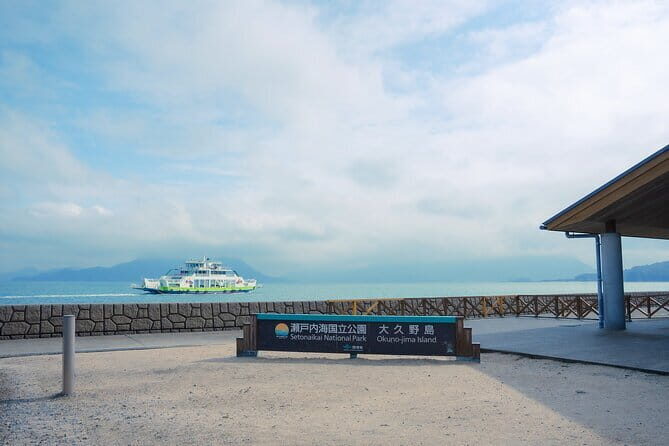
Okunoshima, in Hiroshima’s area of the Seto Inland Sea, is famous for rabbits. That part is true. But what makes this tour memorable is the way it holds two ideas at the same time: a quiet island full of rabbits, and a wartime chapter that once kept the island off maps.
You cycle around this small island (it’s about a 4 km circumference), with a local expert guiding you from one stop to the next. The goal isn’t to race. It’s to move at a comfortable pace so you can actually look around—at the rabbits, the coast views, and the remains of wartime facilities—without feeling like you’re rushing through bullet points.
This is a shared group tour, so you won’t have the bike for yourself alone. The good news is the group size is capped at 5 travelers, which keeps things from feeling crowded. If you’re the type who likes asking questions and getting straight answers, the small cap matters.
Other private guided tours in Hiroshima

Price and Value: Is $59.12 a Good Deal?

The price is $59.12 per person, and it includes bicycle use, all fees and taxes, and travel insurance. That’s an important piece of value. Many tours charge extra for transport or basic overhead. Here, you’re mainly paying for a local guide’s time plus a bike to cover the island efficiently.
What’s not included is food and beverages, plus the ferry fee. The ferry from Tadanoumi to Okunoshima is listed as 360 yen, so you’ll want to budget for that on top of the tour price.
So what are you really getting for your money?
- A guided ride, not just a bike rental
- Efficient movement across multiple stops in about 2 hours
- Insurance coverage, since it’s listed as included
- A visit shaped around both the rabbits and the island’s difficult wartime story
If your day in Hiroshima is limited and you want an experience that’s more than a quick photo stop, the value makes sense.
Cycling the Island: Pace, Bike Time, and Who It Fits
The tour runs about 2 hours. That’s just enough time to take in several viewpoints, a shrine stop, and multiple wartime sites—without turning the day into a full-day grind. The tour also fits well if you’re balancing other Hiroshima-area plans.
You’ll be on a bicycle for the tour, and the guidance says you should have moderate physical fitness. That likely means: expect some riding time, but you’re not signing up for a cycling event. The island is small, yet the experience still requires a normal ability to ride and stop-and-start safely.
Group size is max 5, and it’s shared with other participants on the same departure. The ride therefore has a practical rhythm: you’ll pause together, listen together, and then roll to the next spot. This structure is good for first-timers. If you prefer to freestyle and stop whenever you feel like it, you might find the group timing a tiny bit limiting—but for most people, it keeps the tour from dragging.
Stop-by-Stop: The Route and What Each Stop Is Like
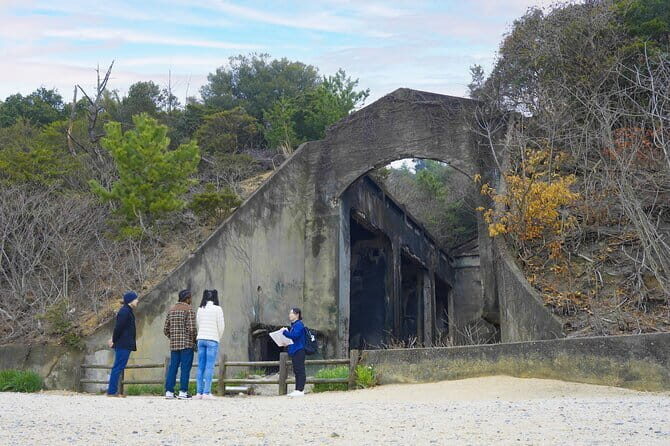
Here’s how the tour unfolds and what each stop is actually for.
Stop 1: Okunoshima Lighthouse (View Only)
You start with the Okunoshima Lighthouse, but there’s a catch: you can’t enter. You view it from a short distance instead. Still, this stop is useful because it gives you a clear sense of orientation. When you can see the lighthouse even from afar, the island feels more navigable right away.
This is also a good “tone setter” stop. You’re seeing a recognizable landmark before you move into the wartime sites, so your brain has something solid to hang the rest of the story on.
Other Hiroshima cycling and bike tours in Hiroshima



Stop 2: Okunoshima Island (Main Ride and Island Time)
This is the heart of the cycling portion. You spend about 1 hour on Okunoshima Island, with admission listed as free. The island sits in the Seto Inland Sea National Park, and it’s described as a little west of the Shimanami Kaido islands route.
In plain terms: this is where you slow down just enough to take in the island surroundings while your guide keeps the narrative going. You’ll also likely encounter more rabbits here than at some of the shorter stops. If you want rabbit photos that look natural, this is the time window.
A practical note: the island is only about 4 km around, but that doesn’t mean everything feels flat and effortless. You’re still moving by bike and stopping for viewpoints, so the hour on island time is valuable.
Stop 3: Okuno Shrine (Rabbits Live Here Too)
Next comes Okuno Shrine. It’s described as the island’s only shrine, and it’s now also home to rabbits. That combination is part of why this stop feels different from a normal shrine visit. You’re not just looking at a quiet religious space; you’re watching a daily-life overlap between people’s spiritual place and the island’s wild animal presence.
This is a short stop (about 10 minutes), so think of it as a reset: a calm moment between the bigger wartime reminders. If you’re traveling with kids or anyone who likes gentler stops, this is a good one.
Stop 4: Nagaura Poison Gas Storage Ruins (View From a Distance)
Now the tour pivots to the wartime facilities: the Nagaura Poison Gas Storage Ruins. Again, entry is prohibited for safety reasons, so you view the ruins from a short distance.
Why include a view-only stop? Because seeing the site from outside can still help you understand the scale and layout. Your guide’s job here is to connect the story to what you can actually see, instead of sending you somewhere restricted for a safety reason.
This is also likely the emotional center of the tour. The island is known for rabbits, but this is where the “why it was hidden” part of the story stops being abstract.
Stop 5: Power Plant Ruins (Also View Only)
You move to the power plant ruins. It’s described as a facility used when poison gas was secretly made on the island. Like the previous ruins, it’s restricted, and you view it from a short distance due to safety.
This stop helps you understand the machinery behind the wartime operations. If Stop 4 feels like storage, Stop 5 is about how production worked. Even without entering, the separate viewpoint makes the story feel less like one vague ruins blob.
Stop 6: Northern Cannon Battery Remnants (You Can See Closer)
The final stop is the Northern Cannon Battery Remnants. Unlike the lighthouse and the poison gas and power plant sites, this one says you can see it closely. You spend about 15 minutes here, giving more time to take it in.
This is a good capstone stop because it feels more direct. When you’re allowed to see closer, you get better detail and a stronger sense of how the island was defended.
The Rabbits Part: Cute, Yes, But Also Context-Heavy
Let’s be honest: the rabbits are the headline. People come for the idea of bunnies hopping around a real island.
What surprised me from the way this tour is described is how the rabbits fit into the bigger story, instead of replacing it. The island’s charm can make it easy to forget the wartime past. This tour tries to prevent that by pairing rabbit moments with stops that explain why the island’s name carries weight.
One guide you may meet is Junko, who’s praised for being kind and passionate about educating visitors on the island’s terrible past. That matters because the best rabbit island experience isn’t just cute. It’s guided, respectful, and clear about what the island used to be.
What You’ll Need for a Smooth Ride

This is a short tour, but you’ll still want to plan for outdoor time.
Bring:
- A light layer and a hat, because it’s an island day
- Rain protection, because weather can shut things down
- Comfortable shoes even if you’re mostly on the bike
You won’t have food and beverages included, so plan snacks and water on your own. Since the tour is only about 2 hours, you can often manage with a small plan rather than a full picnic.
Also, expect that some of the most important places are view-only. So don’t plan your expectations around walking into ruins or climbing inside structures. The experience is about seeing from permitted areas and learning what you’re looking at.
Logistics That Affect Your Day (Without Making It Complicated)

The tour meets and ends at KYUKAMURA OHKUNOSHIMA (休暇村大久野島), right in front of the hotel. That’s convenient: no long scavenger hunt for the final pick-up spot.
You’ll use a mobile ticket. And the tour is near public transportation, which can make it easier to connect with ferry timing on the day you go.
One cost you should not forget: the ferry fee from Tadanoumi to Okunoshima is listed as 360 yen and is not included. If you only budget for the $59.12 tour price, you’ll be surprised at the last step.
Weather matters a lot here. The policy says if the Japan Meteorological Agency forecasts a 60% or higher chance of rain by 12:00 PM the day before, the tour is cancelled with no cancellation fees. In practice, that means you’ll want to keep an eye on the forecast, even if the morning looks fine.
Who Should Book This Tour?
I think this tour is a great fit if:
- You want a guided Okunoshima visit that explains the island beyond rabbits
- You prefer active time (bike) over slow walking
- You like small groups and better chances to ask questions
- You’re okay with some stops being view-only because entry is restricted
It’s also ideal if you’re doing Hiroshima for a short time and want one focused island outing that balances light (rabbits) with heavy (wartime sites).
If your top priority is only seeing rabbits and you don’t want any wartime context, this may feel like too much. But if you’re curious and respectful, the structure is built for exactly that balance.
Should You Book Okunoshima Rabbit Island Cycling Tour with Local Guide?
Book it if you want value in one package: a bike, a local guide, and a route that shows why Okunoshima is both peaceful and complicated. The small group size, plus the fact that the guide’s role is clearly tied to the island’s story, makes it more meaningful than a casual rabbit photo stop.
Skip it or reconsider if you strongly dislike view-only stops, because the lighthouse and several ruins are prohibited to enter. Also plan around weather. When rain hits an island cycling day, cancellation is real.
If you’re traveling to Hiroshima and you want a day that feels unusual in the best way—rabbits one minute, wartime remains the next—this is a smart, efficient choice.
FAQ
How long is the Okunoshima rabbit island cycling tour?
It’s listed as about 2 hours.
What is the price per person?
The price is $59.12 per person.
What’s included in the tour price?
It includes bicycle use, all fees and taxes, and travel insurance. Food and beverages are not included.
Is it a private tour?
No, it’s a shared group tour. It has a maximum of 5 travelers, and other participants may join the same departure.
Are any of the stops accessible to enter?
Yes and no. The lighthouse and several ruins are prohibited to enter, but the Northern Cannon Battery Remnants can be seen closely.
What ferry cost should I plan for?
The ferry fee (Tadanoumi to Okunoshima) is listed as 360 yen and is not included.
What if the weather is bad?
If the Japan Meteorological Agency forecasts a 60% or higher chance of rain by 12:00 PM the day before the tour, it will be cancelled with no cancellation fees. If cancelled due to poor weather, you’ll be offered a different date or a full refund.
What are the main stops on the route?
You’ll visit the Okunoshima Lighthouse (view only), Okunoshima Island, Okuno Shrine, Nagaura Poison Gas Storage Ruins (view only), Power Plant Ruins (view only), and the Northern Cannon Battery Remnants.
Where does the tour start and end?
It starts and ends in front of KYUKAMURA OHKUNOSHIMA (休暇村大久野島), at the same meeting point and end point.