REVIEW · HIROSHIMA
Hiroshima History Tour : A-Bomb Dome, Peace Memorial & City
Book on Viator →Operated by Local Gem Tour Hiroshima · Bookable on Viator
Hiroshima hits hard, then heals in steps. What I like most is the local guide approach, often rooted in family memory, not a memorized speech, plus the practical flow that includes skip-line Peace Memorial Museum time. The one catch is you do a solid amount of walking while dealing with heavy subject matter, so comfy shoes and a calm pace matter.
This is a private, customizable tour in Hiroshima that mixes major memorial sights with everyday city streets and a peaceful finish in Shukkeien Garden. If you want the landmarks, you’ll get them, but you’ll also hear the human angle behind them, in English (and Japanese support if needed).
In This Review
- What Makes This Hiroshima Tour Different
- Local Guides Change How You Read Hiroshima
- Your Walking Route: What You’ll See in 3 Hours
- Stop 1: Hiroshima Peace Memorial Museum (Skip-Line, About 1 Hour)
- Stop 2: Peace Memorial Park (About 20 Minutes, Free Entry)
- Stop 3: Children’s Peace Monument and Sadako’s Story (About 5 Minutes, Free)
- Stop 4: Atomic Bomb Dome (About 20 Minutes, Free)
- Stop 5: Hypocenter Monument (About 10 Minutes, Free)
- Stop 6: Hiroshima Castle Replica (About 15 Minutes, Optional Entry Not Included)
- Stop 7: Shukkeien Garden (About 45 Minutes, Admission Included)
- Price and Value: What $105.42 Buys You
- You’re buying time, not just transport
- You’re paying for context that changes your understanding
- Tickets included where it matters
- Small practical inclusions add up
- What the Tour Feels Like on the Ground
- When Hiroshima History Tour Is a Great Fit
- Quick Practical Tips Before You Go
- Should You Book This Hiroshima Tour?
- FAQ
- How long is the Hiroshima History Tour?
- What stops are included on the tour?
- Are tickets included for the main attractions?
- Is pickup available?
- Is lunch included?
- Is this a private tour?
What Makes This Hiroshima Tour Different
- Family-tied local perspective instead of scripted facts, often from guides with direct connections to Hiroshima’s atomic history
- Skip-line museum entry so your time goes to exhibits, not waiting
- A clear memorial walking route that pairs the Museum, Peace Memorial Park, Children’s Peace Monument, Atomic Bomb Dome, and the Hypocenter area
- A calm reset with Shukkeien Garden (including admission) after the memorial stops
- Private, just-your-group flexibility for pacing and interests, with pickup offered
- Photo data included to help you remember what you came for
Local Guides Change How You Read Hiroshima
Hiroshima is one of those places where your brain and heart both need time. Facts matter, yes, but what really sticks is how people living here talk about what happened and what it means now.
That’s where this tour earns its place. The guides are Japanese locals, and some are second-generation atomic bomb survivors. Others are people born and raised in Hiroshima with family members affected by the bombing. The emphasis isn’t on a perfectly rehearsed narrative. It’s on perspective—passed down quietly through families and daily life. You’ll feel the difference when someone points out not just what a site represents, but how it fits into a city that kept going afterward.
The other big win is control. You’re in a private group, and the route is designed to match your pace and interests. That matters because memorial sites can be intense. If you need a slower rhythm at the Museum or want extra minutes near a monument, you’re not stuck watching a big group move on without you.
You do need to be realistic about the tone. This isn’t a casual sightseeing loop. It’s a thoughtful walk through tragedy, recovery, and remembrance, ending with something serene.
Other Peace Memorial Park tours in Hiroshima

Your Walking Route: What You’ll See in 3 Hours
This is described as a private 3- or 4-hour walking tour, so think “comfortable pace with stops,” not “dash through everything.” The stops are clustered in central areas, which keeps transitions manageable even though it’s still a walk.
Here’s the route in a practical order and what each stop does for your understanding.
Stop 1: Hiroshima Peace Memorial Museum (Skip-Line, About 1 Hour)
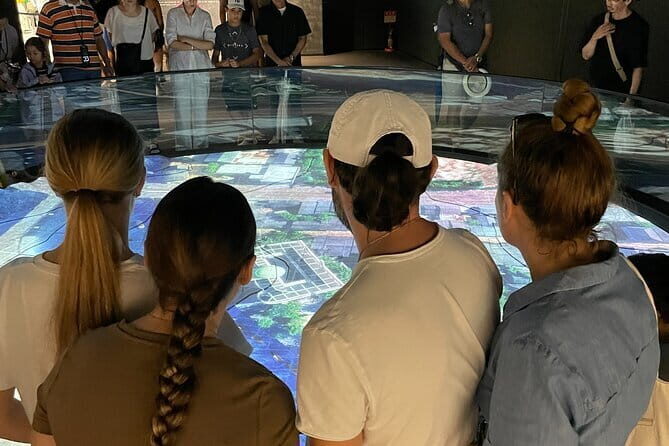
If you only do one place in Hiroshima, this is the one that most strongly justifies the whole trip. The Peace Memorial Museum is where you see the events through exhibits, data, and artwork by A-bomb survivors. It’s also the stop where your visit shifts from seeing a famous name on a sign to understanding what that name implies in real life.
A key practical detail: admission is included, and entry is set up to skip the line. That’s a big value in a place where your attention matters more than your patience.
One thing I’d suggest: don’t treat it like a checklist. Plan to pause. If you’re the type who reads every caption, you’ll appreciate the time. If you read only what hits you, the hour still gives room to catch the main threads without feeling rushed.
Possible drawback: if you’re sensitive to emotionally graphic themes, this is the first place where you’ll feel it. The guide’s local framing can help, but you still want to go in mentally prepared.
Stop 2: Peace Memorial Park (About 20 Minutes, Free Entry)
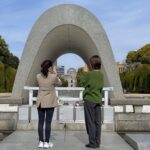
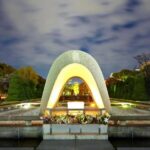
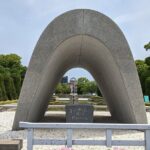
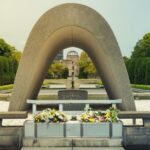
Right after the Museum, the Peace Memorial Park works like a breather that doesn’t soften the message. You stroll the grounds and visit several monuments, with the beauty of the park today sitting alongside what the site remembers.
This is also where a local perspective is especially useful. Even though you’re only in the park for about 20 minutes, the experience isn’t rushed. The guide’s job is to help you listen to the “why” behind the monuments, not just point them out.
Entry here is free, so you’re paying in time and attention, not additional ticket cost.
Stop 3: Children’s Peace Monument and Sadako’s Story (About 5 Minutes, Free)
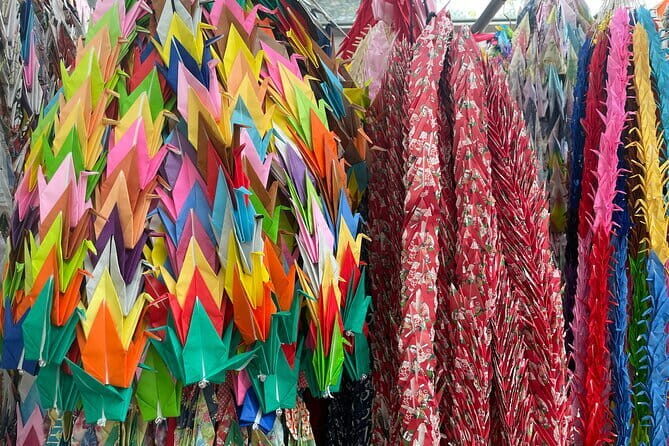
A short stop, but it hits hard. The Children’s Peace Monument is tied to the famous tragic story of Sadako and the tradition of folding origami cranes. You’ll see many cranes here, and the moment works because it shifts the focus from large-scale events to individual lives.
Five minutes is enough if you let it land. If you tend to get emotional quickly, keep your expectations realistic. This is quick, but it’s not light.
Other Atomic Bomb Dome tours in Hiroshima


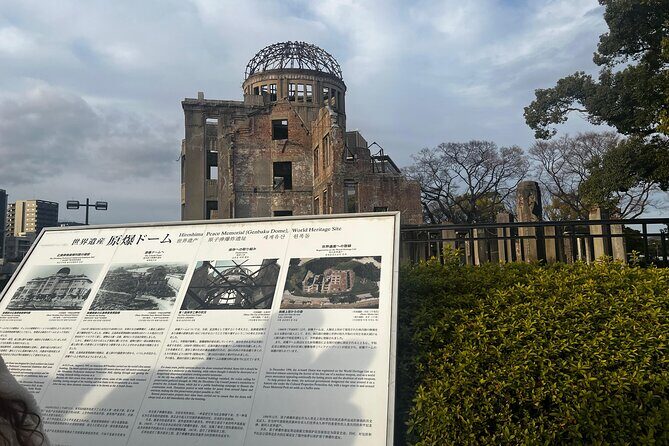
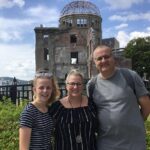
Stop 4: Atomic Bomb Dome (About 20 Minutes, Free)
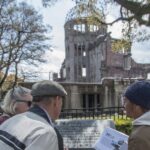
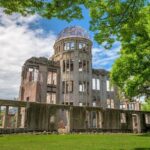
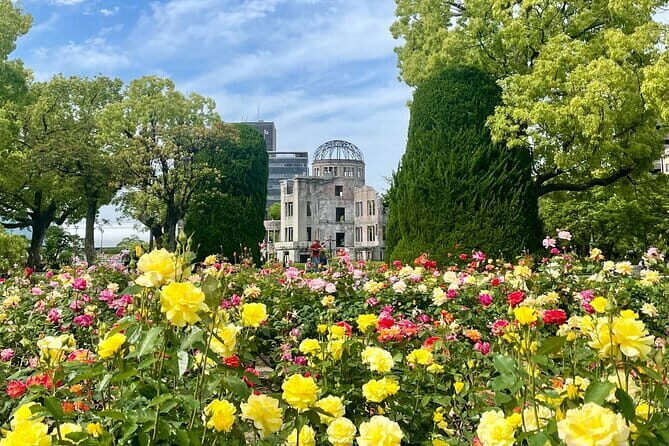
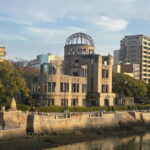
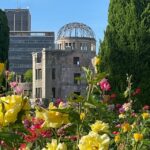
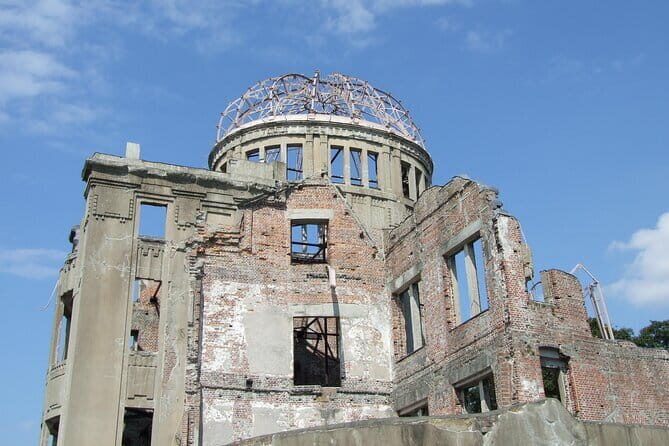
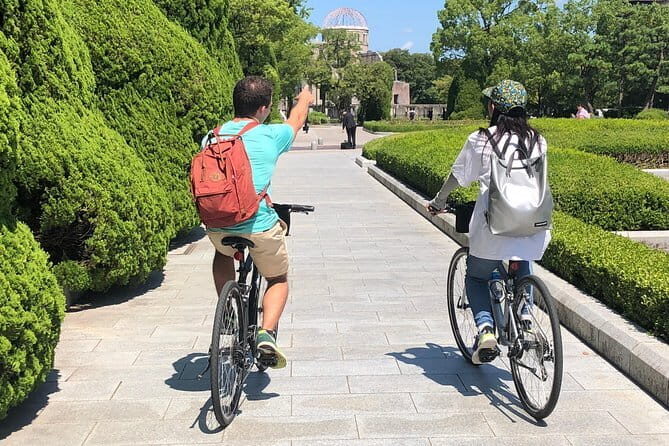
Then you reach the Atomic Bomb Dome, a UNESCO World Heritage Site and one of the most recognized visuals in Japan. The building’s survival is explained in the route itself: it retains its original appearance because it sits almost directly below the hypocenter.
Why it matters: this is where history becomes architecture. You’re not looking at a photo in a book. You’re looking at a structure that visually communicates shock and aftermath. In a way, it turns the Museum’s information into something your body can understand from across the street.
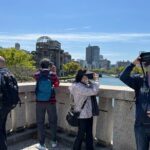
You’ll get around 20 minutes here. If you want photos, you can do it without feeling like you’re sprinting. If you prefer to stand and watch people pass by, you can do that too—this stop isn’t timed like a roller coaster.
Stop 5: Hypocenter Monument (About 10 Minutes, Free)
Next is the Hypocenter monument area, right above the Shima hospital. Here you’re asked to imagine the moment of explosion. That mental image can feel uncomfortable, but it’s part of what makes the site meaningful.
Ten minutes sounds brief, but it works because the tour doesn’t overstuff the stop with extra layers. The guide helps you focus on the spatial reality: where things happened, and how close everything is.
Stop 6: Hiroshima Castle Replica (About 15 Minutes, Optional Entry Not Included)
Hiroshima Castle is mainly an outside photo stop on this route, because the existing structure is a replica. Hiroshima Castle was destroyed by the atomic bomb, so the version you see now is about continuity and symbolism rather than original preservation.
The tour includes a 15-minute window for photos. If you want more, you can enter the museum inside, but that admission is not included.
I like this stop as a “human-scale pause.” You’re switching from memorial architecture to a different kind of Japanese heritage story. Just don’t expect it to change the emotional tone of the day. It’s more like a brief shift in perspective.
Stop 7: Shukkeien Garden (About 45 Minutes, Admission Included)
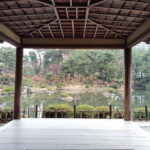
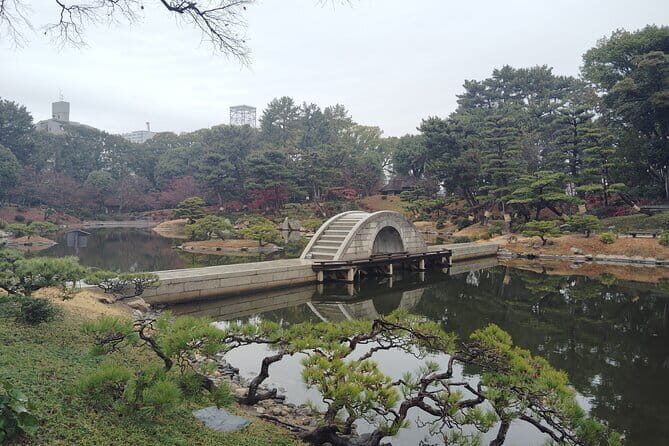
The finishing act is Shukkeien, an older Japanese garden described as created in 1620. It includes pond views, trees, and gentle undulations, designed in the style of a samurai’s settling area.
Admission is included, and the time here is about 45 minutes, so you’re not rushed. After the memorial cluster, the garden gives your mind somewhere to rest without erasing what you learned.
Timing can add extra beauty. One guide’s review notes taking guests to Shukkeien for the Momiji festival, which implies that autumn maple displays can make this stop especially striking. If you travel in fall and the festival lines up, it’s the kind of bonus that makes the day feel rounded.
Price and Value: What $105.42 Buys You
This tour is listed at about $105.42 per person for roughly 3 hours. At first glance, that’s not cheap for a walking tour. Here’s what you’re actually paying for, and why it can still make sense.
You’re buying time, not just transport
There’s no private vehicle included, and lunch isn’t provided. But you do get smart time-savers:
- skip-line museum entry (big in popular memorial stops)
- a guided route that keeps you from wasting energy on decisions
The cost also covers the guide’s time and the structure of the day.
You’re paying for context that changes your understanding
The most valuable part isn’t the buildings. It’s how the day is interpreted. The guides are locals with deep connections to Hiroshima, some with family history of the bombing. That kind of perspective is hard to replicate with self-guided reading, especially when emotions can blur details.
Tickets included where it matters
The Peace Memorial Museum admission is included. Shukkeien Garden admission is included. You’ll also find several stops along the way are free (Peace Memorial Park area, Children’s Peace Monument, Atomic Bomb Dome, and Hypocenter monument area). That mix helps keep your on-the-ground spending predictable.
Small practical inclusions add up
Photo data is included. That’s a useful extra because your attention might be pulled toward reflecting rather than photographing everything. Pickup is offered too, which can reduce stress on your first morning or afternoon in a new city.
What the Tour Feels Like on the Ground
This is a walking day with stop-and-explain moments. The guide is part interpreter, part local translator of emotion into meaning.
From the guide names shared in past experiences—people like Yuka, Masa, Yuta, and Ally—the pattern that comes through is clear: friendly, accommodating, and organized explanations with family-connected viewpoints. If the guide you get has a personal connection to Hiroshima, the tour tends to feel less like a lesson and more like a conversation.
Also, the route is flexible. That means you can slow down at a stop that hits you harder or adjust when the day feels too heavy.
A practical note: because it’s walking, bring shoes you can stand in for longer than you think. And if you’re traveling with a cold or feeling unwell, the tour notes that you should not participate when you have cold symptoms.
When Hiroshima History Tour Is a Great Fit
This tour works best if you want:
- a private experience rather than a large group scramble
- local perspective that connects memorial sites to how Hiroshima lives today
- a balanced day that includes both remembrance and a calm garden finish
It’s especially suited for:
- couples who want conversation-guided storytelling
- solo travelers who prefer a guide’s pacing
- families with older kids who can handle memorial content without turning it into a “quick photos only” stop
If you want a purely light and casual city walk, this likely won’t be your kind of day. It’s respectful and serious.
Quick Practical Tips Before You Go
A few things to help you get the most out of those 3 hours:
- Wear comfortable walking shoes. The tour is built around walking between multiple key sites.
- Bring a little patience for your own pace. The day can run emotionally fast if you try to power through.
- Use the museum time well. One hour can feel short if you stop to read, but it’s long enough to make it meaningful.
- Consider castle entry only if you’re interested. It’s optional, and the outside stop already gives you the core visual.
- If you’re visiting in autumn, ask about Momiji timing. The garden can be especially beautiful when the season lines up.
Should You Book This Hiroshima Tour?
I’d book this tour if you’re coming to Hiroshima for more than photos. The value is in the human perspective delivered through local guides with family connections, combined with a route that uses your time well—especially the skip-line museum entry and the inclusion of Shukkeien Garden admission.
Skip it only if you want a quick, purely factual sightseeing circuit with minimal emotion. This tour is designed to make you slow down and really understand what you’re seeing.
If you’re willing to walk a bit and give yourself time to feel, this is a strong way to experience Hiroshima with clarity and respect.
FAQ
How long is the Hiroshima History Tour?
It’s about 3 hours (approx.), with some descriptions noting it can run 3 to 4 hours depending on pace and interests.
What stops are included on the tour?
The tour includes Hiroshima Peace Memorial Museum, Peace Memorial Park, Children’s Peace Monument, Atomic Bomb Dome, the Hypocenter monument area, Hiroshima Castle (outside with optional entry), and Shukkeien Garden.
Are tickets included for the main attractions?
Yes. Admission for Hiroshima Peace Memorial Museum and Shukkeien Garden is included. Entry to the Peace Memorial Park area and the monuments like the Atomic Bomb Dome and Children’s Peace Monument are free.
Is pickup available?
Pickup is offered.
Is lunch included?
No. Lunch and food or drinks are not included.
Is this a private tour?
Yes. It’s a private tour/activity, and only your group participates.